Tag Archives: assessments

Assessments and evaluations for professionals provide tools to evaluate and assess motor, sensory, speech, language, academic, functional, and other critical areas. Using assessments and evaluations for professionals guides targeted intervention planning.

The DASH-2: Assessing Handwriting Speed and Legibility

The DASH2- Detailed Assessment of the Speed of Handwriting

Handwriting remains an important skill for recording information, expressing one’s thoughts on paper and communicating ideas to others, despite the increasing use of technology in educational settings. Writing demands placed upon students increase as they progress from primary, through secondary, to further and higher education. Confident, legible, and fast handwriting can support success both within the educational system and in workplace settings that still require the ability to write legibly and fast.

The most important objective in acquiring the skill of handwriting is to be able to write legibly, however, in many situations, the speed of handwriting is also important.

Based on this realization, the authors of the DASH-2 (who are experts in motor control) wanted to provide a reliable measure of the speed of handwriting while at the same time accounting for legibility. Thus, when measuring the speed of production, only letters/words that are legible within the context of the writing are counted. 

Uses of the DASH-2

The primary aim of the DASH-2 is to provide a reliable age-appropriate measure of handwriting speed and legibility. Data from the DASH-2 can be used to:

  • identify individuals with handwriting difficulties
  • determine eligibility for extra support 
  • provide a detailed description of handwriting performance
  • contribute to diagnostic assessment (e.g. Dysgraphia)
  • monitor progress and evaluate intervention effectiveness
  • aid research

DASH-2 Tasks

The DASH-2 contains five handwriting tasks:

  • Copy Best: Copying a sentence in ‘best’ handwriting for 2 minutes
  • Alphabet Writing: Writing lower case letters in alphabetic order from memory continuously for 1 minute
  • Copy Fast: Copying letters in words and words in sentences from a model sentence that contains all the letters of the alphabet quickly for 2 minutes. This is the same sentence used in Copy Best.
  • Graphic Speed: Drawing X’s in circles for 1 minute
  • Free Writing: Writing on the topic of My Life of Past/Present/Future for 10 minutes

Interpretation of Test Results: The 7Ss and 4Ps

Although the main focus is on speed and legibility, the authors encourage obtaining other useful information about an individual’s handwriting and written expression. They offer a format that is part of the Record Form for making Qualitative Observations during the testing.

The 7Ss are features of the examinee’s handwriting that can be observed in the finished product:

  1. Shape/letter formation
  2. Size
  3. Spacing
  4. Slant/slope
  5. Stringing together/joining
  6. Site/sitting on the line
  7. Shakiness

The 4Ps have been associated with poor handwriting outcomes.

  1. Posture
  2. Paper Position
  3. Pen/Pencil Grip
  4. Pressure 

Types of Scores:

The DASH-2 yields different types of scores pertaining to the five DASH-2 tasks:

  • Raw scores and scaled scores for each of the four core tasks
  • A total Standard Score
  • Percentile equivalents for the total standard score

The four types of supplementary scores provide:

  • A scaled score for the Graphic Speed task
  • a Copy Speed Difference score for the Copy Best/Copy Fast tasks
  • The percentage of illegible words from Free Writing
  • A WPM score for each section on the Free Writing task, to provide a profile of the whole Free Writing task

Summary:

This relatively new handwriting assessment fills a gap in our tools for the evaluation of handwriting speed and legibility for older students. Developed by the same authors of the Movement Assessment Battery for Children – Third Edition who are experienced in observing motor control and evaluation development, we can feel comfortable in getting reliable results from the DASH-2. It is being used in some exciting research projects at the University of Washington. We think it is an important component in our ability to identify handwriting difficulties with a standardized and reliable assessment.

Guest Blogger: Karen Conrad Weihrauch, ScD, OTR/L 
Transition Planning Inventory-3 Overview & Review

The Transition Planning Inventory - Third Edition

The Individuals with Disabilities Act (IDEA) of 1990 instituted a transition mandate for students receiving special education services.  IDEA 2004 expanded on this to include planning across all areas including community participation, independent living, and continuing education. The Transition Planning Inventory, now in its 3rd edition, was designed to address these mandates. As described in the TPI-3 Administration and Resource Guide, the primary purpose of the TPI-3 is “to assess the transition needs, strengths, preferences, and interest of students at the secondary level” (Patton & Clark, 2021, 14*)   The domains covered within the TPI-3 are working, learning, & living. 

Information is gathered from:

Core Rating Forms 

  • Three forms (Student, Home, and School) Each form contains 57 statements related to transition planning.
  • Each form is organized according to 11 planning areas; Career Choice & Planning, Employment Knowledge & Skills, Post Secondary Training/ Education, Functional Communication, Self Determination, Independent Living, Personal Money Management, Community Involvement & Usage, Leisure and Recreation, Health, & Social/Interpersonal Relationships.

Preference &  Interest Forms

  • Intended to gather information about a students preference and interest
  • Two versions available; basic (intended to be used early in the transition process) and advanced (intendended to be administered when a student is close to leaving school).
  • An optional Home Preference and Interest Form is also available.

Information is compiled through:

Profile & Further Assessment Recommendation Form

  • All information is summarized on this form consisting of 6 sections; 1.) general information, 2.) likely setting for postsecondary outcomes, 3.) student’s preference, interests, and strengths, 4.) results of other assessments, 5.) student profile, 6.) further assessment and information.

Summary of Performance Data

  • The purpose of this form is to give users a quick and easy way to compile the information required by IDEA into a Summary of Performance (SOP) document.  

Overall, the TPI-3 provides a comprehensive means to gather key information from all major players in order to create and implement a meaningful transition plan.

Quick Facts

Age Range: 14-21

Administration Time:
Student Rating Form:

  • 15-20 minutes to complete independently
  • 25-30 minutes if administered orally and/or with support.

The Home Core Rating:

  • 15-20 minutes to complete independently
  • 25-30 minutes if administered orally and/or with support.
  • The School Rating Form 10-12 minutes

Student Performance & Interest Form:

  • 10 to 15 minutes to complete independently
  • 20-25 minutes if administered orally and/or with guidance.

Profile & Further Assessment Recommendation Form

  • 10-15 minutes

Publication Year: 2021

Authors:
James R. Patton
Gary M. Clark

Administration Type: Individual

Scoring: Inventory rated on a scale from 0 (strongly disagree) to 5 (strongly agree)

*Patton, J. R., & Clark, G. M. (2021). Transition Planning Inventory Administration and Resource Guide (3rd ed.). Pro-Ed.

Visual Processing & Perception Assessments: Seminar Highlights

Selecting the best assessment in order to gain the information we seek about a client’s functioning is vital for the occupational therapist, the client, and the team. It’s a jumping off point that helps us design a treatment plan that is meaningful and helps the client achieve goals. On Saturday, February 28th, Therapro’s President, Karen Conrad Weihrauch, PhD, OTR/L, tackled the task of examining 14 standardized visual motor and visual perception assessments as part of the Saturday Seminar Series.

Having the opportunity hear a comparison of the assessments, discuss them, and provide personal experience with the administration of the assessments helped therapists and educators identify tests that they might like to use in their work settings. In addition, being able to actually examine and manipulate the tools was a valuable experience not typically available to us.

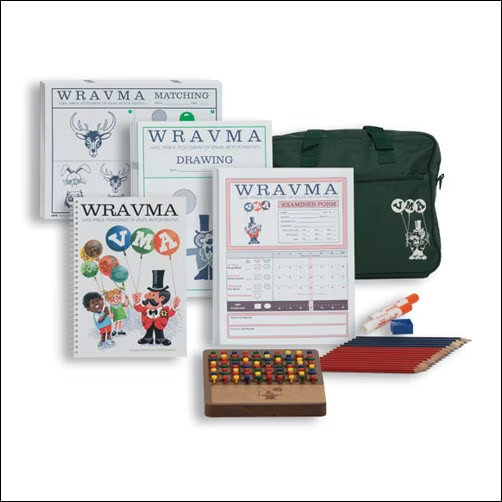
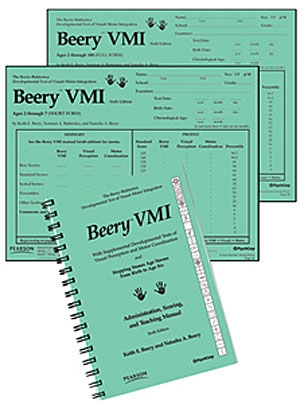
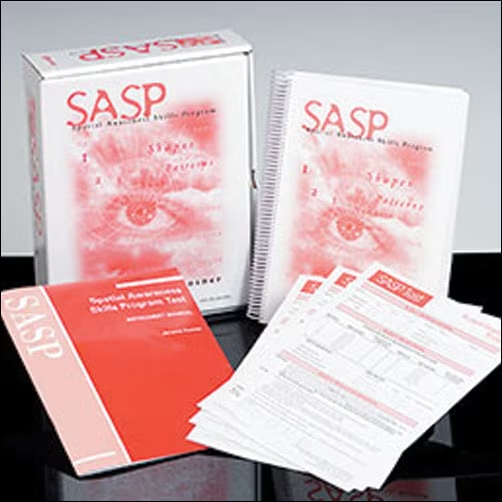
Karen provided a succinct description of each test, including ages for which the test was designed, time required to administer, and interpretation information. Included were new editions of old standards such as the Beery VMI, DTVP-3, and DTVP-A. She presented tests that include useful or unique features. For example, the Spatial Awareness Skills Program (SASP) includes a curriculum manual, the Wide Range Assessment of Visual Motor Abilities (WRAVMA) is the only test available that includes a pegboard for testing dexterity, and the Preschool Visual Motor Integration Assessment (PVMIA) includes two Behavioral Observation Checklists in addition to the two subtests. The PVMIA is unique because its authors are OTs.

Attendees shared their comments regarding this valuable seminar:

“A great review of all available v.p. tests that should be shown to all school system OTs so that they can choose what they want to use.” Beth H.

“As an outpt therapist, I have very limited access to updated assessments. This seminar was very helpful with regard to: easy, wide-range tests that I could use for children and adults in a non-academic setting.” Joanne T.

“Good overview of potential VP/VM tests including quite a few I had never heard of.” Lynne H.

Thank you, Karen!

Filomena Connor, MS, OTR/L

February 28, 2015