All posts by Therapro

Therapro at Ohio OT/PT School-Based Practice Institute

The 22nd Annual Ohio Institute for OT/PT School-Based Practice conference in Columbus on August 11-12 was an exhilarating 2 days of incredible workshops with distinguished presenters. A record-breaking attendance of 700 therapists attended this superb event. The exhibitors included 28 vendors, one of which was Therapro! For the 7th consecutive year as the Therapro rep, I thoroughly enjoyed the enthusiasm and positivity of the conference planning committee co-chairs, Mary Kay Eastman, PT, MS and Molly Dodge, OTR/L. These women and their tireless team planned another stellar conference. Throughout the conference, Holly Bartholomew, conference coordinator, kept things running smoothly behind the scenes.

This year, Therapro authors, Bhanu Raghavan, MS, OTR/L and Ginger McDonald, OTR/L were included on the roster of speakers. Their dynamic presentation featured their publication, “Self-Care with Flair! A Step-by-Step Guide to Teaching Self-Care Skills to Children with Disabilities.” They presented their unique method for increasing independence with self-care skills, teaching the skills of dressing, grooming, toilet training, and eating by using a uniform approach with pictures and rhyming while employing visual, verbal, and tactile/kinesthetic cues.

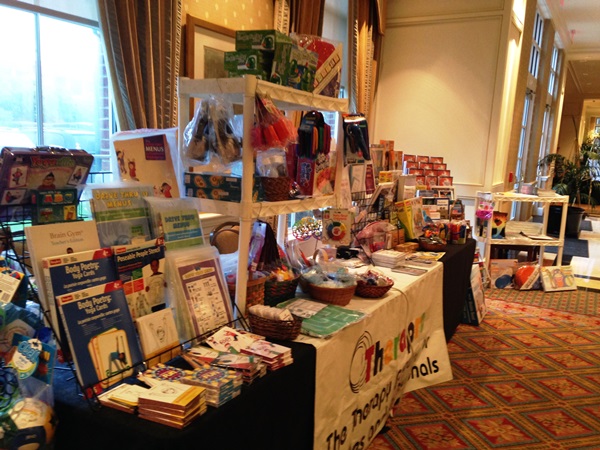
The gregarious Ohio therapists spent time lingering at the Therapro exhibit area, sharing their opinions about products and creative uses for them in the classroom setting. They returned this year with endorsement of products they purchased at last year’s conference, including Wobbledeck, Crayon Rocks, and Fanta Color Jr. Many of Therapro’s new items, including WriteRight pencil grip Yogarilla Cards, and Stretch and Match Geoboard, won rave reviews.

It was a whirlwind 2 days in Columbus! I am eager to learn what the OT/PT Institute will be planning for next year. Thank you for a terrific conference! I look forward to returning to Columbus again next August.

Filomena Connor, MS, OTR/L

August 20, 2014
22_otpt_conference

Bullying: Understanding the Basics

On May 17, 2014, Therapro concluded its Spring Saturday Seminar Series with a compelling presentation by Iris Leigh, CAGS, OTR/L, Assistant Clinical Professor at Boston University’s Sargent College of Health and Rehabilitation Sciences. Her seminar, titled “Bullying: Understanding the Basics,” offered valuable perspectives on identifying and addressing bullying behaviors in educational settings.

Understanding the Basics: Defining Bullying and the Core Components

Iris Leigh began the session with an interactive anti-bullying quiz, sparking thoughtful discussion among attendees. She emphasized that bullying is a deliberate “power game” characterized by three key elements:

  • Intent to Harm: The bully aims to cause physical or emotional distress.
  • Power Imbalance: The bully holds more power, whether physical, social, or psychological, over the victim.
  • Repetition: The harmful behavior occurs repeatedly over time.

Such behaviors often manifest during unstructured school times, including lunch, recess, bathroom breaks, and bus rides.

The Broader Impact of Bullying

A critical takeaway from the seminar was the recognition that bullying affects not only the direct victim but also bystanders and the overall school environment. Witnesses to bullying can experience feelings of fear, helplessness, and anxiety, highlighting the need for comprehensive prevention strategies.

Strategies for Prevention and Support

Iris Leigh provided attendees with practical tools to support children who are targeted by or witness bullying behaviors. While understanding the basics of bullying is key, she stressed that preventing bullying is a collective responsibility, requiring active involvement from educators, therapists, professionals, and caregivers. Implementing clear policies, fostering open communication, and promoting inclusive activities are essential steps in creating a safe and supportive environment for all students.

Attendees, including teachers and occupational therapists, praised the seminar for its practical strategies and insightful resources:

“Very well put together – easy strategies.”

“Applies to work…and life.”

“Lots of good resource info – this lady knows her stuff!”

For more information and resources related to this seminar, visit Therapro’s official website.

Filomena Connor, MS, OTR/L

May 17, 2014

Visual and Motor Cohesion: The Beery VMI

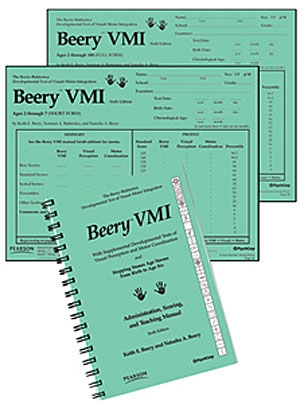
The Beery-Buktenica Developmental Test (more commonly known as the Beery VMI) detects difficulties in connecting visual perception and motor skills. The test is a Visual-Motor Integration Test (VMI) for ages two and up. It takes about 10-15 minutes to complete, and has two supplemental tests that last five minutes each, as needed.       Beery VMI

The Beery-Buktenica Developmental Test of Visual-Motor Integration, 6th Edition (BEERY VMI)This VMI test examines how well an individual integrates visual and motor skills by having them look at 24 drawings. (There is a short form of this test that is often used with two to eight-year-olds, which only tests 15 drawings.) The drawings present simple geometric shapes from the most simple to the most complex. The examinee looks at the shape, then copies each drawing into the Test Booklet.

If the full or short form tests indicate a need for further testing, then the two supplemental tests are administered. These two supplemental tests are the VMI Visual Perception Test and the VMI Motor Coordination Test. They follow the same form as the main test, which ensures that the results are easy to compare.

The starter kit for the Beery VMI includes a manual, 10 full form tests, 10 short form tests, 10 Visual Perception supplemental forms, and 10 Motor Coordination supplemental forms.

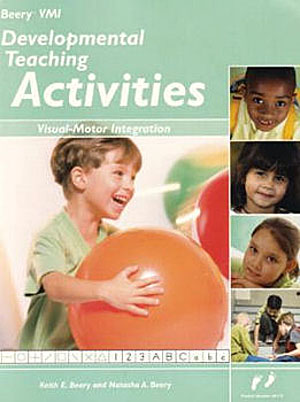
Various teaching materials aid this test. These tools help improve visual, motor, and visual-motor function for children pre-elementary school. The booklet of Developmental Teaching Activities headlines the teaching materials. This booklet includes over 250 activities to help a child establish an understanding of art, pre-reading and pre-writing, and athletic skills. Each level has activities directed towards gross motor, fine motor, visual perception, and visual-motor development.

Next in the line of teaching activities is called My Book of Shapes. From the title, you can get a sense of its contents. This book contains 100 geometric exercises that children in preschool and kindergarten can use to improve their motor, visual, and motor-visual function. These activities give children a jump-start for recognizing letter and numeral shapes that the child will experience in school.

Beery VMI, cover of the book Developmental Teaching Activities for Visual Motor IntegrationThe Beery VMI Stepping Stones Parent Checklist provides an easily accessible list of key developmental “stepping stones.” This list helps parents to track a child’s development from pre-kindergarten through early elementary. While many schools provide developmental feedback, this home checklist helps you observe your child’s development outside of a school setting.

For parents and professionals, the Developmental Wall Chart for Visual-Motor Integration is a colorful chart of gross motor, fine motor, and visual-motor stepping stones. This chart marks development from birth to age six. Many parents and professionals find it useful to have this clear chart on hand for easy reference.

The Beery-Buktenica Developmental Test is currently in its 6th edition. This edition was standardized based on a national sample of 1,737 children aged 2 to 18, and the adult norms derive from a sample of 1,021 individuals aged 18 to 100. The Manual for this test includes about 600 norms from birth through age 6 to track and understand visual and motor development.

The Beery VMI Test finds any weaknesses in a child’s development, but also effectively assesses adults of all ages. The Teaching Materials improve any underdeveloped areas, both proactively and reactively, to provide successful integration of visual perception and motor skills.