Tag Archives: therapist resources

Explore curated resources for therapists, including intervention tools, educational materials, assessment supports, and treatment strategies. Designed for therapists and educators, these resources help professionals plan effective sessions, support diverse client needs, and stay current with best practices in therapeutic and educational settings.

Unlocking Potential: Assistive Technology for Cerebral Palsy

As March unfolds, the global community prepares to observe Cerebral Palsy Awareness Month dedicated to raising awareness and understanding about this neurological condition. Among the myriad of challenges faced by individuals with cerebral palsy (CP), assistive technology emerges as a beacon of hope, offering innovative solutions to enhance independence, communication, and quality of life. For parents of children with CP, understanding the role of assistive technology is paramount in supporting their child’s development and well-being.

Understanding Cerebral Palsy

Cerebral palsy is a complex neurological disorder that affects movement, muscle tone, and posture. It is typically caused by brain injury or abnormal development during fetal development, infancy, or early childhood. The impact of CP varies widely, with some children experiencing mild motor difficulties while others face more significant physical and cognitive challenges.

The Promise of Assistive Technology

Assistive technology encompasses a wide array of tools and devices designed to mitigate the barriers faced by individuals with disabilities. For children with cerebral palsy, assistive technology offers tailored solutions to support their unique needs and promote active participation in daily activities.

Simple and Effective Assistive Technology Solutions

Let’s explore some assistive technology solutions specifically designed for children with cerebral palsy:

Adaptive Books and Learning Tools

Interactive Storybooks: These engaging books feature interactive elements such as sound effects, textures, and movable parts, catering to children with CP who may have difficulty turning pages or focusing for extended periods. Occupational therapist, Allyson Locke offers these pro tips for leveraging assistive technology to make reading more accessible:

Using wikki stix as a page lift

Wikki Stix!: Wikki Stix are simply wax covered strings that are often used in craft activities but they offer a simple and easy low tech solution for making page lifts.  Page lifts are used to ‘lift’ the pages of a book making it easier for those with fine motor difficulties to turn the pages of the book. To make page lifts with Wikki Stix simply roll a Wikki Stix into a spiral or ball shape and place it onto the upper right hand corner of the pages in a book.  Wikki Stix offer a non-permanent solution for making the pages of a book easier to turn.  

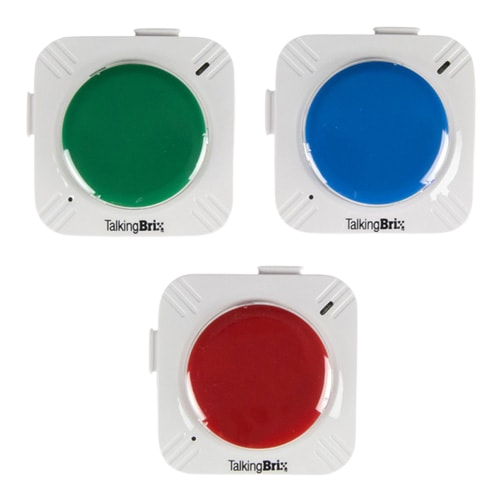
Communication Devices: There are numerous types of communication devices available, these devices are used to convey anything from a simple message to complex dialogs.  When leveraging these devices to enhance reading experiences I tend to focus on the simpler devices that have a record and playback feature.  For example, TalkingBrix2BIGmack communicator, or LITTLE Step-by-Step with Levels.   These can be used to record the words on the page of a book that can be played back by the “reader” with a simple hit of switch. This modification turns any book into an interactive one! 

Augmented Reality (AR) Learning Apps: AR apps provide immersive learning experiences, allowing children with CP to explore educational concepts through interactive visualizations and simulations.

Sensory Devices and Toys

Multi-Sensory Play Equipment: Sensory play is essential for children’s development, especially those with CP. Multi-sensory toys, such as vibrating cushions and textured balls, stimulate different senses and promote sensory integration. Pro Tip: If decreased hand skills limits your child’s ability to hold these objects, occupational therapists Allyson Locke has a solution:

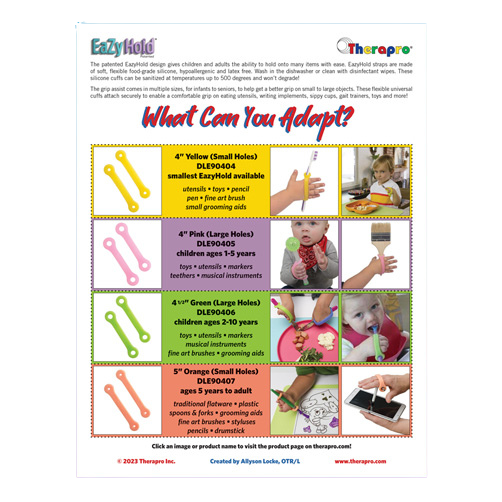
The Eazyholds silicone cuffs are a unique tool that gives children and adults the ability to hold onto many items with ease. They can be used on their own or in conjunction with the functionalhand when a more precise movement is desired (any Eazyhold with the large holes will fit over the handle of the functionalhand). Shake a maraca, bang a drumstick or wave a colorful ribbon with ease! To get more ideas check out Therapro’s Eazyhold, What Can I Adapt, handy guide

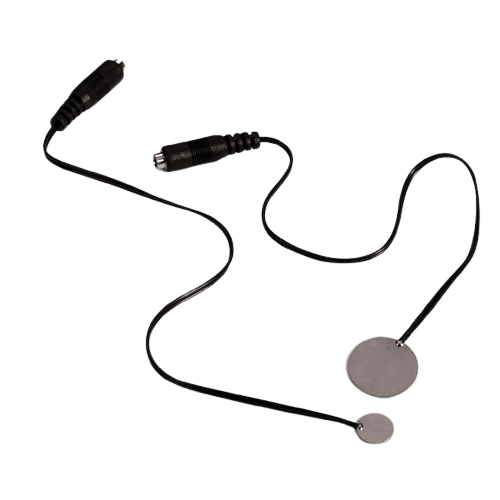
Switch-Activated Toys: Switch-adapted toys can be controlled using simple switches, enabling children with limited mobility to interact with and manipulate toys independently. Another pro tip from occupational therapist Allyson Locke; battery interrupters can be used to make most battery operated toys switch accessible! Learn about battery interrupters here!

Communication Aids

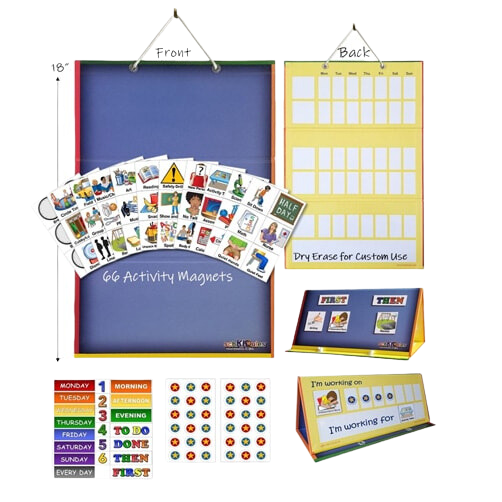
Schkidules visual schedule display

Picture Communication Systems: Visual communication systems, including communication boards and symbol-based apps, facilitate communication for children with CP who have difficulty speaking or expressing themselves verbally. 

	
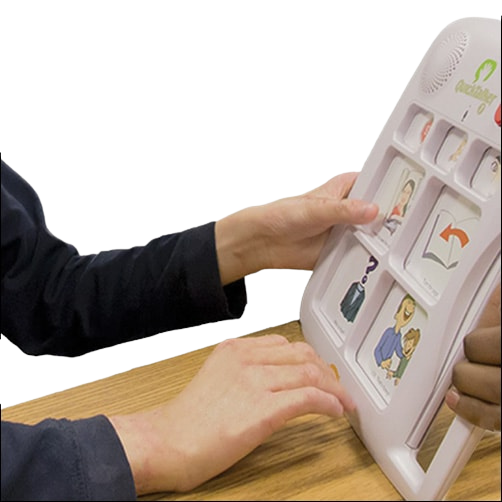
QuickTalker 7

Voice Output Devices: Voice output devices allow children to communicate using pre-recorded messages or synthesized speech, empowering them to express their thoughts and feelings more effectively.

Supporting Cerebral Palsy Awareness

As we observe Cerebral Palsy Awareness Month, there are several meaningful ways to show support and solidarity:

  • Educational Initiatives: Share information about cerebral palsy and assistive technology with friends, family, and community members. Raise awareness about the unique challenges faced by individuals with CP and highlight the importance of inclusion and accessibility.
  • Advocacy and Empowerment: Advocate for policies and initiatives that promote equal opportunities and access to assistive technology for individuals with cerebral palsy. Encourage schools, healthcare providers, and policymakers to prioritize the needs of children with CP and provide necessary support and resources.
  • Community Engagement: Participate in local events and fundraisers dedicated to cerebral palsy awareness and support. Connect with advocacy organizations and support groups to learn from and collaborate with other families affected by CP.
  • Charitable Contributions: Consider donating to reputable cerebral palsy charities and organizations that provide financial assistance, support services, and assistive technology to individuals and families in need. Cerebral Palsy Guidance is one such resource, offering valuable assistance to those navigating the challenges of cerebral palsy.

By embracing assistive technology and fostering awareness and support, we can create a more inclusive and equitable society where children with cerebral palsy can thrive and reach their full potential. Together, let us champion the rights and dignity of all individuals, regardless of ability, and build a brighter future for generations to come.

Tools for Developing Scissor Skills

On September 19, 2023, Kelly Wilk-Downs, OTR/L presented Therapro’s first FREE Webinar of this school year, Cutting Made Simple. She offered a comprehensive look at the:

  • Development of scissor use
  • Selecting appropriate scissors for students
  • Prerequisite skills needed for learning to cut with scissors

This blog post comes on the heels of Kelly’s webinar; in this post we are reviewing some tools available at Therapro that are perfect for encouraging the development of scissor skills in beginner scissor users and beyond!

Cover of the book Hats Off and On to Scissors Skills a book for Developing Scissor Skills

Hats Off and On to Scissor Skills: Exclusive to Therapro is a creative publication called Hats Off and On to Scissor Skills, by
Peggy Huntley Spitz, OTR. This book consists of 25 themed hat designs that can be made for 4
progressive levels of cutting skills:

  • Straight line cutting and/or random snipping
  • Curved line cutting
  • Simple shape cutting
  • Complex shape cutting

This is a fun and unique activity book that will help you create an enjoyable project for the
developmental progression of scissor skills!

Comprehensive Scissor Assessment Kit used for Developing Scissor Skills

Comprehensive Scissor Assessment Kit: Therapro offers a variety adaptive scissors that will ensure active participation from all students
learning cutting skills, including those with limited hand function due to weakness, incoordination, and other functional limitations. Check out Therapro’s Comprehensive Scissor Assessment Kit, which includes 15 scissors of 10 different styles, plus a carry case and Manual.

Therapro carries a variety of scissors to meet the different needs of scissor users as they are progressing developmentally. Here is a sample of some of our favorite scissors.

Easi-Grip Loop Scissors for early scissor skills

Easi-Grip Loop Scissors : Easi Grip Loop Scissors are available in two sizes; the Mini Easi-Grip Loop Scissors are great for pre-school children while the standard Easi Grip Loop Scissors are made for the adult sized hand. These scissors are self opening for either right or left hand. They are operated by using pressure between the thumb and fingers or palm and fingers.

Self Opening Scissors

Self Opening Scissors : The Self Opening Scissors are available for left and right handed users. These scissors reopen automatically after hand pressure has been released.

Long Loop Scissors

Long Loop Scissors : The Long Loop Scissors are also available for left and right handed users. These scissors allow the user to use whole hand strength to operate. They also provide greater finger contact, which offers better control.

Mounted Table Top Scissors

Mounted Table Top Scissors : The Mounted Table Top Scissors offer stability with scissors attached to a base. To operate users simply depressing the large handle.

Be sure to check out all of the scissors and scissor activities available at Therapro!

Guest Blogger: Filomena Connor, MSOTR, Retired

schoodles logo

Using Schoodles School Fine Motor Assessment (SFMA) as Part of a Strengths-Based Assessment


What does a ‘strengths-based’ assessment mean to you? In the past, it may have simply
involved listing a student’s strengths and then moving on to their needs. However, a
strengths-based assessment can be a powerful tool for promoting self-confidence,
motivation, and independence. This type of assessment highlights areas for growth and
improvement, while simultaneously showcasing a student’s positive attributes. By utilizing
a strengths-based approach, parents, staff, and students can all view the student in a
different, more positive light.

Using a criterion-reference tool like Schoodles, you can more effectively locate areas where
a student excels, as well as areas that require further support. Unlike standardized tools,
Schoodles offers the flexibility to provide verbal prompts, visual demonstrations, task
grading, or other aids to help students complete challenging tasks.
Here are some strengths/needs we can observe during testing:

  • Good attention to task/ may need support to move from activity to activity
  • Demonstrates interest and curiosity about all of the materials/may need a limited amount of materials in front of him to work to his potential
  • Highly sociable/may need some social time before beginning hands-on tasks
  • Quick learner/excellent candidate for 6-10  week burst of service to improve skills
  • Easily understands and follows visual versus verbal directions/may benefit from visual supports to move through the day
  • Loves to use his hands/ may benefit from fidgets or may need to be presented with one task at a time and given extra time to explore hands-on activities.

To effectively support students, we must shift our attention from their limitations to their capabilities. It is a common misconception that a strengths-based focus disregards a student’s challenges. We can describe a student’s skills in neutral or positive terms, highlighting attributes that help them succeed. While we do not ignore struggles or weaknesses, we strive to reframe them in a constructive manner.

You could start by reviewing your previous documentation to initiate a shift toward strengths. Highlight all the positive statements in green, all neutral statements in yellow, and all negative statements in red. By doing this, you can aim to minimize negative statements and ultimately eliminate them altogether.

When writing reports, it’s important to provide a positive summary of your data while still including any challenges. Here are some helpful tips:

  • Place all test scores at the bottom of your report.
  • Use positive or neutral descriptive language only.
  • Focus on what the student CAN do.
  • Reframe subjective language into objective language.
  • Highlight areas of potential growth.

By using Schoodles‘ SFMA alone or in combination with other tools, you can gain valuable
information about student strengths in a relatively short amount of time. Focusing on
student strengths during information gathering, report writing, and sharing will help
facilitate a sense of student efficacy in the students, their parents, and staff.

Guest Blogger Marie Frank OTR/L, Schoodles Co-Owner