
When a student with ADHD struggles to begin a task, remember instructions, stay organized, or remain seated, it can be tempting to interpret the behavior as a lack of effort. ADHD isn’t a lack of effort. Attention, organization, time management, and self-regulation are influenced by executive functioning, environmental demands, sensory needs, and the structure of the task. Understanding these factors can help therapists, educators, and families replace frustration with practical support.
Look Beyond “They Aren’t Paying Attention”
Attention is not simply an on-or-off skill. A student may be highly engaged in one activity while struggling to focus on another. The difference may have more to do with the demands of the task and environment than with motivation.
For students with ADHD, challenges may include:
- Executive functioning: Planning, shifting between activities, prioritizing, and monitoring performance can require significant effort.
- Working memory: Holding multiple steps in mind while completing a task can be difficult.
- Task initiation: Knowing what needs to be done does not always mean knowing how to get started.
- Organization: Materials, assignments, and information can be difficult to manage without external supports.
- Time management: Estimating how long a task will take and recognizing the passage of time can be challenging.
- Movement needs: Movement can support alertness, attention, and participation rather than simply being a distraction.
- Regulation: A student’s ability to participate can change depending on their sensory, emotional, and cognitive state.
These challenges are especially important to consider in classrooms and therapy settings, where students are often expected to manage multiple demands simultaneously.
Before Saying “They Aren’t Paying Attention,” Ask…
A quick environmental and task analysis can reveal opportunities to make participation more accessible.
Is the task too long?
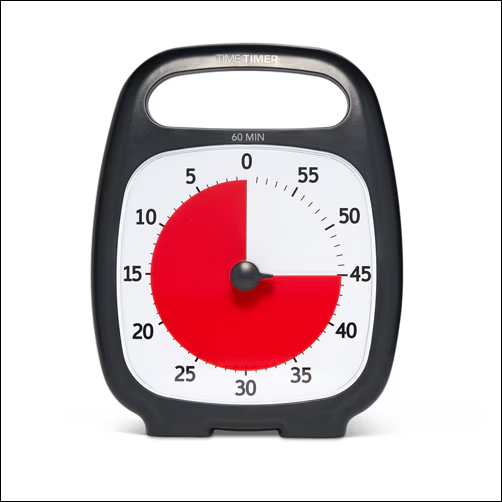
Breaking a lengthy assignment into smaller, manageable sections can reduce cognitive load. A visual checklist, timer, or clearly defined stopping point can help a student understand what is expected and experience progress along the way.
Therapro’s Tools for Time Management collection offers resources designed to support time awareness, planning, organization, and task completion.
Is the environment distracting?
Noise, visual clutter, movement around the room, and competing sensory input can affect a student’s ability to attend. Consider whether the environment can be simplified or whether the student would benefit from access to a quieter or more predictable workspace.
Explore Therapro’s Sensory-Friendly Environments resources for tools that can help create supportive learning and therapy environments.

Is movement needed?
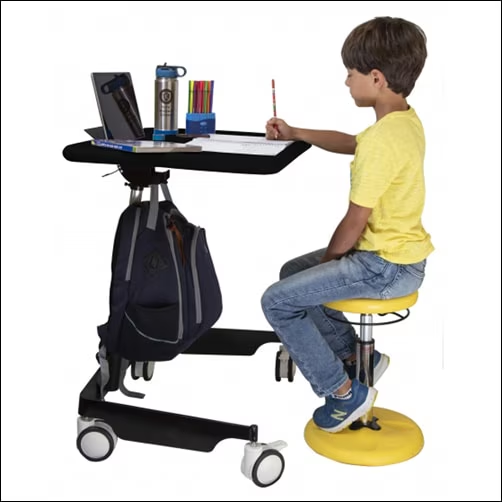
For some students, movement is an important part of maintaining an optimal level of alertness. Instead of automatically viewing movement as off-task behavior, consider building appropriate movement opportunities into the day.
Movement might include a brief movement break, standing while working, changing positions, or completing an activity that incorporates gross motor movement. Therapro’s Move to Learn resources provide options for incorporating purposeful movement into learning.
Are instructions accessible?
Verbal directions can disappear from working memory quickly. Consider pairing spoken instructions with visual supports, written steps, demonstrations, models, or checklists.
Instead of saying, “You know what to do,” try providing a concrete starting point:
1. Get your pencil.
2. Write your name.
3. Complete number one.
Externalizing information can reduce the amount a student must hold in working memory.
Does the student know how to start?
Task initiation is an important executive function. A student may understand an assignment but still become stuck at the starting line.
Try identifying the first action, rather than repeating the entire assignment. “Open your notebook and write today’s date” can be more actionable than “Get started on your work.”
A consistent start-up routine can also reduce the number of decisions a student must make before beginning.
Is there a visual structure?
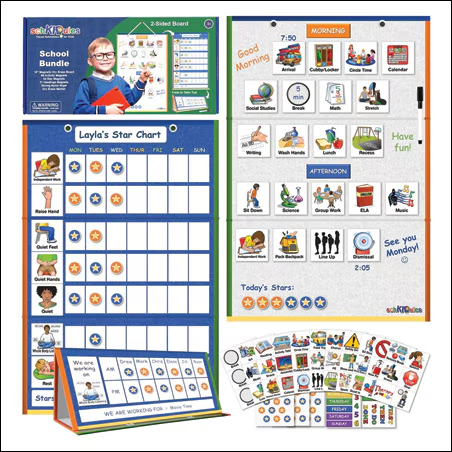
Visual structure can make expectations more predictable and reduce reliance on working memory. Visual schedules, first-then supports, checklists, timers, color coding, and written directions can all provide external cues.
The goal is not to make a student dependent on visual supports. Instead, these tools can serve as temporary or ongoing external supports for executive functioning, helping students develop strategies they can eventually use more independently.
Support the Environment, Not Just the Student
When a student repeatedly struggles with attention, it is worth looking at the interaction between the student and the environment. Ask:
- What does this task require?
- What does the environment require?
- What skills does the student have available right now?
- What support could bridge the gap?
This perspective shifts the conversation from “Why won’t they do it?” to “What is making this difficult, and what can we change?”
For occupational therapists, this may involve analyzing sensory and motor demands, positioning, materials, routines, and environmental factors. Physical therapists may consider movement, positioning, endurance, and opportunities for active participation. Speech-language pathologists may examine language processing, communication demands, and the accessibility of instructions. Parents and educators can look at routines, organization, transitions, and the structure of everyday tasks.
ADHD Isn’t a Lack of Effort—Support Can Make Effort More Effective
Students with ADHD are often working hard to manage demands that may not be immediately visible to others. Providing structure does not mean lowering expectations. It means identifying barriers and providing tools that allow students to participate more successfully.
A timer may make time visible. A checklist may make a sequence visible. A movement opportunity may support regulation. A quieter workspace may reduce competing sensory input. A visual schedule may make the day more predictable.
These supports can help transform an overwhelming task into a manageable one.
When we recognize that ADHD isn’t a lack of effort, we can move beyond assumptions about attention and look more closely at the factors influencing participation. Small changes to the environment, task structure, movement opportunities, and executive-function supports can make a meaningful difference in a student’s ability to start, participate, and succeed.
The next time you hear, “They aren’t paying attention,” pause and ask: What support might make paying attention more accessible?
Explore Therapro’s resources for Executive Function, Sensory-Friendly Environments, and Move to Learn tools to help therapists, educators, and families build more supportive environments for learning and participation.