Category Archives: Events & Conferences

Get comprehensive details about Therapro’s active participation in various industry events and conferences, including informative presentations, hands-on workshops, and trade shows that showcase innovative therapy products and provide valuable professional development opportunities for clinicians and educators.

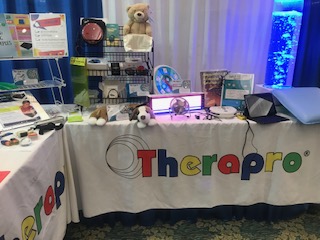
Therapro's demo table at ATIA 2023

ATIA 2023 Conference Highlights: It’s All About The Free Resources!

As a part of Therapro’s effort to be the resource for families and professionals the Therapro team attended the recent 2023 Assistive Technology Institute Association (ATIA) Conference where we had many opportunities to demonstrate the resources Therapro is known for.

Did you ever notice that Therapro’s logo includes the line “The Resource for Families and Professionals?”  Why? We believe that achieving goals toward independence is not only about the use of products, but also about the resources that educate consumers on the uniqueness and rationale behind the products. Because of this strong belief, all of Therparo’s  resources are FREE and include FREE webinars, FREE catalogs (5 catalogs), free TheraGram newsletters, free Handy Guides and more. 

At ATIA the Therapro team was able to meet up with specialists in the field of assistive technology and share with them many of Therapro’s assistive technology resources that were created by occupational therapist, Allyson Locke and graphic designer Dave Asselin. In this blog we are sharing some of the favorite resources from ATIA 2023.

Therapro’s Mechanical Switch Comparison Chart

Do you work with switches? Do you sometimes struggle to decide which is the best switch to choose for a client? Then this chart, created by occupational therapist Allyson Locke, is for you! It features 11 switches and compares each of them by 6 important factors: Connection type, Activation type, Activation Surface, Feedback, Plug size and Mounting plate. This Chart will help in your decision making and explanation to staff and family members regarding switches.

The Functionalhand: Live Demos & Information Sheet 

Getting a chance to try out the functionalhand was a big hit at ATIA 2023 and was one of the most important pieces of adaptive equipment used in activities of daily living  shown at ATIA. Created by Linda Merry, OTR and Celine Skertich, PT, the functionalhand has been engineered to assist individuals who have difficulty with grasp. Attendees were amazed by its simplicity and versatility in being used with almost any object. The accompanying handout was sought out by many; it includes a QR Code that takes the viewer  to a  terrific video showing its MANY  different uses.  When used with the  EazyHold (see next paragraph) the adaptations are greatly expanded.
EazyHold Universal Cuff

EazyHold – What Can You Adapt?

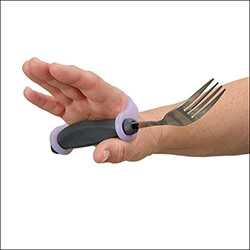
The patented design of the EazyHold gives children and adults the ability to hold onto many items with ease. ATIA attendees loved the soft feel and flexibility. EazyHolds comes in multiple sizes to help get a better grip on objects small to large. Therapro’s Handy Guide, What Can I Adapt, has great explanations to help you decide which size is best and the many pictures illustrate how to use them in everyday life!

Assistive Technology Handy Guide for Daily Activities

Therapro’s Assistive Technology Handy Guide and catalog provides a quick snapshot of available technology, from low to high tech that is available at Therapro.  Looking for ideas for increasing access and independence in the classroom or at home? This resource is for you!
Powerlink

PowerLink Activity Ideas

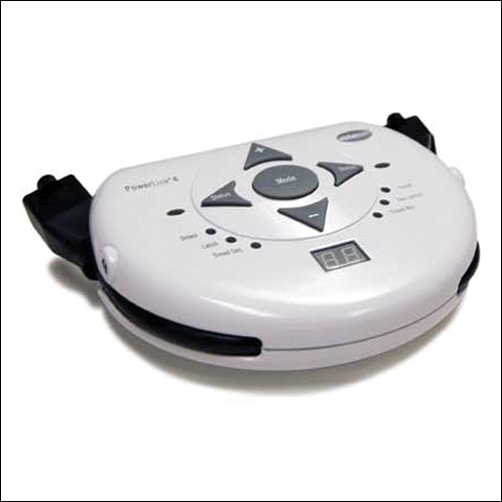
Another great opportunity we had at ATIA was sharing activity ideas with fellow therapists and of course we brought along some of our favorite ideas! In a previous blog, The Power of a PowerLink in Promoting Access, which is definitely worthy of reading, we shared several ideas for switch adapted activities that can be done with a Powerlink. While at ATIA, occupational therapist and writer of the blog, Allyson Locke, explained and discussed with attendees one of the activities, Switch Adapted Bowling. Check out the blog for additional ideas.

Making April Autism ACCEPTANCE Month

Claire McCarthy

April brings the beginnings of warm weather. It brings more time spent outside and the return of the birds who went south for winter. It also brings Autism Awareness Month. Fundraisers are held for local and nationwide autism related organizations. Facebook and Instagram are full of memes, posts, stories, and quotes about autism. This is all great, but what happens on May 1st? What happens when the posts get buried under cute animal videos and the fundraising moves onto the next mission?

Now, don’t get me wrong. I think awareness is wonderful. However, most of the world is very aware of autism now. They know organizations exist for it. There are plenty of tv shows and movies that portray autistic characters. We see autism in the news. What we need to be striving for is Autism Acceptance. We need to be striving for a world where autistic individuals are valued as community members, coworkers, and friends. A world that values and honors autism 365 days a year instead of 30.

To begin the move towards Autism Acceptance, there are some key terms we should know.

  • Neuro diversity: a viewpoint that brain differences are normal, rather than deficits
  • Neurodivergent: people who have diagnoses such as ADHD, autism, OCD, dyslexia, etc.
  • Neurotypical: individuals of typical developmental, intellectual, and cognitive abilities
  • Ableism: discrimination in favor of able-bodied or neurotypical people

Most of us on this blog are familiar with autism. For those who may not be, it is defined as “a developmental disorder of variable severity that is characterized by difficulty in social interaction and communication and by restricted or repetitive patterns of thought and behavior”. It is deficit based. There is nothing wrong with acknowledging the challenges seen in an autistic individual. However, let’s flip that around with a quote from NeuroTribes and define neurotypical: “Neurotypical syndrome is a neurobiological disorder characterized by preoccupation with social concerns, delusions of superiority, and obsession with conformity. There is no known cure.” Makes one think a little, doesn’t it?

To continue on a path of autism acceptance, we also need to target the myths around autism. One I hear all the time is, “S/he can’t be autistic. S/he speaks so well.” The DSM-5 and DSM-5-TR say nothing about verbal communication deficits in regards to autism. “Accompanying language impairment” can be added to an autism diagnosis, but having typical spoken language skills does NOT mean an individual is not autistic.

Another common misconception is that every child who receives an autism diagnosis must receive Applied Behavior Analysis (ABA) services and must be eligible for an Individualized Education Plan (IEP) when they reach 3 years of age. Yes, ABA is one of the few evidence based autism specific teaching methods. This research dates back to the 1960s when autism rates were 1 in 2,500 people. This research was done on individuals that would be considered “low functioning” and often had accompanying Intellectual Disability. Autistic learners needs to be seen as individuals the same way that neurotypical learners are seen.

That last paragraph brings me to another issue that gets in the way of autism acceptance- functioning levels. Parents and therapists are so quick to get caught up in levels. Many people think that a functioning level can tell you all about the autistic individual. One of the problems with levels, though, is that it makes it harder to see past the diagnosis. When someone is diagnosed with “high functioning autism” people have a hard time understanding their challenges, honoring how hard that individual works day to day to appear high functioning, and sees less need for services. When someone is diagnosed with “low functioning autism” people don’t see their competence, assume lower intellectual capacity, and lower their expectations for the individual.

What can we do as therapists, parents, family members, and friends to change from Autism Awareness to Autism Acceptance? A simple place to start is to change our vocabulary. Try to ditch “red flags” or “symptoms” and replace them with “characteristics” or “learning profile.” Don’t be afraid to use “the A word” in your every day life. Talk about individuals being autistic the same way you would talk about someone wearing glasses or having black hair. Encourage children to ask questions about themselves or others. Using statements such as “don’t stare” or “mind your business” inadvertently tell children that what the autistic child or adult is doing is “wrong” or something to be ashamed of.

Along the lines of observing behaviors, remember that all behaviors serve a purpose. A tantrum or “noncompliance” is not the child being difficult or trying to upset an adult. They are letting us know they have had enough, do not understand what we are trying to do, or do not understand why we are trying to do something. Self-stimulating behaviors should not be a target in therapies. These are physical needs to self-regulate and make sense of a neurotypical world. The more an autistic individual suppresses the need to stim the more the individual will need to eventually “get it out” and it will likely be in a way that is not fun for them or others such as self-injurious behavior or a meltdown.

Some people may be reading this and thinking, “But what about all of the challenges? What about those who may never be able to live independently or have challenging behaviors day after day?” This blog is in no way saying that these challenges should be ignored. In fact, that would be just as ableist as saying the positive characteristics of autism should be ignored. What needs to be thought about is that we are not out there to “cure autism” or “teach a child to look typical.” We are out there to make an autistic person who has challenges become an autistic person with as little barriers in their life as possible.

One of the best things we can do is to listen to autistic voices. Autistic adults and children can teach us more about autism than any study or textbook can even begin to. Families who have loved ones with autism are also a wonderful resource. If it hasn’t been said clearly enough, the best thing to remember is that autistic individuals are just that- individual. They will all have different thoughts, feelings, and beliefs in regards to THEIR autism. Autism Acceptance begins with understanding that and valuing each individual for exactly who they are.

ASHA 2021 Conference Highlights

ASHA 2021 marked Therapro’s first return to large scale conferences since the start of the COVID pandemic. There were some major differences between ASHA 2021 and conferences of the past but the one thing that remained the same was all of the great professionals who came to visit the Therapro booth! One question always asked is “what are the favorite products this year?”. In case you were not able to attend ASHA 2021 in person,  we summed up the top conference favorites for you! 

  • Big Feeling Pineapple.  This one sold out on day one! Conference goers compared Big Feeling Pineapple to “Mr. Potato Head” because the expressions were interchangeable similar to Mr. Potato head pieces.  Conference goers loved the smaller size and soft but firm feel.  They also loved that there were two sides allowing for endless uses like matching expressions, using it as a prop while reading stories, and as a jumping off point for discussing feelings.  
  • Balloon Car Racers: Another sell out! A comment often heard about Balloon Car Racers was that they were a great tool for working on oral motor strength.  Another highlight was that there were two to a pack allowing for peer interaction. 
  • Lion In My Way. This one is an oldie but still very much a goodie. Lion in my way is a conference staple and no matter how many we bring, we never have enough! Conference goers often remarked about the way Lion In My way approaches collaborative problem solving. It was also noted to be a great tool for tapping into imagination and flexible thinking.  
  • NOVENOPS. Another conference staple and another one that never fails to disappoint!  A huge draw of NOVENOPS has always been its compact size especially for professionals who travel from building to building or even room to room.  Conference goers appreciated the many opportunities for ‘WH’ questions that NOVENOPS offers. 
  • Choose your Chew Handy Guide: Our handy guide isn’t really a product but the many copies of our Choose Your Chew Handy Guide that we brought were gone before we knew it! Therapro is known for the many varieties of chews that we offer but selecting the right chew can be daunting. Conference goers appreciated the ease that our handy guide made in the selection process.  
  • Feeling Heads: Not only were these a hit but they also got a good laugh from many conference goers! They remarked that not only were they soft but also the perfect size for little hands.  Conference goers had so many great ideas for ways to use these heads including as props while reading stories, as a tool for discussing emotions, and as a communication aid when words are not available.
  • Smart Games:   The Three Little Pigs Game made its conference debut at ASHA 2021 and was a big hit.  In the age of COVID, conference goers appreciated that the pieces were made of easy to clean plastic.  They also remarked that these and other games were a great way to target early executive function and language skills in a fun way.  
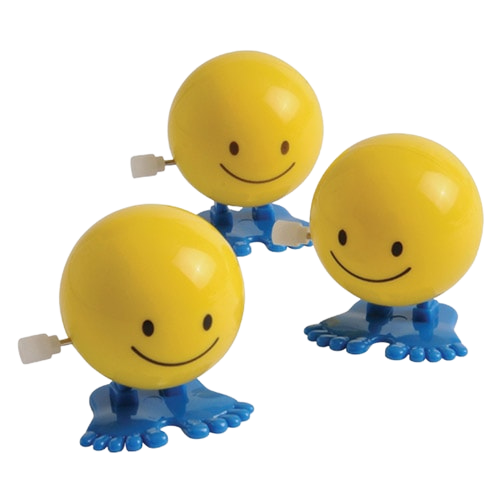
  • Wind-Ups.  No conference would be complete without some fun windups! As many conference goers noted, wind-ups are a big motivator and a great way to target language areas like asking for help and asking for more.  
  • Spark Cards. With so many options to choose from, Spark Cards were very popular.  Conference goers appreciated the wide variety from complex cards to simpler versions as well as options for larger cards that could be used on the floor.  Another big draw was that these cards are dry erase marker friendly, making it easy to emphasize key areas.  

It was great to meet  everyone at ASHA 2021, thank you all for sharing your great ideas. We are looking forward to seeing everyone again at ASHA 2022!