Category Archives: Motor & Movement

Find practical strategies, research-backed techniques, and resources designed to support the development of gross motor skills in children. This category is ideal for physical therapists, occupational therapists, early interventionists, and parents seeking effective movement-based solutions to enhance coordination, strength, balance, and mobility in young children.

Adding Movement to Everyday Activities

A quick web search will unearth a vast number of articles, books, and research supporting the notion that movement is critical to so many life functions, including a child’s ability to attend and engage in learning activities. Cold winters, limited daylight hours, and the current COVID pandemic have all played a significant role in limiting access to movement opportunities.  However, there are still some great ways to move within the confines of these restrictions! Check out these ideas!

Obstacle Courses

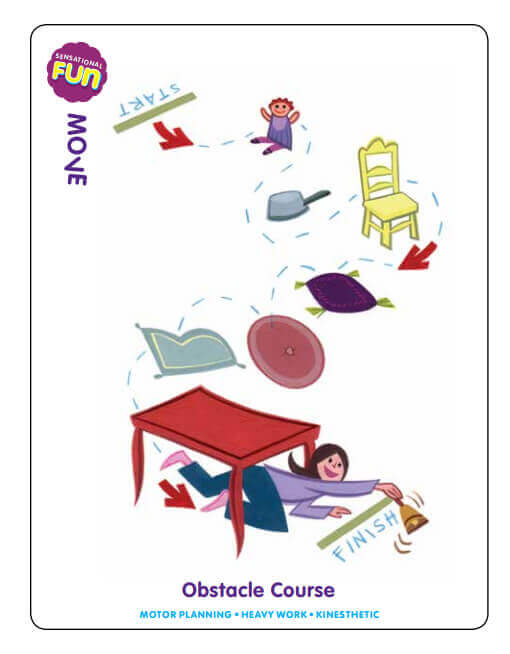
Obstacle Course

Obstacle courses can be big, small, built indoors, or built outdoors.  There is no set of specific materials needed, just a little imagination!  At home, obstacle courses are a great rainy day activity. Use couch cushions, blankets, pillows or whatever else is readily available around the house.   In the classroom, obstacle courses make a great option for indoor recess.

Simple modifications can help everyone get in on the fun!

  • To help learners still working on motor planning, establish a starting and end point, and/ or identify materials to use for the course.
  • Make it more complex by adding game rules such as “the floor is lava” and cannot be touched!
  • Get creative juices flowing by establishing a challenge. Can you make it from your desk to the pencil sharpener using only three materials? Can you make it from the couch to the kitchen without touching the floor?

Check out Sensational Fun and Therapro’s free resources for ways to enhance obstacle courses with sensory exploration!

Alternative Seating

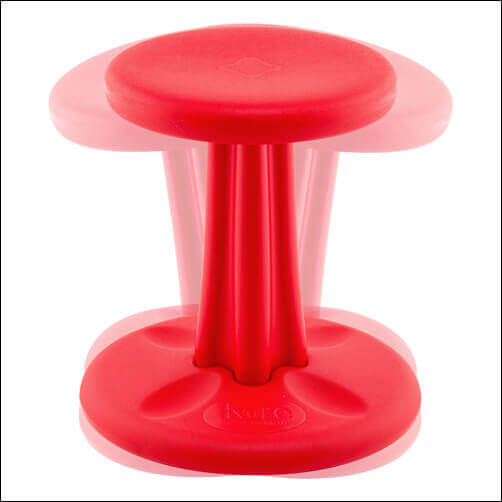
Alternative Seating

Swapping out traditional chairs for something that allows for wiggling is a great way to add movement experiences to traditionally sedentary activities! Be sure to supervise those with decreased balance!

Some Ideas Include:

  • Sit on a jacket, blanket, pillow, or air-filled cushion.
  • Sit on an upside-down water jug, chair with wheels, rocking chair, ball chair, or Kore Stool!
  • Place an air filled wedge between a student’s back and the back of the chair or under the feet (also great to support posture and positioning!).
  • Use a ready made Foot Fidget or tie exercise bands to chair or desk legs.

For more alternative seating ideas, check out Therapro’s Blog, Setting up Your Seat for Virtual Learning Success!

Games!

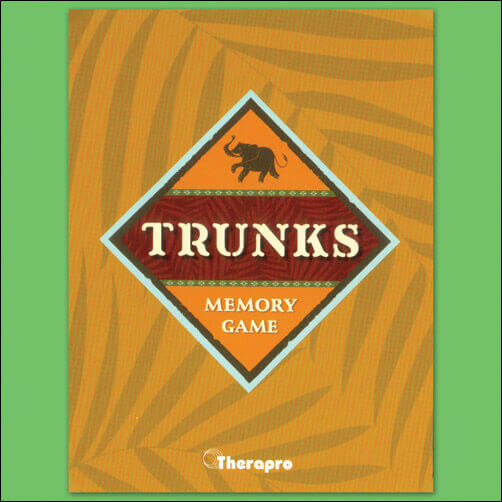
Trunks Memory Game

Games are engaging at all ages and are a great resource for movement.  Some games come with built-in movement opportunities like the Yoga Spinner Game, Trunks, or Letter Treasure Hunt. For games that are traditionally sedentary, table games, a few tweaks can add a dose of movement!

Try These Ideas:

  • When game setup allows, spread game pieces out.  For example, when playing a memory game, place cards in different spots in the room (across multiple desks, across the living room floor, or even taped to the wall!)
  • Use sticky notes or small stickers to cover game board spaces with a movement activity.  For example, take a traditional board game and add movement cues (“10 jumping jacks”, “run in place”) to several of the game’s squares.  When a player lands on this square, they would perform the movement prescribed.

Movement Breaks!

More and more classrooms are adding movement or “brain breaks” into the daily schedule. A simple stretch break can do wonders for changing a student’s level of alertness and their ability to attend. These mini breaks don’t have to be restricted to the classroom; they are perfect for homework sessions, online learning activities, or even Saturday morning cartoon sessions!

Try These Ideas:

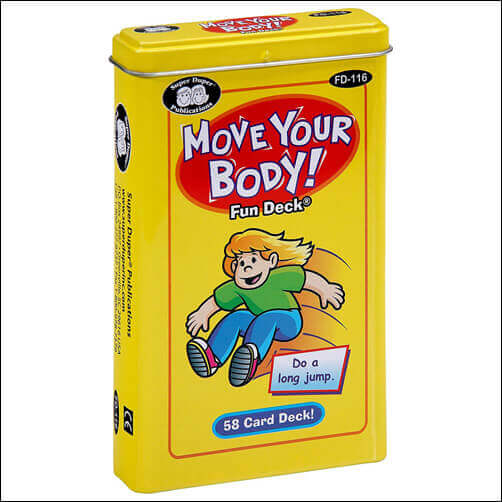
  • Get students involved. At the beginning of the day, assign a movement activity to each student. During the designated movement break time, students take turns leading classmates through their assigned movement.  Make it super simple by distributing movement cards at the beginning of the day (for example, Fun Deck cards or Yoga Cards) for students to use as guidance!
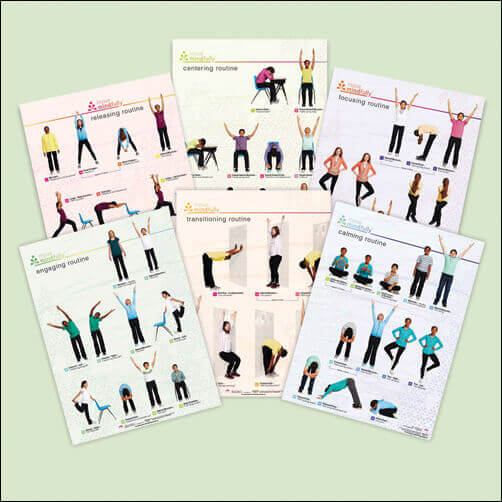
  • Keeping a visual near spaces where sedentary activities usually occur helps to provide reminders to move. Try Move Mindfully Poster Strips, simple cutouts from favorite magazines, or Drive Thru Menus.
  • Create a movement corner near learning spaces to help students have quick and convenient access to movement opportunities without getting off track! These can be quick and easy to create; try using a small yoga mat or towel, some weighted balls or filled water bottles, and/ or a therapy ball.
Move Your Body

Be sure to check out Therapro’s Tap Into Tools For The Body Handy Guide for more ideas!

Small amounts of movement will quickly add up.  Providing the space, tools, and opportunities to access movement experiences will help students attend, focus, and better access their learning environments. In addition, these early, positive experiences with movement will help to establish lifelong health habits!

Motor Interventions in Autism: Enhancing Participation and Function

Dr. Jennifer Colebourn, MSPT, DPT and Dr. Julie Goff, MSPT, DPT presenters of The Role of Motor Interventions in Autism Spectrum Disorder.

The 2019 Therapro Saturday Seminar Series was launched by school-based physical therapists, Dr. Jennifer Colebourn, MSPT, DPT and Dr. Julie Goff, MSPT, DPT with their presentation: The Role of Motor Interventions in Autism Spectrum Disorder.

Jenn and Julie met at Northeastern University where they were pursuing their doctoral degrees. Jenn’s research focuses on motor interventions for Autism Spectrum Disorders. Her most recent work has been published in the journal, Pediatric Physical Therapy: A. Colebourn, Jennifer & C. Golub-Victor, Ann & Paez, Arsenio. (2017). Developing Overhand Throwing Skills For a Child With Autism: A Collaborative Interdisciplinary Approach In School-Based Therapy. Pediatric Physical Therapy. 29. 262-269. Julie’s research on improving gross motor skills in children with Autism Spectrum Disorders received Northeastern’s RISE award in 2016. In their practice, both therapists focus on a collaborative team approach to improving motor performance in children with ASD.

Attendees were given a comprehensive review of Autism Spectrum Disorder, including the DSM-V (2013) diagnosis as a Neurodevelopmental disorder. We learned that ASD is no longer classified on a “spectrum” but with levels of severity. The term “Asperger” is no longer used, but individuals with the characteristics formerly attributed to Asperger are now considered to be “high functioning Autism.” An alarming statistic they revealed was that currently 1.5 billion children in the US have an autism diagnosis. Jenn and Julie cautioned that diagnosing ASD is complex and in the past 5 years, neuroimaging has provided startling information about the difference in the brain of the child with ASD from a typical child, i.e. “neuro over connectivity” that impacts function.

Jenn and Julie addressed the fact that motor function of children with ASD is affected, usually with simple motor tasks being intact, but with complex tasks and motor planning being impaired. Motor difficulties are now considered a “Core Deficit.” Screening for motor deficits is important for all children with the ASD diagnosis. The PT’s role includes recognizing if a motor impairment interferes with function. Julie and Jenn cited a number of studies that examined how core deficits affect a child’s participation in physical activity across many dimensions. What we might see is a child who prefers simple, sedentary activities and who doesn’t participate in complex social activities such as organized sports. In summary, motor deficits affect a child’s ability to participate in play.

When providing treatment for the child with ASD, Julie and Jenn advocate strongly for a team collaborative approach that includes the child’s family members. They noted that the ABA therapist would be a strong, valuable ally because they can provide behavioral support to motor intervention. They discussed ways to design the environment and treatment sessions in order to help ensure success and motor learning. A few examples they gave were: promote positive transitions, simplify choices, and have a predictable space and schedule. A few materials they recommended include: Body Awareness Fun Deck, Upper Body and Core Strength Fun Deck, Magicatch Set, Rainbow River Stones, Learn to Move, Move to Learn!, and ABC Yoga Cards for Kids.

We are grateful to Jenn and Julie for sharing their passion and expertise for improving motor performance of children who have an ASD diagnosis. With improved motor skills, it is likely that other areas of function will be affected in a positive way as well. With the high incidence of ASD worldwide, Autism will affect us all. The need for continued research is critical to help our understanding and ability to treat children with ASD effectively.

Here are just a few of the attendees’ positive reviews of this seminar:

“Incredibly informative and relevant! Felt so empowered from the seminar. Helped to give me better direction in my practice as well as increased confidence in my recommendations to families & school staff.” – Laine F., Physical Therapist

“The two presenters were so knowledgeable in their area – facts were most interesting.” – Rolene K., Teacher

“Great overview of school PT and best practice for collaboration with all members of the team.” – Micaela M., Physical Therapist

“Presenters were professional presenting evidence based practice to help improve functional skills for students with Autism.” – Alice T., Occupational Therapist

Thank you, Jenn and Julie!

Filomena Connor, MS, OTR/L
January 12, 2018

Brain Gym: Using the Figure Eight in OT

I came across Educational Kinesiology in the early 1990s when searching for tools or techniques to help heal from a chronic illness. Little did I know that it would become an integral part of much of my OT practice. I began with Brain Gym I and II and loved the fact that the two trainers in South Africa were experienced occupational therapists trained in both SI and NDT.

Brain Gym is wonderful for assisting with goal setting, whole brain learning, stress release, and re-patterning. Although there is a specific process to follow, many of the exercises are both beneficial and transferable into a regular OT session. One that I use a lot is the Lazy 8 – a figure eight that lies on its side like the infinity sign.

What is the Brain Gym figure eight used for?

In Brain Gym terms, the Lazy 8 turns on or activates the eyes while also crossing the mid-line.

It can be used to improve ocular motor function, which assists with reading, and crossing the mid-line improves integration between the two hemispheres of the brain.

The repeated action of the Lazy 8 is also very calming. It can be used in several different formats – using the eyes, drawing the figure of 8 in the appropriate orientation, and in motion, as we shall see shortly.

The Lazy 8 can also be carried out as a motor activity, having the client walk, skip, or run around a figure eight. I love to use two hoops placed side by side on the floor to provide a visual cue. Varying the space between the hoops elongates or enlarges the figure eight. Make it more fun by having the client clap while moving around the figure of eight in time to music.

For added motor integration, combine the cross crawl with the Lazy 8. This often has to be carried out in stages:

  • Having the client carry out their cross crawl while standing until they are sufficiently at ease with the exercise
  • Upgrade to carrying out the cross crawl while walking on a straight line
  • Upgrade further to doing cross crawls while walking a figure eight

When I first began using components of Brain Gym in my treatment sessions, I would often make up my own worksheets. I am delighted to discover that Therapro has a range of products that bring the figure eight into practice for all occupational therapists. Two examples include:

The development of these tools shows how Brain Gym is becoming accepted as a beneficial modality to use within OT. It also provides an added level of professionalism, which is important for anyone who is skeptical of either how Brain Gym combines with OT or the extent to which OT itself is a recognized profession.

Once clients are familiar with the Lazy 8 through either Trace the 8s or Race the 8s, introducing the Alphabet 8 helps improve their motor memory. The Alphabet 8 incorporates lower-case letters with the Lazy 8 and is wonderful as a pre-writing activity to enhance work to meet writing goals. It’s designed for English letters but, with some creativity and practice, cursive letters for Hebrew can also be used. Note, I am not sufficiently familiar with other alphabets to know how well they can be used in the Alphabet 8.

I mentioned earlier the benefit of improving a sense of calm. The rhythmic movement of drawing or moving in the Brain Gym figure eight pattern is a wonderful addition to your toolbox for assisting clients in need of stress management and improving relaxation.


Guest Blogger: Shoshanah Shear

Occupational Therapist, healing facilitator, certified infant massage instructor, freelance writer, author of “Healing Your Life Through Activity – An Occupational Therapist’s Story” and co-author of “Tuvia Finds His Freedom”.