Category Archives: Sensory

Investigate evidence-based sensory integration strategies and therapeutic tools designed to help individuals of all ages regulate sensory input, enhance emotional regulation, and improve behavior, attention, and participation across a variety of environments.

Using Sensory Stories & Sensory Strategy Cards for Regulation

For children with over-responsive sensory modulation, participating in everyday activities can be overwhelming. Victoria Nackley, MS, OTR/L, co-author of Sensory Stories, presented a Therapro seminar on Saturday, October 18th, entitled Using Sensory Stories and Sensory Strategy Cards (45 Strategies to Add to Your Sensory Diet) to Promote Self-Regulation. She engaged the audience of about 60 therapists, teachers, parents, and grandparents in learning how to use sensory stories as a therapeutic tool to help a child engage successfully in typical home, school, and community activities that intrinsically are loaded with sensory experiences. Victoria discussed the fact that 15 research studies currently support the theory that Sensory Stories promote a child’s ability to engage in day-to-day activities.

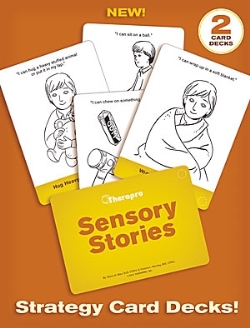
Sensory Story Cards for regulation Sensory Stories empower a child to cope with day-to-day life activities such as getting dressed, riding the school bus, and going to the store. Victoria and her co-author, Deborah Marr, have developed 30 individual stories that can be customized to each child. She engaged the attendees as a group in a sensory story about brushing their teeth. The calming strategies recommended are simple and quick so that they can easily be incorporated into a task that a child finds difficult to accomplish. For example, calming strategies might involve deep touch pressure, like a self-hug or using a towel to apply deep pressure to the skin.

For a child to feel successful every day builds self-esteem and social acceptance. Sensory Stories are a powerful tool in our toolbox that can help a child learn self-regulation. The following are a few of the many positive comments from those who attended the Sensory Stories seminar:

“Informative practical ideas that can be used right away.” Karen D.

“Exploded my ideas beyond the ‘typical’ applications of the Sensory Story cards.” Elizabeth S.

“Gives a very good presentation not only on Sensory Stories but also the importance of understanding sensory modulation.” Brooke W.

“She provided a great background/review on self-regulation. She gave many great examples and treatment ideas. I’m looking forward to trying them both with my clients and my own son!” Natalie S.

Thank you, Tory!

Filomena Connor, MS, OTR/L

Sensory Exploration with Pumpkin Carving

It is October, and it’s time to harvest not only pumpkins and apples, but also the sensory exploration this time brings. Have you ever broken down all the sensory input that the simple task of carving a pumpkin can provide? If you have the opportunity to go to a farm to pick your own pumpkin, take advantage of it. The experiences that you and your child will share stay with you forever.

Read on for all the ways a trip to pick your own pumpkin is sensational fun.

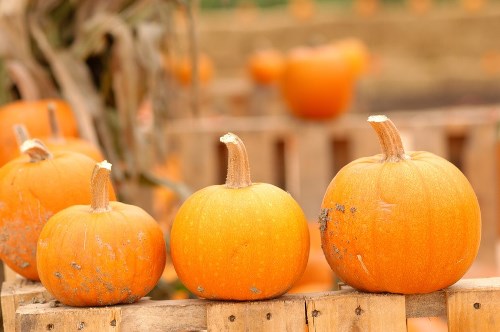
pumpkins on a fence ready for carving and sensory exploration

Pumpkin Carving Sensory Experiences

Senses

At the Farm

At Home

Visual

  • The leaves changing colors
  • The bright orange pumpkins
  • The roots and vines through the pumpkin patch
  • The blue sky
  • The animals at the farm
  • Browsing through different designs for the pumpkin
  • Tracing the design unto the pumpkin

Tactile

  • Feeling the breeze
  • Touching the Leaves


  • Feeling the grooves on the pumpkin
  • Scooping the pulp
  • Sifting through the pulp to separate the seeds

Auditory (hearing)

  • Shoes crunching the dead leaves and dry ground
  • Tractor on the farm
  • Hearing other people talking
  • The animals making noises
  • Singing Songs as you prepare to carve the pumpkin
  • Listening as the carving tool cuts through the pumpkin


Olfactory (smell)

  • The smell of the hay
  • The smell of the grass
  • Baked goods at the farm
  • The smell of the pumpkin pulp
  • The smell as you bake the pumpkin seeds or other desserts

Proprioceptive

  • Carrying the pumpkin from the patch to the car
  • Climbing up the ladder to go on the hay ride
  • Carry the pumpkin to the table
  • The feeling of carving the pumpkin (this must be done with adult supervision and using the appropriate tools)

Vestibular

  • Going on a hay ride
  • Sitting on a rocking chair while enjoying some of the baked goods

Gustatory (Taste)

  • If the farm has a bakery, get some of their delicious baked goods
  • Bake pumpkin seeds (see recipe below)

Pumpkin Seeds Recipe

  1. Separate the seeds from the pulp.
  2. Rinse and dry the seeds (sometimes they have to dry overnight).
  3. Preheat the oven to 250 degrees F (120 degrees C).
  4. Spread pumpkin seeds in a single layer on a baking sheet. Sprinkle to taste with the seasonings of your choice. For sweet seeds use Cinnamon, nutmeg and brown sugar, for salty seeds use garlic powder, salt and pepper.
  5. Toast for 45 minutes, stirring occasionally, until dry and toasted. Larger seeds may take longer.

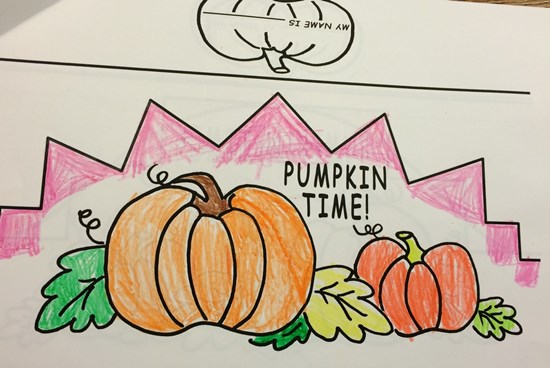
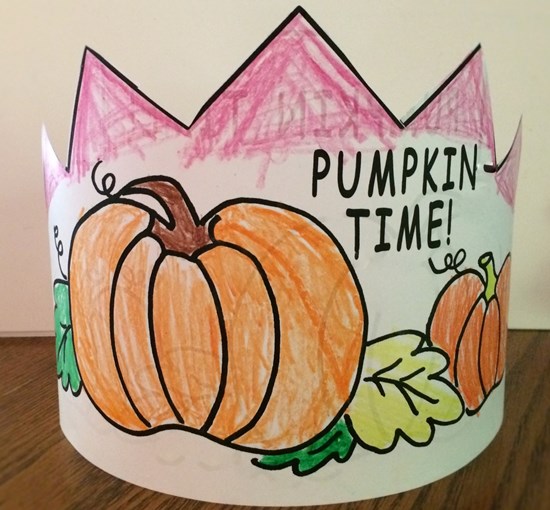
For more seasonal activities get Therapro’s Hats Off and On to Scissors Skills– you get to practice scissor skills and make hats for every season. Below are pictures of a Pumpkin Time Hat.

Also see our seasonal writing readiness workbooks and our Pre-writing curriculum enrichment series!

Please share other ideas and ways you can have sensational fun this fall.
pumpkin2
pumpkin3

Make Your Own Goop: Therapro’s Free Activity of the Month

Therapro’s Sensational Fun activity cards feature over 100 creative, safe sensory experiences—perfect for parents, teachers, and therapists. As a standout, the Make Your Own Goop activity delivers a tactile, proprioceptive, and kinesthetic feast. This goop behaves like a solid when squeezed and flows like a liquid when released, offering quick, easy-to-make fascination and rich sensory stimulation for curious hands.

Materials:

  • 1 cup of cornstarch
  • 1 cup of water
  • Medium plastic bowl
  • Spoons

Directions:

  1. Place one cup of cornstarch into a bowl.
  2. Pour water into the bowl slowly and stir continuously until the cornstarch is fully saturated (you may need more or less water, so add a little water at a time).
  3. The mixture is ready to use once the cornstarch resembles a thick paste and becomes difficult to stir.

CAUTION: DO NOT EAT THE MIXTURE.

Activities:

  1. Give your child a scoop of goop. When he squeezes tight and then opens his hands, it drips out in unexpected ways! Does it feel cool or warm?
  2. Play charades by making shapes or animals with the goop. Can your child guess what you’ve made? Give him hints: draw details in the goop!
  3. Fill a larger container with goop and submerge your child’s feet. What does it feel like? Does it make a sound?
  4. Place the goop on a cookie sheet, have your child spell his name.
  5. Add food coloring and make colorful goop! Mix food coloring and guess what colors you can make.
  6. Make it an olfactory sensation as well- Add a sprinkle of your favorite Fruit Flavored drink mix (Kool-Aid®)

Have fun! Below are some pictures of our Cherry Scented Goop.

Child's hand in goop from Make Your Own Goop activity
Childs hand mixing goop in the Make Your Own Goop activity

Ready to explore even more engaging sensory experiences? Discover all 100+ activities in Therapro’s Sensational Fun cards—each designed to spark curiosity, develop skills, and bring joy to your therapy sessions or home play. Check out the full collection here: Therapro Sensational Fun Activity Cards.