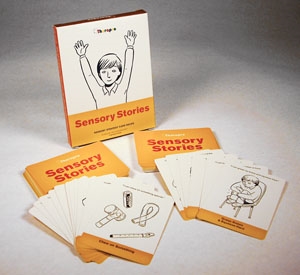
Karen Moore, OTR/L presented a superb seminar on Saturday entitled: A Sensory Perspective on Helping Adolescents and Young Adults Learn to Deal with Difficult Emotions. Working in the area of mental health has been Karen’s passion and career focus. She is a highly respected and renowned therapist in her area of practice. In her seminar, Karen shared information from her most recent publication of The Sensory Connection Program called The Sensory Connection Program: Curriculum for Self-Regulation, which teaches self-regulation skills through the use of sensory strategies and social engagement. It was evident from her creative and heartfelt approach that her clients benefit greatly from her knowledge and experience. Today she focused on the emotionally charged years of middle and high school, when students benefit from learning fun and engaging strategies to help them deal with emotions. She described how to teach adolescents to recognize signs that they are having emotional difficulty, how to teach them to seek help, and how to help them learn to use effective self-regulation skills.
Karen’s discussion of the value of mastering self-regulation made good sense; when an individual is able to cope with emotions, he/she is able to “tune back in” to the self, which in turn results in being back in control and greater self-confidence. She emphasized that without mastery of self-control, it would be difficult for an individual to explore new adventures including higher education, travel, or entering the job market. When applied to adolescents, whose pre-frontal cortex and cerebellum are still developing, the need for learning self-regulation strategies is crucial.

When Karen reviewed the evolution of the stress response, it was easy to see that the vagal level of “freezing” when confronted by a stressor is not a useful response because it results in being overwhelmed by fear. In the next level in the hierarchy she explained how the sympathetic “fight or flight “ response is more effective than the “freeze” response, but has a long recovery time. The optimal response to stress involves appraisal of the situation and communication, which promotes a calm state. She shared research evidence that shows that adolescents who have experienced trauma respond with more primitive responses, have difficulty with communicating verbally, and are more reliant on sensory responses than cognitive strategies for coping. Teaching adolescents self-regulation skills prevents them from resorting to the dangerous lower levels of the hierarchy when responding to stress.
Karen employed some of techniques for calming with her audience today, including several different ways of using deep breathing as a group activity, resulting in a feeling of socialization and engagement. The pneumonic “Pause – Connect – Engage” helps adolescents to “short-circuit” fear by signaling them to stop and think what made him/her upset, make a social connection by reaching out to someone trusted, and then do something positive that helps, which may be tool-based or non tool-based, i.e. squeeze a ball, do deep breathing, exercise, use a fidget, etc. The group tried out several calming strategies, but one called “seaweed” which involved rooting the feet on the floor and swaying gently and slowly with body and arms, was simple and effective immediately.
Karen guided us in learning how to avert a crisis by helping adolescents gain self-control with the use of a variety of sensory strategies that can be personalized. The strategies are highly effective for the teen population, but can be valuable tools for any individual who is in a state of emotional distress.
Here’s what attendees had to say about Karen’s seminar:
“As a pediatric OT at elementary school level, learning about sensory curriculum at adolescent level guides me in treatment. Really enjoyed Karen’s stories/real examples to associate to curriculum.” Jen M., Occupational Therapist
“This topic is relatable to everything I do as a COTA. It ties emotions and sensory input. Every student I work with will benefit!” Beth M., COTA
“Very informative. Wonderfully explained with explanations in brief & practical exercises to experience.” Rajini K., Parent
“I would recommend this seminar to a colleague because of the scientific/physiological information, therapeutic activities, and hands on demonstrations. Very knowledgeable speaker. Excellent examples.” Joann W., Occupational Therapist
“Useful information for sensory techniques to calm/alert children effectively. New concept/less traditional routes for sensory strategies.” Megan Z., OT student
Thank you, Karen!
Filomena Connor, MS, OTR/L