All posts by Guest Blogger

OCALICON 2018: Therapist Highlights & Takeaways

Sometimes OTs only consider conferences aimed at OTs for their CEUs, but there are other (and sometimes cheaper) ways to get your CEUS, and learn something new and different at the same time. In November 2018 we were invited to participate in OCALICON, the annual conference in Columbus OH, sponsored by OCALI (Ohio Center for Autism & Low Incidence).  OCALI is a wonderful organization whose mission is to inspire change and promote access to opportunities for people with disabilities.  OCALICON is directed towards parents, physicians, educators, therapists, administrators and other professionals working with children and young adults with disabilities especially autism.  The conference is a dynamic and inspiring milieu that attracts attendees from all over the United States and even the world. 

We had the pleasure of meeting this year’s keynote speaker- Christopher Gillberg, MD, PhD of the Gillberg Neuropsychiatry Centre at the Sahlgrenska Academy.  Dr. Gillburg holds professorships at universities and hospitals in Sweden, Japan, the United Kingdom and Paris.  His keynote speech was highly compelling.   
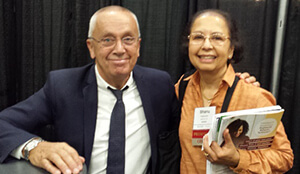
Dr. Gillberg’s address was titled AUTISM AND ESSENCE, NEURODIVERSITY AND AUTISM: THE ESSENCE OF ESSENCE.  ESSENCE is an acronym coined by Dr. Gillberg that stands for Early Symptomatic Syndromes Eliciting Neurodevelopmental Clinical Examination.  The ESSENCE diagnoses include the ADHDs, Language Impairment Disorder, Developmental Coordination Disorder, Intellectual Disability, Autism/ASD, Tic Disorders/OCD, Selective Mutism and Reactive Attachment Disorder. Dr. Gillberg maintains that autism always coexists with one or more of the ESSENSE conditions.  His major point is that pediatric practitioners should screen for these comorbidities early on or they may be missed.  Dr. Gillberg asserted that correct diagnosis followed with early intervention leads to success.  Lack of intervention results in negative outcomes including academic failure, social exclusion, substance use, psychiatric disorders, empathy problems, antisocial lifestyle and criminality later in life.
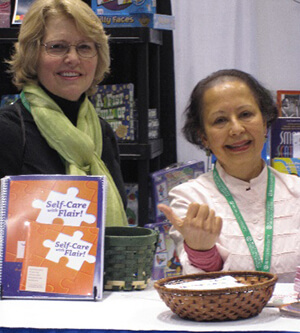
We were pleased to have 150+ people attend our presentation on Self-Care
with Flair!
Our audience consisted of educators, parents, social workers and OT/PT/SLP.  The session was well received. We especially appreciated the parents who shared their children’s self-care challenges & successes with the group.

One of our favorite sessions was called Strategy Smackdown.  This was a total audience participation session, where attendees shared their favorite resources/strategies/evidence. A summary was shared with all participants. OCALICON was a marvelously inclusive, collaborative experience that school-based practitioners could consider for CEUs from a different than the usual perspective.


Guest Blogger: Bhanu Raghavan, MS, OTR/L

Bhanu Raghavan

A graduate of Indiana University and The Ohio State University, Bhanu has over 25 years of experience in pediatrics. She is certified in pediatric NDT and the READY Approach (Bonnie Hanschu) for Sensory Integration Disorders. Frequently, she presents workshops on topics related to self-care independence, sensory processing disorders and fine motor/handwriting skill development to therapists, teachers and parents/caregivers. She works at Centerville City schools, OH. She is a firm believer of the following Confucian principle: “I hear and I forget, I see and I remember, I do and I understand.”

Guest Blogger: Ginger McDonald, OTR/L
Ginger McDonald one of the Therapists who presented at OCALICON 2018

A graduate of the University of Wisconsin, Ginger has practiced Occupational Therapy for over 30 years. She is certified in SCSIT. With an eclectic background of working in hospitals, schools and geriatric settings, Ginger believes in promoting self-care independence at all levels. While working with Bhanu in the Centerville City Schools, they conceived the idea for Self-Care with Flair!
Tips to Help Special Needs Kids Tolerate Grooming and Hygiene

Occupational therapists are the “ADL specialists” on a treatment team. Building independence in self-care isn’t always the problem we are addressing.  For younger kids or multiply challenged children of any age, simply tolerating experiences like nail cutting, haircuts and face washing can be the hardest part of the day. Helping children and their families to make grooming and hygiene less of an issue can improve children’s sense of safety and control.  It can even build the relationship between caregivers and children.

When evaluating a child’s aversion to ADL’s, look to the comprehensive OT evaluation.  While the Sensory Profile or the SPM will highlight specific challenges in oral or tactile domains, looking at a child’s level of motor, visual-perceptual and behavioral functioning provides a more complete picture of the child.  Postural issues, issues with endurance, attention, or identifying unique behavioral/emotional expression of frustration will suggest potential treatment pathways or complications.

Prior to Grooming And Hygiene Activities:

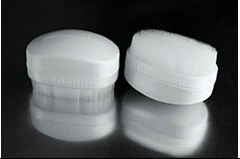
Directly address sensory-based issues in a comprehensive manner.  Use of the Wilbarger Protocol, creation of a sensory diet and selecting tools to desensitize aversive response can support even the most agitated child. Brief activity on a Therapy Ball can increase postural activation while modulating arousal prior to ADL’s. Other children benefit from other oral/facial input before tooth brushing or having their face washed.

Wilbarger Therapressure Brush

During ADL’s:

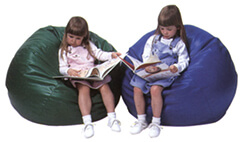
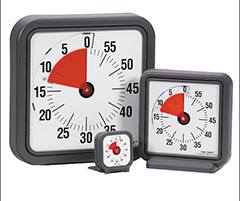
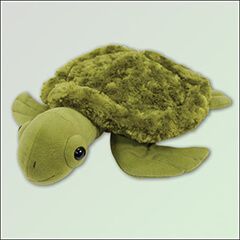
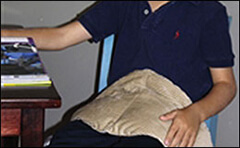
The use of sensory and behavioral activities can help increase and lengthen tolerance.  Some children benefit from sitting in a Beanbag Chair during grooming to provide calming input and postural stabilization.  A visual timer supports a child to understand that the activity will end and provides an objective measurement.  This could reduce the child’s use of whining or aggression directed at the caregiver.   A Weighted Lap Pad can be helpful calming input to an agitated child.  Children with sensory seeking as well as sensory sensitivity often prefer a weighted object with texture.

Bean Bag Chair
Bean Bag Chair

Time Timer
Time Timer

Weighted Turtle
Weighted Turtle

Sit Tight Weighted Lap Pad

When the ADL Task is Completed:

Aversive responses can continue long after a child demonstrates minimal or no observable aversive response in a treatment session. Why?  Because children are more than a stimulus-response cycle. They develop a sense of anticipatory anxiety and have habitual reactions that can be triggered even without sensory input.

Replacing old behaviors with more functional new habits may require slowly adapting ADL routines to decouple sequences that elicit aversion.  An example of this would be allowing a child who is agitated during feeding to briefly play with washable items after a meal but before cleaning his hands.  Any residual agitation from distressing feeding experiences could dissipate partially or totally before the caregiver uses deep pressure input to wipe the child’s hands.

Supporting children for ADL tolerance and eventual independence requires us to use our task analysis and evaluation skills in creative and complex ways.  Building tolerance and independence is our initial goal, but successfully navigating daily ADL experiences will have wide-ranging effects. Improving grooming and hygiene experiences helps families feel calmer around ADL’s in general, improves communication, and deepens trust between caregivers and children.


Guest Blogger: Cathy Collyer, OTR, LMT, PLLC

Cathy Collyer, OTR, LMT has treated children with neurological, orthopedic and sensory processing disorders for over 20 years. She is the author of The Practical Guide To Toilet Training Your Child With Low Muscle Tone. Learn more about her work at tranquilbabies.com.

Brain Gym: Using the Figure Eight in OT

I came across Educational Kinesiology in the early 1990s when searching for tools or techniques to help heal from a chronic illness. Little did I know that it would become an integral part of much of my OT practice. I began with Brain Gym I and II and loved the fact that the two trainers in South Africa were experienced occupational therapists trained in both SI and NDT.

Brain Gym is wonderful for assisting with goal setting, whole brain learning, stress release, and re-patterning. Although there is a specific process to follow, many of the exercises are both beneficial and transferable into a regular OT session. One that I use a lot is the Lazy 8 – a figure eight that lies on its side like the infinity sign.

What is the Brain Gym figure eight used for?

In Brain Gym terms, the Lazy 8 turns on or activates the eyes while also crossing the mid-line.

It can be used to improve ocular motor function, which assists with reading, and crossing the mid-line improves integration between the two hemispheres of the brain.

The repeated action of the Lazy 8 is also very calming. It can be used in several different formats – using the eyes, drawing the figure of 8 in the appropriate orientation, and in motion, as we shall see shortly.

The Lazy 8 can also be carried out as a motor activity, having the client walk, skip, or run around a figure eight. I love to use two hoops placed side by side on the floor to provide a visual cue. Varying the space between the hoops elongates or enlarges the figure eight. Make it more fun by having the client clap while moving around the figure of eight in time to music.

For added motor integration, combine the cross crawl with the Lazy 8. This often has to be carried out in stages:

  • Having the client carry out their cross crawl while standing until they are sufficiently at ease with the exercise
  • Upgrade to carrying out the cross crawl while walking on a straight line
  • Upgrade further to doing cross crawls while walking a figure eight

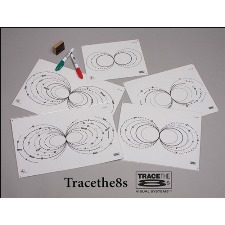
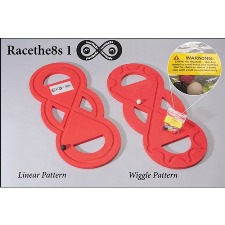
When I first began using components of Brain Gym in my treatment sessions, I would often make up my own worksheets. I am delighted to discover that Therapro has a range of products that bring the figure eight into practice for all occupational therapists. Two examples include:

The development of these tools shows how Brain Gym is becoming accepted as a beneficial modality to use within OT. It also provides an added level of professionalism, which is important for anyone who is skeptical of either how Brain Gym combines with OT or the extent to which OT itself is a recognized profession.

Once clients are familiar with the Lazy 8 through either Trace the 8s or Race the 8s, introducing the Alphabet 8 helps improve their motor memory. The Alphabet 8 incorporates lower-case letters with the Lazy 8 and is wonderful as a pre-writing activity to enhance work to meet writing goals. It’s designed for English letters but, with some creativity and practice, cursive letters for Hebrew can also be used. Note, I am not sufficiently familiar with other alphabets to know how well they can be used in the Alphabet 8.

I mentioned earlier the benefit of improving a sense of calm. The rhythmic movement of drawing or moving in the Brain Gym figure eight pattern is a wonderful addition to your toolbox for assisting clients in need of stress management and improving relaxation.


Guest Blogger: Shoshanah Shear

Occupational Therapist, healing facilitator, certified infant massage instructor, freelance writer, author of “Healing Your Life Through Activity – An Occupational Therapist’s Story” and co-author of “Tuvia Finds His Freedom”.