Category Archives: Fine Motor & Hand Skill Development

Explore tools, games, and activities that support fine motor skill development including grasp, dexterity, hand strength, and coordination essential for functional tasks.

Dyspraxia Tips: Teaching & Treating Coordination Challenges

Dyspraxia is one type of sensory processing disorder (SPD) that makes it difficult for children to plan and perform motor tasks such as stringing beads or riding a bicycle. Children with dyspraxia may

  • Appear clumsy
  • easily break things because they use too much force or
  • struggle to fit their arms into sleeves or sequence steps to shoe tying

Children with SPD often have more than one of the 6 subtypes that impact how their brains interpret and respond to what they see, hear, feel, smell, taste and how they move. They may seem extra active or lethargic, super sensitive or oblivious, have difficulty controlling their body while using their hands or can’t discriminate what part of their body was touched or is in pain.  Let’s take a look at a few strategies that may help children with dyspraxia and other types of SPD as well as children who are typically developing.

Simplify for Success

Nobody likes failure; especially young children who have poor coordination to stack rings, string beads or lace boards.  Consider purchasing, making or adapting these types of activities to make success easy and frequent. Try using

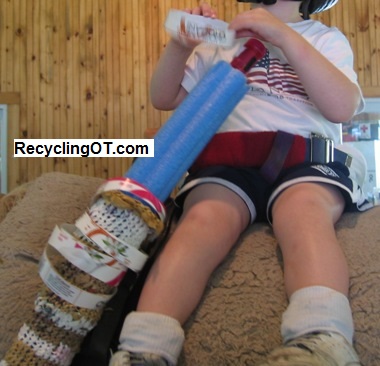
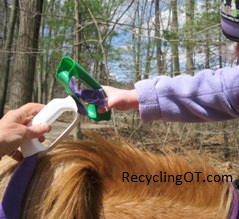
  • an extra large tube as a ring stack and rings to stack. The one shown in the photo is made by wedging a swimming noodle into a juice container and has a motorized pen inserted on top to make it vibrate.  Vibration helps children to focus on what their hands are doing.
  • thick cord and shower curtain rings for stringing instead of offering string and beads. Many toddlers will find this an easier introduction to stringing.
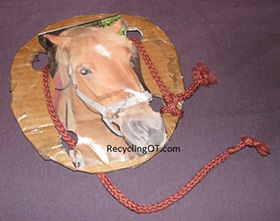
  • lacing boards with a few extra big  holes and thick cord. I attached the photo of a horse to this lacing board that I used with clients during Hippotherapy (therapy using a horse as a therapeutic tool).
 

Practice Makes Perfect

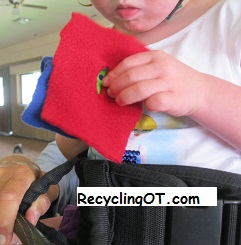
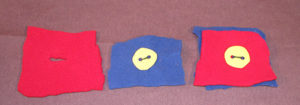
Design activities to require repetition. When a child closes a jacket there is usually only one zipper to connect or a few buttons. Many children benefit from the repetition of closing several button squares. As I describe in my book From Rattles to Writing: A Parent’s Guide to Hand Skills, these are made by sewing a large button or round plastic piece (see photo) to fabric. Then cut a slit into another piece.  As your child develops skill, offer button squares with smaller buttons.

Button Squares teaching activity for treating dyspraxia

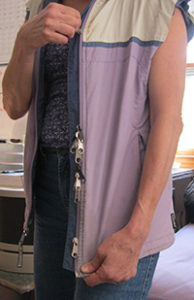
Zippers teaching activity for treating dyspraxia

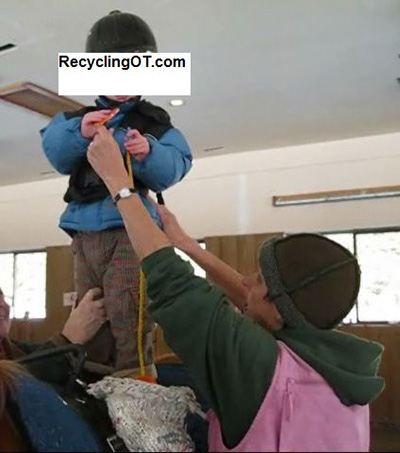
Many children are able to close a zipper once the slider is connected.  But connecting the slider onto the zipper is very tricky. In the photograph you see me wearing an old jacket and attaching several zipper sliders.  The sliders are sold in zipper repair kits or you can remove nice big ones from broken backpacks and suitcases. I have taught adults with developmental disabilities to zip their own jackets after practicing connecting and pulling up several slider every day.

Let’s Take Apart

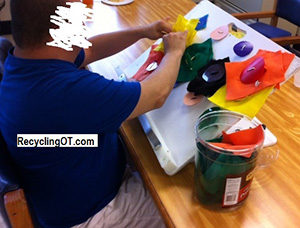
Button Board teaching activity for treating dyspraxia

Opening buttons, screw caps, zippers and knots seems to be a lot easier than closing them.  One of the strategies I describe in my book From Flapping to Function: A Parent’s Guide to Autism and Hand Skills is to teach children to “ take- apart” before teaching them to “put-together”. In this way they will become familiar and successful with the materials before learning the more challenging motor skills of tying, buttoning, snapping, screwing lids etc. It is much easier to remove the fabric pieces from the “buttoning board” shown below and children will have many opportunities to practice. This board was made by drilling holes into a book stand and tying the “buttons” onto cord that is knotted through the holes.

Manipulation Box teaching activity for treating dyspraxia

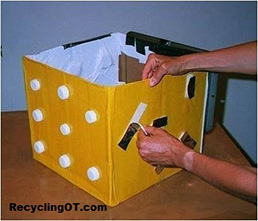
In my book The Recycling Occupational Therapist I describe how to make activities that are perfect for opening and taking apart. The Manipulation Box shown in the photograph has screw covers, Velcro strips, pull lids, and magnets attached to a cookie sheet so that children can remove a variety of objects to drop inside.

Keeping It Fun

Yes, practice is important but we need variation and to add sensory stimulation to keep it fun. That’s why I love

  • form boards and ring stacks that make music
  • adding a motorized pen inside containers to make insertion tasks vibrate
  • using materials such as Velcro and elastic cord that feel good to pull
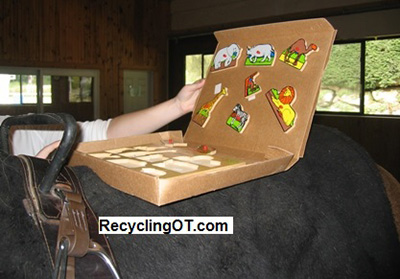
  • toy animals with clothing fasteners to manipulate
  • using pretend play toys such as “Feed the Bunny”
Bunny Insertion Task teaching activity for treating dyspraxia

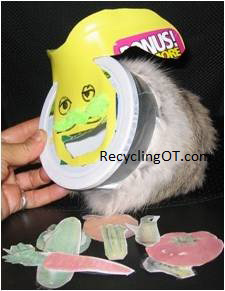
I covered an oatmeal container with fur, attached a face to the lid and photocopied some food items. Now “Feed the Bunny” is more than a plain old shape sorter. This great for working on choice making (i.e. shall we feed bunny a carrot or tomato?), identifying pictures, counting and of course promoting a healthy diet.  I hope that you have fun implementing some of these strategies!

Here are some great Therapro products I recommend that you might use in addition to the activities I’ve discussed:

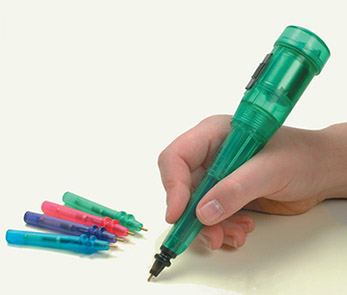
Squiggle Wiggle Writer Pen
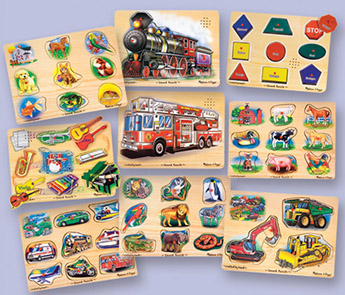
Sound Puzzles
Sound Puzzles
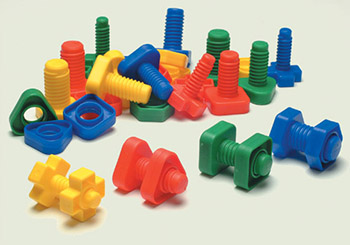
Giant Plastic Nuts and Bolts
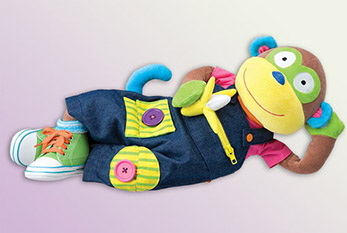
Learn to Dress Monkey


Guest Blogger: Barbara A. Smith.

Barbara A. Smith has worked with children and adults with developmental disabilities for over 40 years! She is the author of the Recycling Occupational Therapist, From Rattles to Writing: A Parent’s Guide to Hand Skills and From Flapping to Function: A Parent’s Guide to Autism and Hand Skills. Learn more about her work at RecyclingOT.com.

Analyzing Activities for Improving Student Hand Function

Marcia Bridgeman presenting on hand development stages at Therapro seminar.Not even an anticipated nor’easter kept 30 hardy New Englanders from attending last Saturday’s seminar at Therapro, Analyzing Activities for Improving Student Hand Function! Marcia Bridgeman, MHA, OTR/L presented an interesting, well paced seminar that engaged her audience fully as she seamlessly mapped hand development from birth to elementary school age, linking the development of hands to functional skills.

Marcia is the author of the newly revised Fine Motor Olympics (2016) that includes a Manual and 64 beautiful color photo cards of children’s hands performing fine motor tasks with instructions on the reverse side of the cards. A Guide to Hand Function, Quick Screening Form, Fine Motor Observation Checklist, Record Form, and In-Service Training Program are included in the Manual. She currently has a private practice through which she provides consultation and direct service to several Massachusetts school systems.

Interspersed within a comprehensive review of motor development and hand function from newborn to age 6, Marcia discussed functional fine motor activities expected at the corresponding developmental stages. For example, around the age of 7 months, many essential new fine motor skills are emerging including finger isolation, open web space, opposition, and thumb isolation.  She matched simple activities to this developmental level, such as tearing paper, turning knobs on an Etch-a-Sketch, and spinning a top, to name a few!

Fine Motor Olympics kit with manual and photo cards for hand function activities.Seminar attendees thoroughly enjoyed breaking into groups and trying out 8 original fine motor activities that Marcia created that are not included in the 64 activity cards included in Fine Motor Olympics.  The activities included activities like creating a spider web in a plastic basket and moving the spider in the web, using a variety of tongs to hunt tiny dinosaurs, balancing marbles on golf tees, and threading straws into toilet paper cardboard rolls punched with holes. The groups engaged in activity analysis and shared their comments with the rest of the group.  Attendees took away new, inexpensive ideas to engage the entire classroom and facilitate development of hand musculature and arches of the hand for optimal function. In addition to the new activities Marcia introduced today, she highlighted a number of fine motor Therapro products she loved, including Froggy Feeding Fun, Wind Up Walking Robots, Boinks, Tall Stacker Pegboard Set, Get A Grip Pegboard, and Magnetic Marbles.  She discussed conventional uses for the materials and also adapted the materials creatively and adeptly to help develop muscles of the hand. Some activities incorporated use of intrinsic muscles in translation activities, for example: moving a small single object fingers to the palm (1.5 – 2 years) and from palm to fingers (2.0 – 2.4).

We couldn’t think of a more fun way of spending a snowy Saturday morning than analyzing both innovative and familiar fine motor activities, and sharing thoughts on how to help develop better hand function in the classroom setting in a fun way.

Take a look at the glowing comments Marcia’s seminar generated:

“Great combination of visuals, interactive experiences & developmental stages. Great workshop for OT rookies or vets!” Karen D., Occupational Therapist

“As a teacher, I’m certainly not an expert on OT issues students may be experiencing. This seminar helped to raise my awareness and sensitivity to these issues. Great suggestions for how I can help these students in easy, quick, fun ways.”  Maura M., Teacher

“This seminar revisited & reviewed a lot of what I learned in school (great refresher) however I’ve had colleagues who did not have pediatric courses regarding this!”  Kelly V., Occupational Therapist

“Very informative; great to be interactive & experience/explore activities!”  Caitlyn D. COTA

“Such meaty well organized info on hand development, screening, and activities to help hand function.”  Alice T., Occupational Therapist

Thank you, Marcia!

Filomena Connor, MS, OTR/L

Marble Painting: Therapro’s Free Activity of the Month

Marble painting combines abstract art and bilateral coordination—a winning combination!  Bilateral coordination refers to the action of using the right and left sides of your body together in a smooth and efficient manner. Babies develop bilateral coordination first by stabilizing an object such as a pail while filling it with sand (From Rattles to Writing: A Parent’s Guide to Hand Skills by Barbara A. Smith, MS, OTR/L).  When someone has difficulty with bilateral coordination, they can have difficulty with daily tasks. Think of everything you do using both sides of your body together; Dressing, tying shoes, buttoning, drawing, writing, catching and throwing, even crawling and walking.  Therapro’s free marble painting activity challenges participants to guide marbles across the page, building bilateral coordination, fine motor control, and sensory integration through vibrant, hands-on play.  See below for all the steps.

You will need:

  1. Finger-paints
  2. Paper
  3. Marbles
  4. Cardboard Box top, Large Shoe Box, or back of frame.

Process

  1. Tape the paper to the inside of the box, or frame.
    Free Marble Painting Activity- Step 1
  2. Place a dollop of paint on either side of the paper. I used 4 colors.
    Free Marble Painting Activity- Step 2
  3. Place a marble on each dollop of paint.
    Step 3
  4. Using both hand hold the box and move the marbles over the paper.
    Step 4
  5. Continue to move the marbles until the paper is covered with paint or you are satisfied with the design.
    step 5
  6. Remove paper and set aside to dry.
    Free Marble Painting Activity- Step 6
  7. Start all over again- See how many marbles you can use.

Other Ideas

  1. This is a great activity for anyone who does not like to get messy, as they really don’t have to finger paint. They are just moving marbles around in a box.
  2. Have 2 children do the activity, each child holds one side of the box.
  3. Use different-sized marbles.
  4. Use more or fewer colors.
  5. Change the placement of the paint.

Example of the Free Marble Painting Activity

Example 2 Free Marble Painting Activity
Send us a picture of your Marble Painting, or post it on Facebook, Pinterest or Twitter with the hashtag #Therapro

Ready to elevate hand skills and bilateral coordination even further? Explore Therapro’s Fine Motor & Hand Skill Development page for a comprehensive collection of tools, activities, and resources designed to support therapy goals and empower learners of all ages. Discover more at Therapro Fine Motor & Hand Skill Development.

Guest Blogger: Diana V. Mendez-Hohmann