Susan Little, OTR/L provided a fabulous seminar as part of Therapro’s Saturday Seminar Series on November 10th entitled: Handwriting Without Tears: Strategies for Success. She gave attendees a close look at a developmentally based curriculum for students from Pre-K through 5th grade and beyond, that uses a multisensory, fun approach to teaching skills for both printing and cursive. It includes three programs: Pre-K Early Learning, Handwriting Without Tears, and Keyboarding Without Tears (digital program). The program keeps expanding with additional products and trainings. The Pre-K program and elementary grade level programs include workbooks, journals, and Teacher’s Guides. Multisensory materials offer kinesthetic learning experiences for printing and cursive letter formation.
Susan is an experienced occupational therapist who has provided services to children aged birth through 21 years old in a variety of settings including school systems, early intervention, inpatient/outpatient rehabilitation, and neonatal intensive care units. As a certified handwriting specialist, she has worked extensively with children on penmanship instruction and remediation. She was first introduced to Handwriting Without Tears (HWT) as an OT student and found it to be a unique and targeted approach that meets the diverse learning styles of all students. Susan began working for Learning Without Tears in 2003 and now serves as Channel Sales Manager for the company. Her passion for educating others on the benefits of using the Learning Without Tears programs was evident in her presentation today.
The handwriting process was described in sequential stages beginning with pre-writing and finally handwriting. Susan identified the stages as follows: controlled scribbles; discrete lines, dots, or symbols; straight-line or circular letters; uppercase letters; lowercase letters. She focused primarily on early stages of handwriting, but also touched on the development of cursive and keyboarding skills using multi-sensory learning experiences.
The Print Tool is a comprehensive evaluation for students from kindergarten through grade 5 that includes student and school information, a review of school papers, and careful observation of the child’s physical approach and fine motor skills. Administered individually, the Print Tool evaluates uppercase letters, numbers, lowercase letters, and seven specific handwriting components: memory, orientation, placement, size, start, sequence, and word spacing.
A preschool student who is exposed to the Pre-K Learning program learns the readiness skills for handwriting (includes both letters and numbers). It consists of three components: 1.) Language and Literacy; 2.) Readiness and Writing; and 3). Numbers and Math. Susan identified some common struggles that occur at this level such as letter and number memory difficulties that might manifest themselves as omitting a letter, interchanging upper and lower case letters, or spelling phonetically. Another struggle a child at this early level may exhibit are letter and number formation problems including letter reversals, spacing, and sizing issues. Pencil grip is another area she discussed that may require simple modifications of posture or paper placement to build success. A fun fact Susan offered is that 50% of all 3 year olds have the ability to grasp a crayon correctly. LWT uses this fact by utilizing very small tools like pieces of chalk or Flip Crayons to facilitate development of the intrinsic muscles of the hands. Susan demonstrated a number of strategies and sequential activities to engage students as they transition to letter formation. The use of songs can help develop the motor plan for pencil/crayon use. Here’s an example:
Pencil Song
Pick up a pencil, Pick up a pencil
This is easy to do
Pick up a pencil, Pick up a Pencil,
I just tell my fingers what to do
My thumb is bent,
Pointer points to the tip, Tall man uses his side
I tuck my last two fingers in
And take them for a ride.
Now I’m holding it just right,
But not too tight,
Every finger knows what to do
And now I have a big surprise,
A big surprise for you
Let’s drop it and do it again!
Susan demonstrated a number of products that can be used in a variety of creative ways, including Capital Letter Kit to form letters in the correct order and position through teacher-directed play. It includes wood pieces and laminated cards that show the image of a letter on one side and activities on the flip side to help teach letter awareness and same/different discrimination. Roll-A-Dough Letters is a great companion to the HWT curriculum because it includes a multi-sensory tray that can be used to make letters in sand or shaving cream. Laminated letter and number cards and 12 oz. of modeling dough are included. The child learns the skills of size discrimination and visual integration. The Stamp and See Screen is a magnetic screen in a sturdy plastic frame. It includes 4 plastic magnetic letters to allow a child to stamp upper case letters. A tool that resembles chalk is used to trace or write letters. It can be used over and over because the slide eraser clears the board in one sweep. Blackboard with Double Lines helps teach placement on lines and spacing for uppercase and lowercase letters, and numbers. With repetition, a motor plan develops.
Handwriting Without Tears aims to maximize writing success for all students! This resource is fun and engages students as soon as it is introduced by providing the building blocks that are essential for handwriting in sequential steps. It is a rich program that takes into consideration the many components of learning handwriting skills throughout the school years and uses creative, engaging sensory activities.
Attendees had rave reviews about Susan’s seminar:
“As an OT student, I walked in with a limited knowledge of the topic.
Walking out, I feel much more comfortable teaching handwriting skills
and I am confident in the additional resources that were presented to
me.” – Elizabeth W., OT Grad Student
“After 40 years of practicing OT, I wanted to be aware of other options I will try.” – Anonymous, Occupational Therapist
“I would recommend this seminar to a colleague because it provides the
participant with the importance of the development of underlying
components. Handwriting Without Tears is fun and brings back the joy of
learning. It allows children to marinate in the learning process!” – Tara G., Occupational Therapist
“Lots of valuable information. Easy for students and teachers.” – Jenna R., Teacher
“I am an OTS and I believe this should be a required seminar. It was very
informative and I feel as if I have a great resource to go to once I am
an OTR.” – Tabitha C., OT Grad Student
Thank you, Susan!
Filomena Connor, MS, OTR/L
November 10, 2018
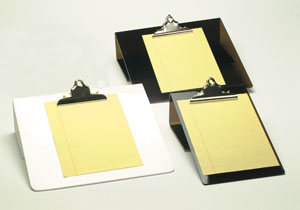 Here at Therapro we have a BIG focus on handwriting – from