Category Archives: Therapist Resources

Comprehensive resources, strategies, and tools designed to support therapists in delivering effective care and ongoing professional growth.

Discover Therapro’s Handy Guides

Searching for the perfect tools, games, or evaluations for your clients can be time-consuming and overwhelming. Therapro’s Handy Guides can help streamline the selection process. The Guides help with making informed decisions. At a glance, you can see color representations of products. These guides are user-friendly, concise, and best of all, they’re absolutely FREE! The Handy Guides cover the following categories:

Handy Guides for Fine Motor:

Therapro's Which Writing Tool or Accessory Handy Guide

Which Writing Tool or Accessory: This Guide helps you choose the right tool for your client’s needs, whether it’s for comfort, positioning, or sensory input. For example, a Spike Tactile Pencil Topper or SPIKE Tactile Pencil Gripper may be the right choice if your client would benefit from added sensory input when writing to alert and focus on the task.

Get a Grip on Grips: Explore a variety of writing utensil grips designed for comfort, finger positioning, and sensory needs. To facilitate a tripod grasp, the Start Right Pencil Grip may fit the needs of your client.

Get a Grip on Grips handy Guide

Handy Guides for Sensory:

Therapro's Find Your Fidget Handy Guide

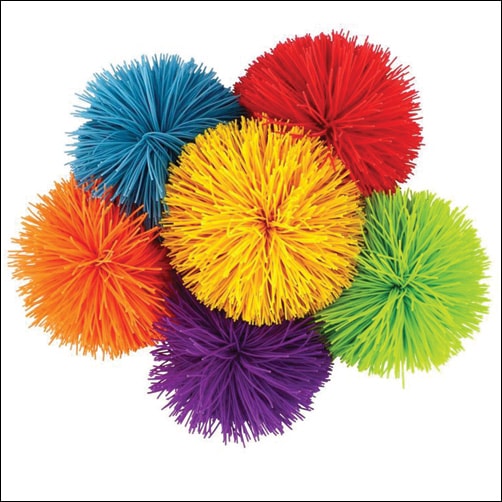
Find Your Fidget: Discover fidgets for calming & organizing or alerting, including popular choices like Squeezies and Theraputty that offer resistance to help with focus and attention.

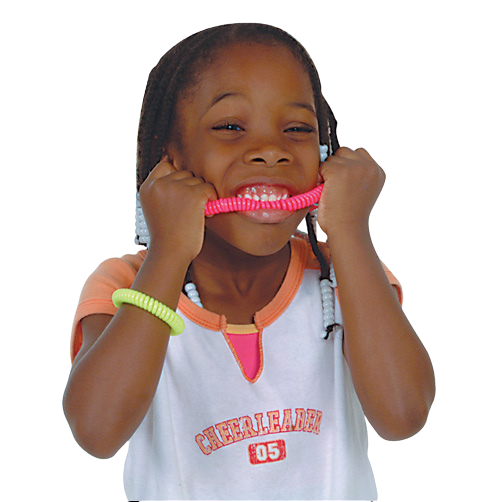
Choose Your Chew: Select the perfect chew for your client’s needs, categorized by age and chew strength. Chews are organized into Chews for Babies and Toddlers; and Chews in 3 chew levels (Light for mild sensory seekers, Medium for chewers who need more sensory input, and Firm for those who are strong chewers who need maximal sensory input). The benefits of selecting the appropriate chew is essential. Selecting a Firm Chew that a client can bite and chew safely is easy with choices such as the Krypto-Bite pencil topper or a Tube Zillas on a Tether.

Therapro's Free Choose Your Chew Handy Guide
Tools for the Body Handy Guide with link to download

Tap into Tools for the Body: Explore tools designed to provide calming and organizing sensory input that have resistive features to increase proprioception and sensory input. Bouncy Bands for Chairs provide foot resistance when a student is seated in a classroom chair. Selecting tools to enhance attention and focus include materials with a vibratory component such as Senseez Touchable Vibrating Pillows or tools that challenge balance such as the Seesaw Sensory Integration Balance Board by Bouncyband®.

A Handy Guides for Adaptations:

What Can You Adapt Handy Guide

What Can You Adapt: Learn how to enhance upper extremity activities with the versatile EazyHold universal cuff. This Guide demonstrates its versatility for use in many home, school, and community scenarios. It can be used in a variety of activities including brushing teeth, holding utensils, and using art materials.

A Handy Guide for Evaluations:

Handy Evaluation Chart: A helpful reference for deciding how best to assess your client’s needs. This Guide organizes evaluations offered by Therapro into comprehensive subcategories with age-appropriate designations. 

Therapro's Handy Evaluation Guide

These Handy Guides are designed to simplify your decision-making process and enhance the quality of care you provide. Each Handy Guide is packed with valuable information and practical recommendations to support your work as a therapist.

Explore them today and discover how Therapro can support you in your journey!

Guest Blogger: Filomena Connor, MSOT-Retired

Meet Therapro’s Occupational Therapy Authors & Creators

Therapro is celebrating its occupational therapy authors and creators during Occupational Therapy Month. Read on to learn more about these great occupational therapists and their creations!

Letter Treasure Hunt

Jenny L. Clark, OTR/L, BCP is the creator of the “Learn to Move” curriculum and Therapro’s Letter Treasure Hunt. Jenny has helped children over the past 25 years as a licensed pediatric occupational therapist working as a speaker, consultant, private practitioner at her own clinic (Jenny’s Kids, Inc.), school-based occupational therapist, independent contractor for early intervention services, author, and inventor. Jenny’s creation, Letter Treasure Hunt, is a fun and engaging game that targets handwriting skills while weaving in fun gross motor activities.

The functionalhand

Linda Merry, OTR is the co-creator of the functionalhand. She has many years’ experience and extensive knowledge working with children and adults who have disabilities and teaching on a variety of topics. She is a senior therapists at Easter Seals DuPage & the Fox Valley Region in Villa Park, IL and co-owner of Thera-Solutions which designs programs, coaches’ professionals and develops products for therapists, educators and caregivers. Her creation, the functionalhand is an innovative tool to assist with grasping objects for everyday fun and function!

LegiLiner

Polly Benson OTR/L is the creator of LegiLiners, “the patent pending, cool little tool to quickly draw handwriting lines”. Polly is a school based occupational therapists with many years experience working with students of all ages. The idea for LegiLiners grew from her love for helping students with functional handwriting. LegiLiners are available in in a variety of styles to help learners of all ages.

 Rattles to Writing: A Parent's Guide to Hand Skills

Barbara Smith, MS, OTR/L is the author of From Rattles to Writing: A Parent’s Guide to Hand Skills. Barbara has been  an occupational therapist for over 40 years working primarily with children and adults with developmental disabilities.  Barbara’s book From Rattles to Writing: A Parent’s Guide to Hand Skills is a groundbreaking guide that describes the songs, games, toys, activities, and adaptations that help children develop the visual-perceptual skills needed to read and the eye-hand coordination to write.

Fine Motor Skills in the Classroom

Jayne Berry, OTR/L is the author of Fine Motor Skills in the Classroom and creator of the Therapro Hand Tool Kit. Jane was a pediatric therapist who worked extensively with preschoolers and school aged children. The Therapro Hand Tool Kit contains all your “hand tools” in a convenient kit! Fine Motor Skills in the Classroom  is a hand skills program developed as a tool to facilitate consultation in the classroom.

Trunks

Diane Long, EdD, MOTR/L is the creator of the game Trunks. Dr. Diane Long is an associate professor and serves as the Chair of Occupational Therapy at Ithaca College.  Trunks is an innovative game that targets working memory; players move their bodies, make sounds and perform actions from memory!

 Is it Sensory or is it Behavior? 2nd Edition

Carolyn Murray-Slutsky, MS OTR, C/NDT, FAOTA has co-authored many publications including: Is it Sensory or is it Behavior? 2nd Edition (2022), Autism Interventions: Exploring the Spectrum of Autism, Developing Visual Motor Integration, and the Sensory Modulation Laminated Card Series. Carolyn is certified in sensory integration (SI) and neurodevelopmental treatment (NDT) for pediatrics, infants, and adults and director of Rehabilitation for Children, Inc, a pediatric private practice.  Her latest publication, Is it Sensory or is it Behavior? 2nd Edition (2022)  answers many questions about the relationship between sensory and behavior.

Fine Motor Olympics

Marcia Bridgeman, MHA, OTR/L is the author of Fine Motor Olympics. Marcia has been a pediatric occupational therapist since 1977, specializing in school based services for students from preschool through 22. Fine Motor Olympics is a program designed for an occupational therapist to provide inclusive and consultative services to teachers, volunteers, parents, and staff.

hand holding a pen and writing

Good Handwriting Starts At The Core!

What do the muscles of the core have to do with good handwriting? The simple answer is, a lot! The five main muscles of the core are the pyramidalis, rectus abdominus, external obliques, internal obliques, and transversus abdominis. These muscles are important for many day to day activities; for a deeper dive into this topic check out the free, recorded webinar Postural Control as a Base of Support for Upper Extremity Participation presented by Celine Rosati Skertich and Linda Merry. When it comes to handwriting, the core muscles are key to providing the stability from which our hands can work from. Without the stability provided by the core muscles, the arms would have difficulty positioning the hands and the hands would have difficulty holding writing utensils steadily. In order to make handwriting successful, it is important build a strong foundation from which students can work from! In this blog we will explore fun ways to develop and strengthen core musculature.

Alternative Seating

black kore wobble stool

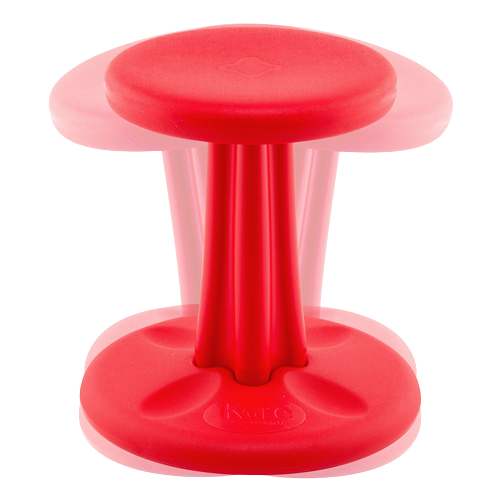
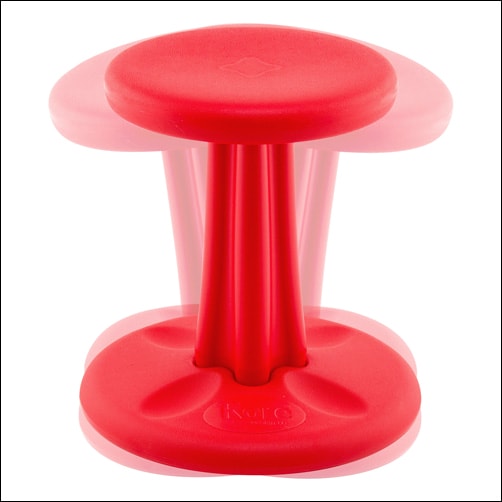
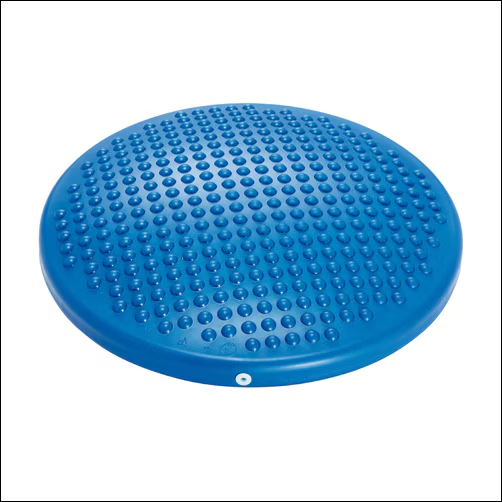
Adding dynamic movement to seated tasks, is a great way to build core muscle strength. There are a multitude of alternative seating options that allow for dynamic movement while sitting. Examples include, The AlertSeat, Kore Wobble Chairs, and therapy balls. For more information on this check out the blog post, Flexible Seating Options in The Classroom & Home Learning Environments. It is important to remember that using alternative seating to strengthening core muscles should be done during fun, non demanding activities such as watching a movie or playing an easy table game.

Scooter Board Fun

Scooter Board

Scooter board activities are fun and engaging; depending on positioning, scooter board games can be a great way to strengthen either the front or the back core muscles.

Scooter board activities done while positioned on the stomach (‘superman position’; think belly down, arms and legs lifted and extended) are great for strengthening the extensor muscles. For a fun game try scooter board- bean bag tag. To play, players lay belly down on the scooter board with a set of beanbags on the scooter board directly under their chest (this encourages the extensor positioning). The goal of the game is to drop beanbags on opposing players’ backs. To do this they would use their arms to push their scooter to their opponent and then drop the beanbag on their opponent’s back.

Scooter board activities done while positioned on the back in the ‘tucked position’ (think knees in toward the chest, arms flexed, and head lifted) are a great way to target the flexor muscles. Scooter board monster stomp is a great example. To play, tape pictures of monsters (or anything of interest) to the wall, at a low level, 1-2 feet from the floor. The player lays on their back on the scooter board and assumes the ‘tucked’ position. The player’s teammate (or therapist) gently pushes the player to the first monster (a small push on the shoulders will usually do the trick!). The player’s job is to stomp the monster with his feet with enough force to propel him back to his teammate who will direct him to the next monster. Use caution here, this game takes a lot of strength! As soon as the player shows signs of fatigue (i.e. difficulty holding his head up) players should switch turns.

For more fun scooter board game ideas check out the Scooter Board Activities Fun Deck.

Balance Games

Balance Beam

Balancing requires core stabilization, a great way to strengthen those muscles! A simple game of catch becomes a core strengthening challenge just by standing on a wobble board or air filled cushion. A core workout can be done while completing an obstacle course simply by adding a balance beam component or stepping stones. Another great option is to explore the many different yoga balance poses!

Handwriting is an intricate process that requires more than just putting pen to paper; the core muscles provide the essential stability from which our hands work off of. Building a strong foundation, before we put pen to paper, will increase handwriting success and lessen frustration.