On February 13th Dr. Cathy Stern, OD, FCOVD, FCSO, FNORA, a developmental and behavioral optometrist, shared her knowledge and passion in a Saturday seminar entitled: Brains Rule – Perceptual Learning to See Better, Learn Faster, and Work Smarter. In her private practice in Canton, MA, she has extensive experience in the diagnosis of developmental and behavioral vision problems and treatment of children and adults with vision therapy and vision rehabilitation. The Massachusetts Society of Optometrists recently recognized her as a leader in vision therapy.
The majority of the audience was made up of occupational therapists, who absorbed the information Dr. Stern imparted with rapt attention. Dr. Stern put a new spin on information already familiar to OTs by explaining how perceptual learning occurs and how it helps a student respond to the world around him/her more efficiently. She stated, “Perceptual learning occurs when practice-induced changes enhance the brain’s visual processing speed and accuracy.” She suggested that if we get referrals for students with decreased attention and behavioral problems, we should take a closer look at the student’s visual processing ability. Dr. Stern noted the staggering statistic that 70-90% of special education students have vision issues, that may or may not be diagnosed.
The principles of perceptual learning dictate that a student learns to recognize features that are relevant and then apply them to new problems. The student attends to what he/she has learned in the past, which guides him/her when tackling new problems more quickly and more accurately. Dr. Stern gave examples of professions that require perceptual learning to be successful, i.e. a baseball batter who needs to recognize the type of pitch he’s receiving so he can adapt and swing accurately. A familiar example of perceptual learning is seen in the “Where’s Waldo?” searches. We know we need to search for red and white stripes, stocking hat, etc. to locate Waldo. Dr. Stern explained that based on our past experience with this game, we know the salient features that make Waldo stand out. We can decide very quickly what’s important and what is not in the scenes. So too for a student who needs to zero in on information and not get sidetracked completely by the background (peripheral) information. We must remember that background information is important to register, such as peripheral vision, which is essential as a “motion detector.” If we see a student who is having difficulty navigating space, we should consider that he/she is not able to process vision accurately or quickly enough.
Perceptual learning, like motor planning, involves time and space. With training the brain to improve processing, changes can occur in improved attention, concentration, time planning, and spatial planning. One tool in Dr. Stern’s toolbox for addressing these issues is a metronome, but there are many tools that can be individualized to a particular student’s needs.
Collaboration between occupational therapists and behavioral/developmental optometrists appears to have great potential in optimizing a student’s classroom success.
Here is a sampling of attendees’ responses to Dr. Stern’s seminar:
“Interesting and exciting! Good information and clearly the speaker had tremendous knowledge!!” Anita A., Occupational Therapist
“This was a whole new way of framing learning issues – combining vision with audition, and timing. I never thought of learning this way!” Robin L., Occupational Therapist
“Excellent information. Easy to understand. Very useful seminar.” Kimberley H., Occupational Therapist
“This was wonderful information about learning from a different viewpoint. Dr. Stern was able to integrate knowledge from many disciplines to help us understand vision.” Michelle B., Occupational Therapist
“So knowledgeable! A pleasure to listen to her info, explained in easy to understand terms. Excellent!” Anonymous, Occupational Therapist
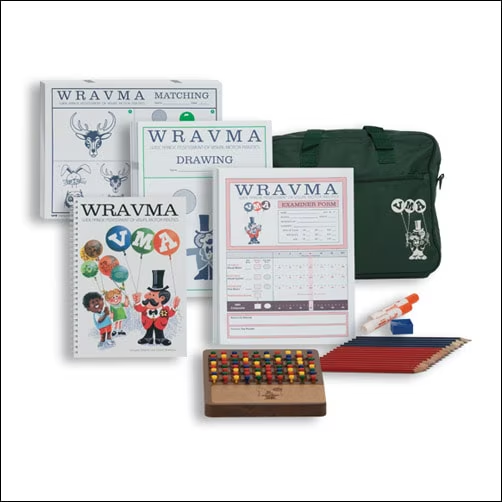
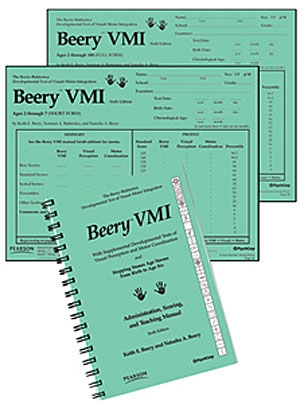
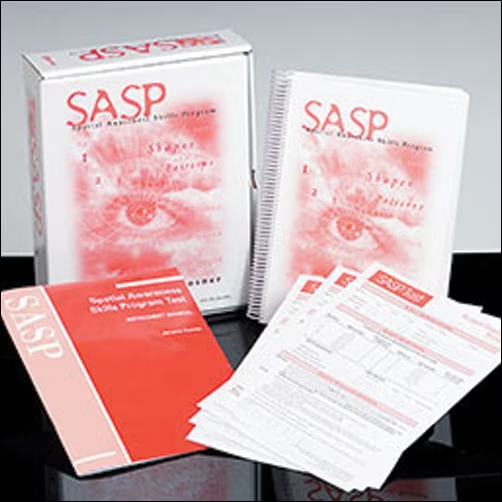
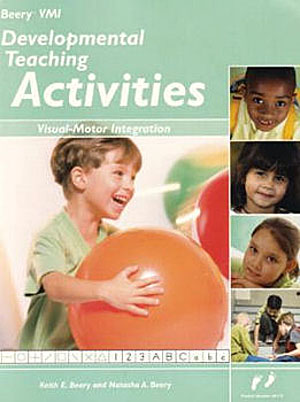
Dr. Stern’s Saturday Seminar underscored the powerful connection between the brain and how we perceive the world around us—an essential foundation for learning, attention, and functional success. At Therapro, we’re committed to supporting professionals and families with tools that enhance visual perception and cognitive development. Explore our comprehensive Visual Perception & Cognition products to find engaging resources that promote visual learning skills, and visit our Visual Processing Assessments to identify and address specific needs. Empower every learner to see better, learn faster, and work smarter.
Filomena Connor, MS, OTR/L