The school and classroom provide a wealth of sensory information. Whether or not your students have special needs, processing sensory information can be a real challenge and also impact their behavior (e.g. difficulty paying attention, sitting still, working cooperatively with others, etc.).
Sensory processing difficulties arise when the brain can’t sort, organize, analyze, or integrate sensory messages. It’s like a “traffic jam” in the brain, with a few snippets of sensory information “stuck in circulation”. When this happens, certain parts of the brain don’t receive the sensory information they need to do their job. (1)
Providing a sensory space helps students to calm down and is a way to avoid disorganization. It’s a simple solution for improving social-emotional behaviors and beneficial for cognitive development.
What Is A Sensory Corner?
A sensory corner is a designated area inside your classroom that is dedicated to supporting the sensory development of all students. It allows the child to take refuge there completely independently. Their withdrawal into this space helps them regulate their emotions and energy level in order to be more available to learn and interact with others.
A sensory space stimulates the primary senses; sight, hearing, smell, touch, vestibular and proprioception without creating overload because the senses are chosen on a voluntary basis.
The Benefits Of A Sensory Corner
These very precious moments, lasting at least 15 minutes, improve mood management by taking care of one’s emotions, increasing the feeling of security, and help reduce agitation and apathy (lack of energy). No wonder they allow for the improvement in attention and quality of concentration.
Regulating our senses is important in maintaining our mental and physical well-being and self-esteem. The sensory space allows for wonderful one-on-ones or supports a moment of guided learning, if the space is sufficient to accommodate the adult and child.
How To Design A Classroom Sensory Space
- It must be welcoming, comfortable and a defined space. The area has boundaries and is large enough to accommodate at least one seat (armchair, cushion, carpet, etc.).
- Make sure the child will be isolated from ambient noise or the hallway.
- Make sure you can adjust the light intensity or filter it. Some children will seek intense light while others will benefit from dim lighting.
- Try to find a corner of the class where the student can have some privacy, out of sight of their peers. To enclose this space, you could use a curtain or furniture such as a bookcase or shelf.
- Ideally, provide storage for the items or equipment that your corner will offer. The space should not be overloaded with things.
The objective is to be able to immerse yourself in a “cocoon-bubble” atmosphere in order to experience better sensory stimulation and enjoy all the benefits.
The effectiveness of a sensory corner has nothing to do with your allocated budget. It’s therefore not necessary to invest in expensive and sophisticated equipment.
What equipment should you provide in your sensory corner?
Your sensory corner can evolve over time and according to the needs of your students. Here are some suggested items that can stimulate the senses.
Touch
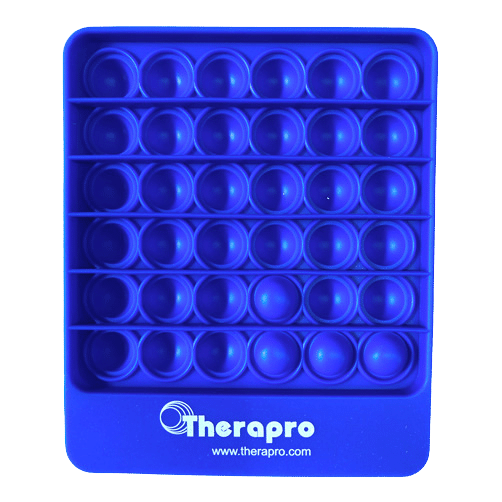
– Manipulative tools such as stress balls, fidgets
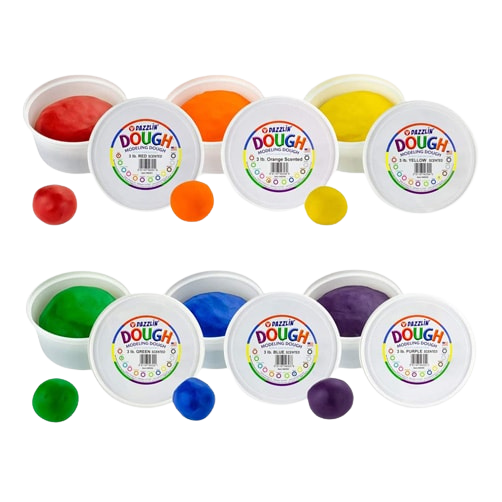
– Tray with play dough
– Vibrating cushion
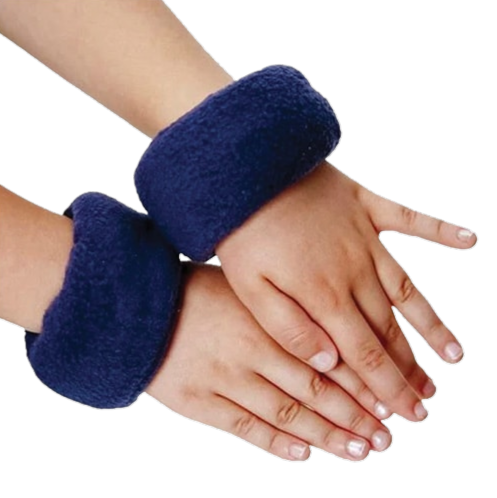
– Massage accessory
– Homemade sheet/board with different textures on it (sandpaper, fur, silk, feathers, etc.)
Hearing
–Noise cancelling headphones
-Earphones and radio
Smell
– An accessory or cushion that you can put a few drops of essential oils on (ex: lavender)
– Scented putty
– Small cotton sachet (for the bottom of a drawer) with different smells
Sight
– Mini flashlight, mini battery-operated candle
– Hourglass or sensory tube
– Homemade glitter bottle
Vestibular (balance and movement)
– Disc or balance board
– Air cushion
– Surfboard
Proprioception
– Weighted animals
– Ghost
– Resistance Band
– Bean bag
– Sensory peapod
And the most important…
Once your sensory space has been established, take the time to show it to your students and teach how to use it, when, and why so that they understand the purpose of this space.
It’s also important to display the tools and resources available in the space. Don’t hesitate, for example, to demonstrate breathing techniques in a large group so that they know how to repeat them when alone.
Having a space like this is a great way to implement social-emotional learning strategies in your classroom.
And now, play on!
Guest Bloggers: The Manimo Team
About manimo
For 20 years, manimo has comforted thousands of children at home and school. manimo’s range of weighted animals are all equally attractive. It’ll be a must have in your sensory space to stimulate your student’s proprioception and touch senses.
Discover manimo weighted animals
1 Sensory Spaces in School 2021. National Council for Special Education, NCSE – Sensory Spaces in Schools