Self Care with Flair

Self Care with Flair: Webinar Recap

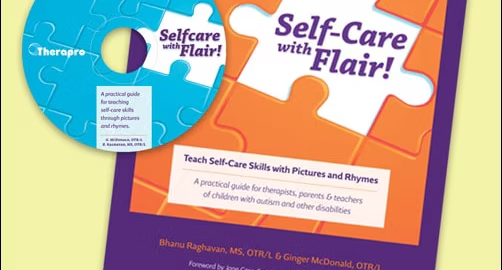
On Tuesday, July 28, Therapro was happy to host another successful webina, Self Care with Flair. Presenters Ginger McDonald, OTR/L and Bhanu Raghavan, MS, OTR/L spoke to viewers about Self Care With Flair and teaching independent living skills. These wonderful ladies have over fifty years of combined experience working with students across a variety of settings. Throughout the presentation they drew from these years of experience to provide illustrations of how a consistent, step by step approach works for teaching self care skills. Viewers left the webinar with helpful takeaways, including: 

Mastery of self care skills is critical for a child’s self esteem. The presenters spoke passionately about the importance of mastering self care skills early on and how this can  improve a child’s self esteem. To exemplify this they discussed toilet training: a skill needed for acceptance in a school setting, community involvement, and employability in later years.  

Use a team approach. The presenters described what they called the partiship triad, where parents or caregivers, teachers, and therapists work together in the teaching of both the self care skill itself and the prerequisite hands skills needed for successful participation. As one viewer noted, “Lots of information for both OT, teachers and parents. Love the team approach and having more information in the book will be an asset for every classroom.” – KF

Use a uniform approach. The presenters discussed the importance of consistency between everyone involved in the teaching process; from grandma, to the therapist, to the classroom teacher. Using consistent language and teaching approaches promotes learning and retention.  In the Self Care With Flair program, the same steps, the same pictures, and the same cues are used, leading to successful learning outcomes. Another useful aspect of Self Care With Flair is that the visuals can be shared with everyone working with the child, ensuring consistency across settings! As one viewer stated, “This is an excellent resource. The work has been done – rhymes, pictures, repetition. It speaks for itself!” – AH

Use rhythms. Rhymes are easy to memorize and make learning the steps of a task so much easier. Rhymes are also a great way to promote consistency across multiple environments and to help with self correction. The presenters pointed to research that supports the use of rhymes for teaching the steps of a task.

Teach Prerequisite Skills. Another important point that was covered in the webinar was the importance of addressing the foundational hand skills needed for success with self care tasks. In the book Self Care With Flair, each prerequisite skill needed for the given self care task is listed with the self care task itself. The final chapter in Self Care With Flair includes activity ideas  to address the essential hand skills needed (finger strengthening, finger to thumb opposition, forearm strengthening, lateral pinch, power grasp, thumb strengthening and wrist extension).  
The presenters also discussed modifications to meet the needs of all users, teaching tips to use when introducing these tasks, and ideas for personalization. Check out the recording of the webinar, and be sure to check out our free resources page for examples from the book!
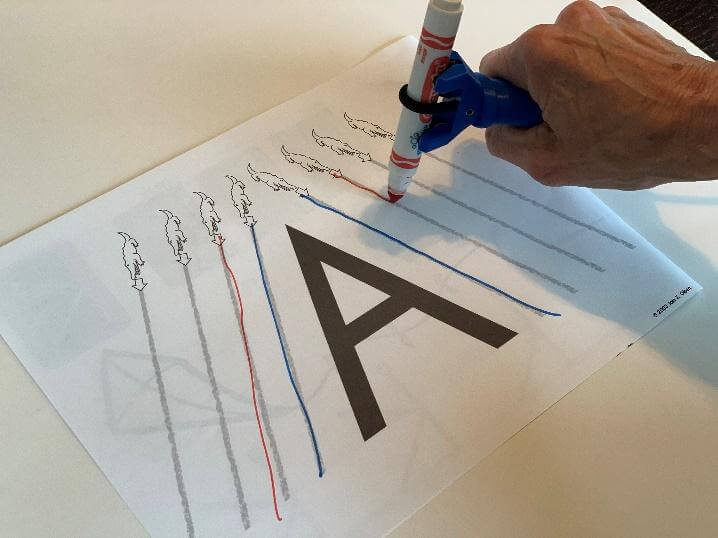
The functionalhand® Supports Your Child’s Learning!

For children who have difficulty with muscle tone, movement and motor skills, they may lack the hand control to hold writing utensils.  This may impact their ability to complete academic skills at the level they are capable of. The functionalhand® supports learning by reduces fine motor demands allowing your child to focus on discovering letters, numbers, counting skills and so much more.

Child using the functionalhand to write the letter A

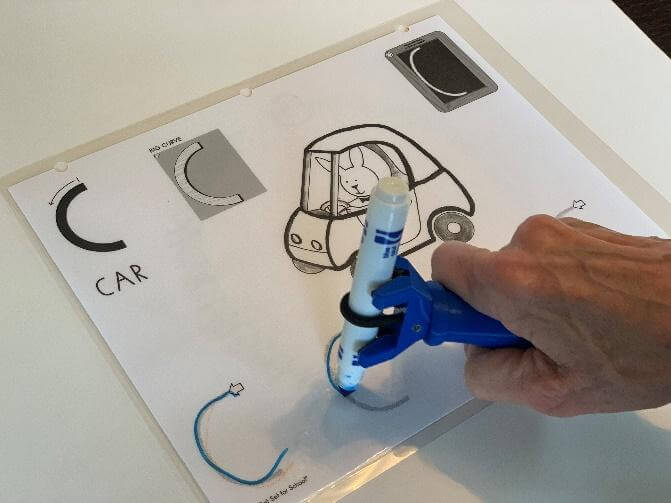
Children learn through a variety of sensory experiences. Processing auditory and visual cues in combination with movement enhances cognitive or academic concepts.  The functionalhand® reduces the physical demands of academic tasks and allows the child to have more energy to focus on learning. Tracing and copying activities are completed with less effort.

Child using the functionalhand tool  to participate in a writing activity

The functionalhand® allows children to participate in formal writing programs that teach letters such as “Handwriting without tears”.

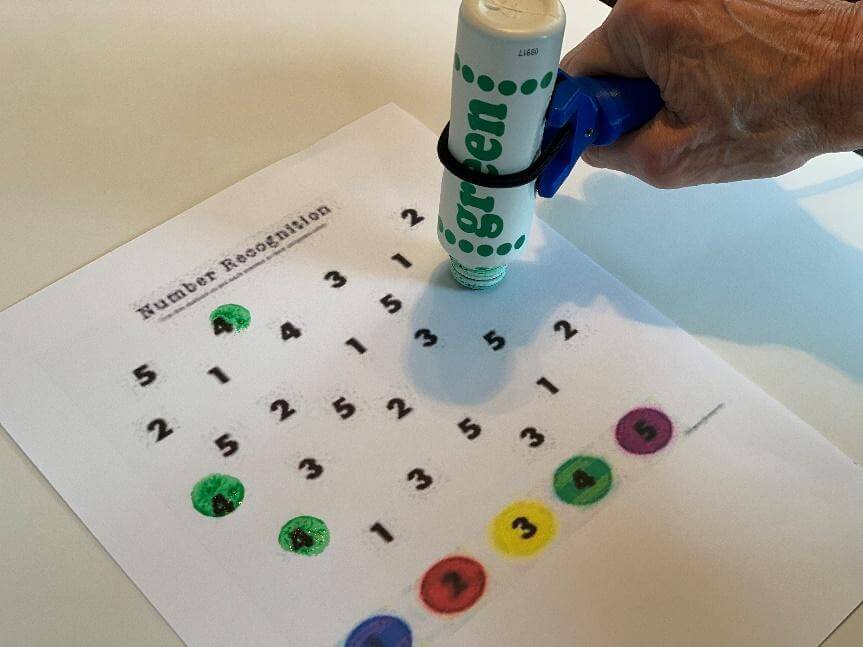
Child using the functionalhand® to support participation in a math activity

Dot markers are another “tool” that the functionalhand® assists children to hold and practice number recognition and matching skills.

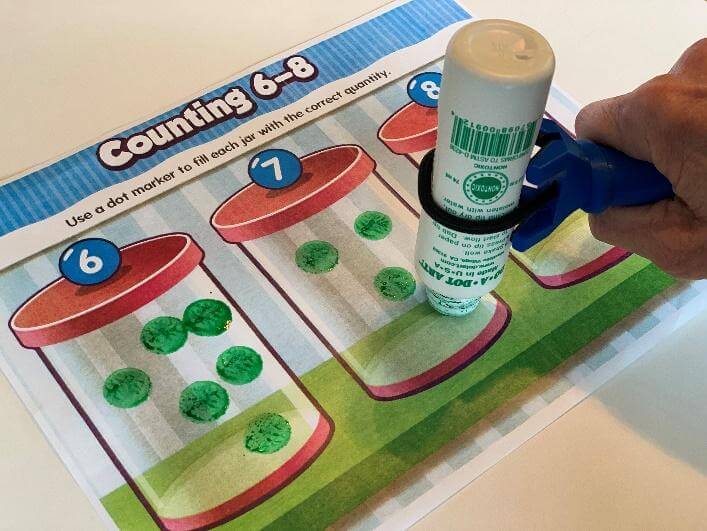
Child using the functionalhand® to support participation in a counting activity
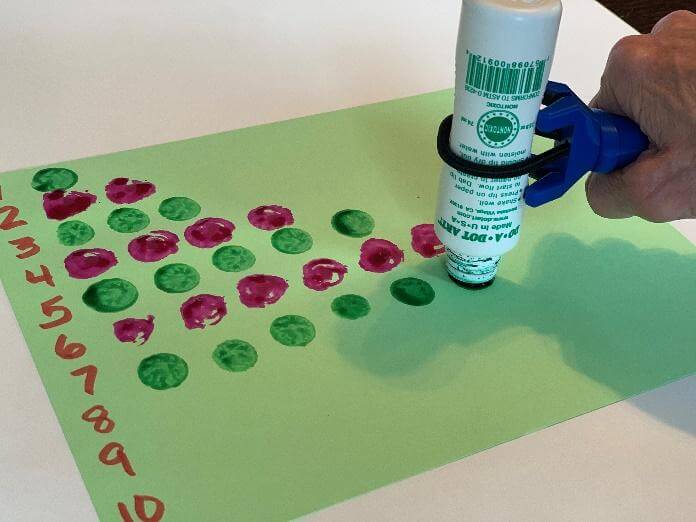
Child using the functionalhand® to support a learning activity

In addition to number recognition, there are a variety of activities a child can participate in that supports math skills.  This universal device enables individuals who cannot hold a writing utensil in their hand, to complete academic skills.

Guest Bloggers: Linda Merry, OTR/L, NDT/C and Celine Rosati Skertich, PT, MS, PCS, NDT/C, creators of The functionalhand®.

Oral Motor Treatment Strategies: Part 3

On June 16, 2020, Therapro hosted a very popular webinar presented by Dr. Kate Barlow on the topic of Oral Motor Treatment Strategies. In past blog posts, we reviewed great takeaways from the webinar, as well as strategies for assessments that Dr. Barlow shared with viewers. Dr. Barlow also covered some effective treatment strategies during the webinar, as attendees reviewed: 

This seminar provided great ideas on how to provide intervention strategies to children with oral motor difficulties. TH

Well presented course, instructor passionate and knowledgeable. As a PT I appreciate the information, insights, and learning content that was presented. JW

Kate is passionate about helping families and children with feeding issues. She presents a variety of strategies and explains why and how these strategies support positive outcomes. The strategies presented can also be implemented in school based practice which is a challenging setting to service and document feeding therapy. ME

Thanks – it was very helpful! Many great takeaways that I will implement in my practice right away. ML

In this post we will take a look at the treatment strategies shared by Dr. Barlow during the Oral Motor Treatment Strategies webinar.

Dr. Barlow gave useful background information to help viewers understand the “why” when planning treatment. For example, she spent time reviewing type 2 muscle fibers – did you know that most of the muscles used for swallowing are type 2 muscle fibers? Given this information, it is easy to understand why it is so important not only to use resistance but also to increase the resistance and workload when planning treatment for oral motor strengthening. Dr. Barlow also reviewed that age and cognitive considerations should be taken into account when deciding on a treatment plan. Check out some of these other effective treatment ideas that Dr. Barlow covered: 

  • To work on lip closure, try an activity as simple as blowing kisses! This is an easy strategy in which all members of the family can easily participate, without any tools!
  • For lip and tongue awareness, Dr. Barlow shared the clever idea of putting a spoon in a cup of ice water for a few hours. The cold spoon can be used in a number of ways to help bring awareness to these areas.
  • For tongue lateralization, Dr. Barlow shared some strategies using handheld munchables.
  • Dr. Barlow also covered some tools that can be used in oral motor treatment.  For example:
    • Bubbles and blow toys are fun ways to develop lip strength.
    • Lip Bloks are a helpful tool when working on tongue retraction.
    • Z-vibes can be used for so many things, like developing cheek strength, working on lip closure, and developing lip and tongue awareness.
    • Straws are a fun tool that can be used to work on lip closure and tongue retraction.

Check out the full video to watch Dr. Barlow demonstrate some of these great treatment strategies and demo some tools she uses in her own treatment!