Child development resources for parents are essential for supporting learning, behavior, and everyday routines at home. This tag offers practical tools, expert tips, and trusted information to help parents navigate motor skills, communication, sensory needs, and more.
Planning for “Back to School” assumes a high priority for parents, teachers, and therapists as July gives way to August. You’ve told us that you and your students LOVE these school /therapy items! Start the new academic year with a bang using these items in your toolbox. Check them off your list!
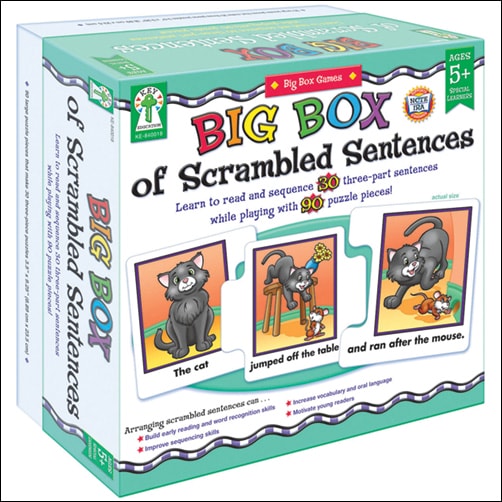
Big Box of Scrambled Sentences
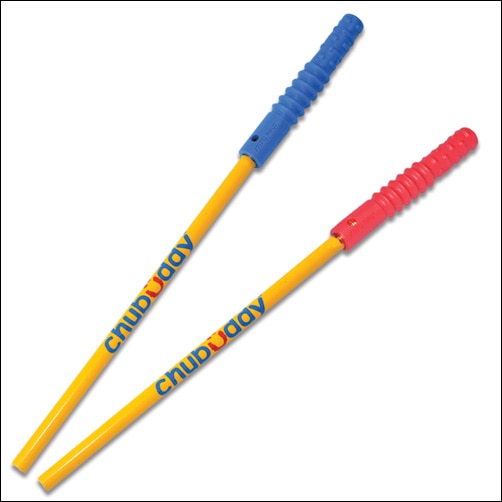
For students who focus better and calm with oral input, Topper Zilla is a winner. It has a chew factor of 3, meaning it is designed for strong chewers. It is not only Godzilla-like strong, but soft as well. It is appropriate for any age, and includes a pencil.
To help build a child’s foundation for success with school tasks by improving strength of the trunk and upper upper body, and fine motor control, Upper Body and Core Strength Fun Deck is comprised of 52 fun activities at your fingertips. It also includes game ideas.
The Star Spacer helps students understand letter spacing, sizing, and alignment. It is a simple, clever tool that works! By providing immediate results, the student gains confidence in his/her more legible handwriting. For Grades 1-5, and for older students with writing difficulty.
Use Learn to Move, Move to Learn!to plan group activities using 52 creative, theme-based lessons that utilize a sensory-integrated developmental sequence, this book is a must! All of the themes have 7 sensorimotor activities including warm-up, vestibular, proprioception, balance, eye-hand coordination, cool-down, and fine motor. The activities are geared to support young school-age children with diverse abilities.
Of course, we have plenty more “favorite and popular” back to school products – be sure to view the Therapro Back to School Catalog for hundreds more ideas to make this the best school year ever!
Occupational therapists are the “ADL specialists” on a treatment team. Building independence in self-care isn’t always the problem we are addressing. For younger kids or multiply challenged children of any age, simply tolerating experiences like nail cutting, haircuts and face washing can be the hardest part of the day. Helping children and their families to make grooming and hygiene less of an issue can improve children’s sense of safety and control. It can even build the relationship between caregivers and children.
When evaluating a child’s aversion to ADL’s, look to the comprehensive OT evaluation. While the Sensory Profile or the SPM will highlight specific challenges in oral or tactile domains, looking at a child’s level of motor, visual-perceptual and behavioral functioning provides a more complete picture of the child. Postural issues, issues with endurance, attention, or identifying unique behavioral/emotional expression of frustration will suggest potential treatment pathways or complications.
Prior to Grooming And Hygiene Activities:
Directly address sensory-based issues in a comprehensive manner. Use of the Wilbarger Protocol, creation of a sensory diet and selecting tools to desensitize aversive response can support even the most agitated child. Brief activity on a Therapy Ball can increase postural activation while modulating arousal prior to ADL’s. Other children benefit from other oral/facial input before tooth brushing or having their face washed.
Wilbarger Therapressure Brush
During ADL’s:
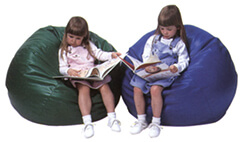
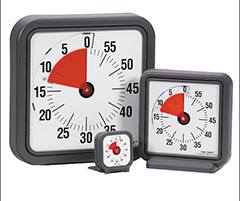
The use of sensory and behavioral activities can help increase and lengthen tolerance. Some children benefit from sitting in a Beanbag Chair during grooming to provide calming input and postural stabilization. A visual timer supports a child to understand that the activity will end and provides an objective measurement. This could reduce the child’s use of whining or aggression directed at the caregiver. A Weighted Lap Pad can be helpful calming input to an agitated child. Children with sensory seeking as well as sensory sensitivity often prefer a weighted object with texture.
Bean Bag Chair
Time Timer
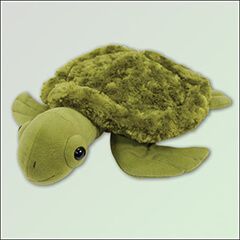
Weighted Turtle
Sit Tight Weighted Lap Pad
When the ADL Task is Completed:
Aversive responses can continue long after a child demonstrates minimal or no observable aversive response in a treatment session. Why? Because children are more than a stimulus-response cycle. They develop a sense of anticipatory anxiety and have habitual reactions that can be triggered even without sensory input.
Replacing old behaviors with more functional new habits may require slowly adapting ADL routines to decouple sequences that elicit aversion. An example of this would be allowing a child who is agitated during feeding to briefly play with washable items after a meal but before cleaning his hands. Any residual agitation from distressing feeding experiences could dissipate partially or totally before the caregiver uses deep pressure input to wipe the child’s hands.
Supporting children for ADL tolerance and eventual independence requires us to use our task analysis and evaluation skills in creative and complex ways. Building tolerance and independence is our initial goal, but successfully navigating daily ADL experiences will have wide-ranging effects. Improving grooming and hygiene experiences helps families feel calmer around ADL’s in general, improves communication, and deepens trust between caregivers and children.
Guest Blogger: Cathy Collyer, OTR, LMT, PLLC
Cathy Collyer, OTR, LMT has treated children with neurological, orthopedic and sensory processing disorders for over 20 years. She is the author of The Practical Guide To Toilet Training Your Child With Low Muscle Tone. Learn more about her work at tranquilbabies.com.
One of the essential back-to-school items on every parent’s shopping list is a new backpack. Beginning in preschool and progressing all the way through high school, kids use their backpacks every day. As therapists, we are aware that how that backpack is filled and carried will either create problems for kids or solve them. A pack that is too heavy, so full that it creates perceptual, sensory or cognitive roadblocks to organization, or missing essential tools for kids with special needs, is not doing it’s job. With targeted education and the introduction of simple alternative strategies, we can improve the chances that backpacks end up helping every child perform well during this school year.
Here are some ways to help students manage their backpacks for optimal performance throughout the school year:
Lighten up. Kids tend to make their packs heavier than they need to be. Hypermobile kids, kids with orthopedic issues and kids with low tone may be carrying packs that put them at significant risk for injury. Make sure parents are aware of this issue, and help them by suggesting a review of backpack contents and downsizing the “essentials” whenever possible. Small water bottles, travel sizes of toiletries, and a minimum number of pencils, pens or markers lighten the load. For kids that aren’t aware of the sensory or cognitive overload of an overfilled pack, a backpack checklist or a smaller pack help them manage without an adult assuming responsibility for content management.
Teach kids how to pack and wear their pack. The heaviest items should be carried close to the body and content weight should be distributed equally across the back. Kids should use both straps when wearing their backpack. The one-shoulder carry can be preferred by middle-schoolers wishing to look “cool”. This overweighting of one side of the body puts them off balance and at-risk for injury. It may be hard to change habitual behavior in children at this age. Try identifying the child or children who seem to be admired and copied by their peers. Influencing the kids who are acknowledged social leaders can change class culture quickly. Don’t wait until children report neck and shoulder pain, but remind parents and teachers that the risk of strains, sprains and exacerbations of issues seen in tweens and teens like scoliosis are real.
Frequently used items should be quickly accessible in surface pockets, and items they need for their first class are reachable when they open their pack, not packed under other materials. Laminated photos of pocket contents can help children learn the habits of efficient storage.
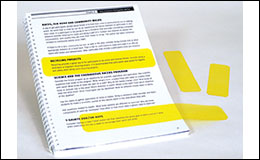
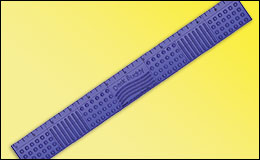
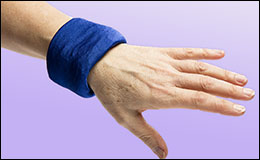
Help kids remember to use their sensory tools by having them handy. Tools like Highlighter Strips and the Desk Buddy Multi-Textured Ruler are slim and can be left between pages of a book or workbook, ready to be used. Calming tools like the Wristful Fidget can be worn, not shoved into a pack. Since it looks like a sport wrap, kids aren’t as eager to toss it away when they pack up and go! Kids may need more than one set of tools so that they can leave a set at school and another one at home. Items that do more than one job, like the Desk Buddy Ruler, have an advantage over carrying a bunch of fidgets and then an equal number of classroom tools.
Accept that altering behavior is a long game. Don’t get discouraged if kids only use some of these strategies to improve how they manage their backpacks. Habits change slowly, and as the demands of the school year mount, it may take periodic reviews and revisions to find the right combination of equipment, organization and carrying strategies to make a difference!
Gueste Blogger: Cathy Collyer, OTR, LMT, PLLC
Cathy Collyer, OTR, LMT has treated children with neurological, orthopedic and sensory processing disorders for over 20 years. She is the author of The Practical Guide To Toilet Training Your Child With Low Muscle Tone. Learn more about her work at tranquilbabies.com.


 Cathy Collyer, OTR, LMT has treated children with neurological, orthopedic and sensory processing disorders for over 20 years. She is the author of The Practical Guide To Toilet Training Your Child With Low Muscle Tone. Learn more about her work at tranquilbabies.com.