Tag Archives: parent resources

Child development resources for parents are essential for supporting learning, behavior, and everyday routines at home. This tag offers practical tools, expert tips, and trusted information to help parents navigate motor skills, communication, sensory needs, and more.

Activities That Build Fine Motor Skills

Fine motor skills are vital for many functional activities like zippering our coats, writing our name, and opening lunch containers. In this post we will take a dive into fine motor skill development and explore toys and activities that are appropriate for every skill level.  

Level 1

Fine motor skill development begins with the simplest hand movements; reaching, swiping, and gross grasp. As development progresses things like visually guided reach, purposeful release, and a better ability to hold medium and small sized objects develops. Poking, pointing, and the ability to use the thumb and first fingers to hold small objects are major milestones during this period. For children at this developmental stage activities that support the growth of the proximal muscles (core and shoulders) are important because it is these muscles that will support later fine motor skills. Activities that are done while on the tummy and activities that involve pushing and pulling are great choices at this stage.

Level 2

The next stage of fine motor development is marked by the ability to begin to use simple tools like crayons, scissors, and spoons. Activities like Lock Boxes are still great choices but now simple arts and crafts, lacing, and building activities can also be enjoyed. These increasingly more complex activities will lend to the development of the hand skills that are needed for greater independence with self care activities like feeding and dressing.

Level 3

The next stage of development is marked by the ability to complete tasks that require the separation of the two sides of the hand; the ‘power side’ and the ‘skilled side’. The power side of the hand is what we use when we engage in activities that require strength like opening a jar; actions like squeezing a toy or playing in putty or playdough are great ways to develop these muscles.  The skilled side of the hand is what we use when we engage in activities that require refined movements like writing, tying, or fastening a button.  To develop these muscles we must engage in activities that predominantly require the use of the thumb and first two or three fingers; actions like winding the small knob on a wind up toy, using the first fingers to grab, grasp or manipulate objects, and using one finger to push a button or lever are all great ways to develop these muscle. The development of the separation of the two sides of the hands is important for academic and self care tasks.

Level 4

Hallmarks of this stage of fine motor skill development include the skilled coordination between the two sides of the body and a mature pencil grasp. Games like Froggy Feeding Fun and activities with Wikki Stix or Playdough are still great but now activities that require refined skill can also be introduced.

Choosing activities that are developmentally appropriate will ensure not only engagement but will also promote continued fine motor skill development.

The Guide to the Perfect Sensory Space

The school and classroom provide a wealth of sensory information. Whether or not your students have special needs, processing sensory information can be a real challenge and also impact their behavior (e.g. difficulty paying attention, sitting still, working cooperatively with others, etc.).

Sensory processing difficulties arise when the brain can’t sort, organize, or integrate sensory messages. It’s like a “traffic jam” in the brain, with a few snippets of sensory information “stuck in circulation”. When this happens, certain parts of the brain don’t receive the sensory information they need to do their job1.

Providing a sensory space helps students to calm down and is a way to avoid disorganization. It’s a simple solution for improving social-emotional behaviors and beneficial for cognitive development.

What is a sensory corner?

A sensory corner is a designated area inside your classroom that is dedicated to supporting the sensory development of all students. It allows the child to take refuge there completely independently. Their withdrawal into this space helps them regulate their emotions and energy level in order to be more available to learn and interact with others.

A sensory space stimulates the primary senses, sight, hearing, smell, touch, vestibular and proprioception without creating overload because the senses are chosen on a voluntary basis.

The benefits of a sensory corner clock

The very preciouses moments, lasting at least 15 minutes, improves mood management by taking care of one’s emotions, increasing feelings of security, and help reduce agitation and apathy (lack of energy). No wonder they allow for the improvement in attention and quality of concentration.

Regulating our senses is important in maintaining our mental and physical well-being and self-esteem. The sensory space allows for wonderful one-on-one or supports a moment of guided learning, if the space is sufficient to accommodate the adult and the child.

How to design a classroom sensory space tools

  • It must be welcoming, comfortable and a defined space. The area has boundaries and is large enough to accommodate at least one seat (armchair, cushion, carpet, etc.).
  • Make sure the child will be isolated from ambient noise or the hallway.
  • Make sure you can adjust the light intensity or filter it. Some children will seek intense light while others will benefit from dim lighting.
  • Try to find a corner of the class where the student can have some privacy, out of sight of their peers. To enclose this space, you could use a curtain or furniture such as a bookcase or shelf.
  • Ideally, provide storage for the items or equipment that your corner will offer. The space should not be overloaded with things.

The objective is to be able to immerse yourself in a “cocoon-bubble” atmosphere in order to experience better sensory stimulation and enjoy all the benefits.

The effectiveness of a sensory corner has nothing to do with your allocated budget. It’s therefore not necessary to invest in expensive and sophisticated equipment.

What equipment should you provide in your sensory corner?

Your sensory corner can evolve over time and according to the needs of your students. Here are some suggested items that can stimulate the senses.

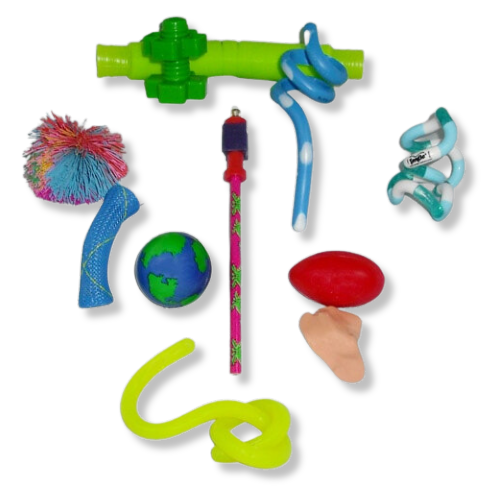
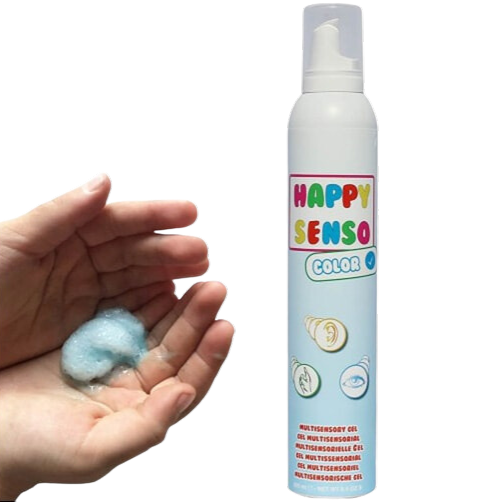
Touch

Smell

  • An accessory or cushion that you can put a few drops of essential oils on (ex: lavender)
  • Scented putty
  • Small cotton sachet (for the bottom of a drawer) with different smells

Sight

You could display or make available inspirational thoughts, relaxing music, pictures to color, breathing strategies, a timer to give child perspectives about time.

And the most important part

Once your sensory space has been established, take the time to show it to your students and teach them how to use it, when, and why so that they understand the purpose of this space.

It’s also important to display the tools and resources available in the space. Don’t hesitate, for example, to demonstrate breathing techniques in a large group so that they know how to repeat them when alone.

Having a space like this is a great way to implement social-emotional learning strategies in your classroom.

And now, play on!

-The manimo team

1Sensory Spaces in School 2021. National Council for Special Education, NCSE-Sensory Spaces in Schools

My Motor Mats movement path, boy completing a crab walk on a black motor mat

Making Time for Movement Breaks

There is no doubt that movement is an essential part of the learning process but finding the time for movement breaks in an already packed school day can be hard.  However, with the ever growing body of research linking movement to academic performance (Petrigna et al, 2022)  finding the time for movement breaks becomes essential. So, how do you move? Here are some quick ways to add a little extra movement to the day: 

Add Extra Movement Opportunities Into Transitions

Movement paths (sometimes called sensory paths or motor paths) offer great opportunities to build in movement breaks during naturally occurring transitions, like changing classes.  The simple addition of movements like hopping, balancing on one foot, or turning in a circle offers an enriched movement opportunity that activates different sensory channels helping the brain get ready and be more receptive to upcoming learning activities.  

Add Movement To Academic Lessons

Reach those kinesthetic learners by incorporating movement into academic lessons. Readily available activities, like the Drive Thru-Menus makes this easy to do!  Practicing spelling words? Try spelling each word while performing Angels in the Snow from the Drive-Thru Menus Body Challenge Exercises.

Don’t Just Take A Break, Take A Movement Break

During the school day there are naturally occurring breaks, such as transitions or when students finish up at different times. Fill these moments with meaningful movement opportunities. Use cards from the Move Your Body Fun Deck to add motor movements to transitions. The fun deck offers easy to grab, quick visuals with a variety of different movement activities; pick three for the day, display them on the board, and do each one a few times between activities for a quick brain reset! Another option is the Year of Mini-Moves for the In-Sync Child, which offers a weekly schedule of different movements that can be easily incorporated into the day.  

Create Accessible Movement Spaces

Getting outside often offers a plethora of opportunities for movement breaks but for the student who has gross motor challenges the opportunities can be limited.  Having a variety of activities available will help ensure students of all abilities are able to access movement opportunities.  For students who have difficulty with standard catch and throw ball games, offering alternatives like Magicatch, Beanbags, or Pezzi Activa Balls offers inclusive approaches.  For students who have difficulty accessing standard playground equipment, the availability of parachutes, bubbles, or movement-based games like Trunks can provide alternative movement activities at recess. 

Movement is a critical component of the learning process that can get overlooked during a busy, academic filled, school day.  Building movement breaks into already existing routines and schedules can help students move and succeed! 

Petrigna L, Thomas E, Brusa J, Rizzo F, Scardina A, Galassi C, Lo Verde D, Caramazza G and Bellafiore M (2022) Does Learning Through Movement Improve Academic Performance in Primary Schoolchildren? A Systematic Review. Front. Pediatr. 10:841582. doi: 10.3389/fped.2022.841582.