Tag Archives: sensory strategies

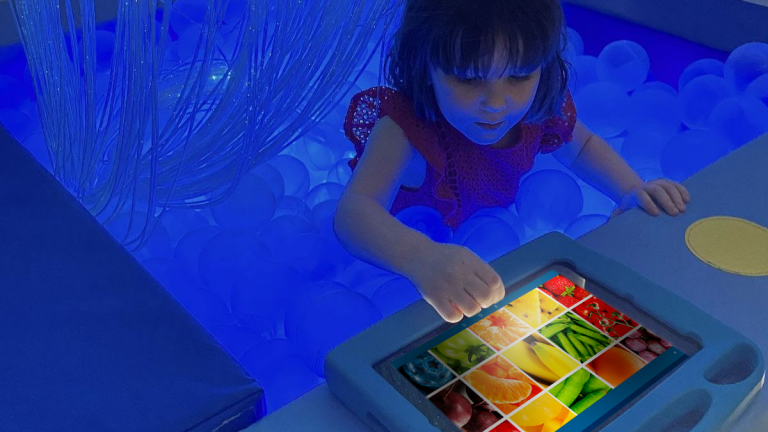
Sensory strategies are techniques used to help children manage responses to sensory input, such as sounds, textures, or movement. These strategies support self-regulation, attention, and participation in learning environments. They are essential for helping children stay calm, focused, and engaged throughout the day.

Supporting Reading: More Than Just Literacy Skills

Supporting reading means more than teaching literacy—it’s about building the underlying skills that make reading possible. This is especially true when reading is hindered by other difficulties such as visual inattention, visual impairments, or sensory processing difficulties.  There are many low to high-tech assistive technology options that can help support reading.  With so many options available, how do you decide which option is best for your needs? Here is a quick breakdown!

Tip for supporting reading literacy skills - use light filters for literacy

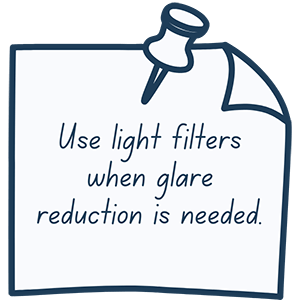
Use Light Filters When Glare Reduction is Needed
Glare results when too much light enters the eye.  It can come from either a direct or a reflected light source. Glare can be distracting and can also make it difficult to read text or see images.   Overhead fluorescent lights are a major source for glare in classrooms and office spaces. Light Filters are a simple solution for minimizing glare that comes from overhead lights.

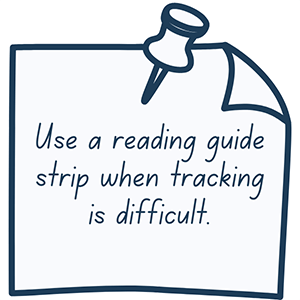
Use a Reading Guide Strip When Tracking is Difficult
Difficulty with eye tracking can cause readers to skip lines or words and can decrease reading speed. This may also impact overall reading comprehension.  Reading Guide Strips make it easy to track print through a transparent tinted window. Even better, they are available in a variety of colors making it easy to find the eye’s preferred color!

Reading guides for literacy
Tip for supporting reading literacy skills - use colored overlays for literacy

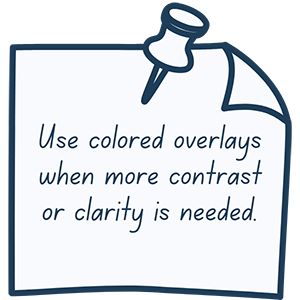
Use Colored Overlays When More Contrast or Clarity is Needed
Colored overlays can help with print clarity.  Improving print clarity can be helpful in decreasing eye strain and fatigue. It can also help by increasing reading attention and overall comprehension. Options to improve contrast include Highlighter Strips and Reading Guides.   Highlighter Strips work by brightening written words. Reading Guides help improve contrast. Pro tip: color preference varies, try different colored reading guides to see which your eye responds to best!

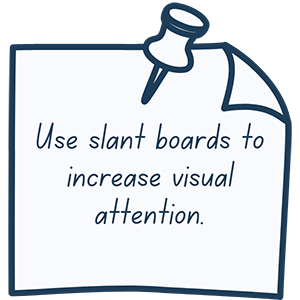
Use Slant Boards to Increase Visual Attention
Bringing visual material closer to the eye can help increase visual attention.  Slant Boards and book holders are both great tools for this job! Pro Tip: Adjustable slant boards offer maximal flexibility with finding the right angle!

Slant boards for literacy

The ability to read is more than just literacy skills! Low tech adaptations and modifications can make the difference between a successful reader and a struggling reader.

Preparing for Holiday Sensory Overload

The holiday season is upon us, and with that comes many associated sensory experiences (or sensory overload!). These can be pleasant, like the sound of bells ringing, the smell of cookies baking, or the sight of lights twinkling. They can also be a bit less pleasant, like the push of crowds, the honking horns of inpatient drivers stuck in holiday traffic, or the burning smell of a holiday meal mishap (oops!).  For those with difficulty processing sensory stimuli, these added sensory experiences can be overwhelming and take the pleasure out of the holiday experience. Read on for tips and tricks for preparing for holiday sensory overload.

Tent- retreat spaces are great option during times of sensory overload Retreat Spaces

Total elimination of sensory stimuli is nearly impossible, but offering a space with dampened sensory stimuli, to retreat to when needed, can help with overall regulation through the day.  These spaces can often be created with minimal equipment and little space.  For more information on retreat spaces, be sure to read our post, How to Help the Over Responsive Sensory System. On the go, items like noise-blocking headphones, sunglasses, and wide-brimmed hats can help limit extraneous stimuli.  

Tool box icon - reminder that keeping sensory tools handy can help with sensory overload Keep Your ‘(Sensory) Tools’ Handy!

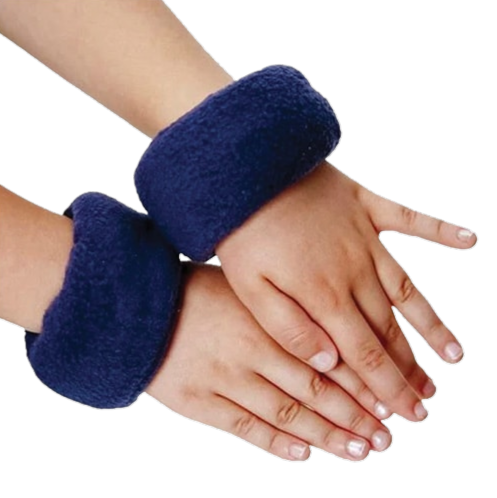
When looking to calm an over responsive sensory system the top tools to keep in your ‘sensory toolbox’ are ones that have weight or resistive qualities. These features are helpful for providing deep pressure input to organize and regulate an over-stimulated sensory system. Keeping a tight fighting hat, heavy quilt or a weighted lap pad in the car can help organize the sensory systems between holiday visits. Pack some gum or a water bottle; chewing and resistive sucking are great ways to provide organizing proprioceptive input.  A simple swap like using a straw or water bottle at the holiday table can be a game changer for the over responsive sensory system! Check out Therapro’s Free Tap Into Tools for the Body Handy Guide for more ideas!

calendar icon - a reminder that schedules can help alleviate  sensory overload Make A Schedule! 

Schedules give the opportunity to be proactive and to prepare for upcoming sensory experiences. This is especially useful for those with an over responsive sensory system because it allows for the needed time to access and utilize coping strategies (like packing those handy weighted lap pads!).  Schedules can also be helpful in identifying when too many over stimulated experiences are grouped together without needed “down time” in between.  Hand held electronic devices offer many ready to use scheduling options, for non screen options check out SchKIDules

Quiet spaces, sensory tools, and sticking to routines are useful strategies for helping an over responsive sensory system and may be the difference between a stressful and a stressless holiday! 

Getting Into the Learning Zone with Sensory Tools!

The “optimal” zone of regulation is crucial during learning activities. The optimal learning zone is characterized by the just right amount of  attention, focus and processing speed to allow learning to take place. Outside of this optimal zone are two zones that are characterized by decreased or heightened levels of arousal.  The appropriate use of sensory tools and strategies may help students maintain an optimal state of alertness during learning activities.  

The low arousal zone is characterized by low energy levels and decreased alertness. This zone may be optimal when we are winding down from a long day but it is not a great zone to be in when learning needs to take place! In the learning environment this state of decreased alertness can make concentration and processing difficult.

The high arousal zone is characterized by increased levels of alertness. Heightened states of alertness are optimal during times of real or perceived danger but is not optimal for learning. In a learning environment this heightened state of arousal will lead to distractions and difficulty with focus.  

Schkidules visual schedule display

Posted Schedules.  Posting the daily schedule can have a tremendous impact on the student with an over-responsive sensory system.  Posting the schedule allows the student to anticipate what is coming up next and prepare their systems for the sensory experiences that the next event will bring. This helps the student to attend and focus rather than be distracted by the anticipation of what will be happening next. The simplest solution is to write the daily schedule on the board!  For early or nonreaders, a visual schedule (like Schkidules) may be easier to understand.  

Lighting:  Harsh glare and the flicker from fluorescent lights can be distracting for some students. When possible, turning off overhead lights and relying on natural lighting is a great solution.  However, natural lighting is not always available or optimal; in those cases light filters offer a great way to reduce the harsh glare emitted from some types of overhead lighting! 

Patterned Fluorescent Light Filter;  a great sensory tools for getting in the learning zone.
Low Set Behind the Head Earmuff; a great sensory tools for getting in the learning zone.

Noise Reduction. Classrooms can get noisy! The typically responding sensory system may be able to handle the fluctuations in noise levels with expected reactions like covering the ears.  For the student with the over responsive system the rise in noise level (or the anticipation of a rise in noise level) may be distracting or be a source of anxiety.  Rugs and curtains can help to absorb some noise. Chair Socks are a great option for chair legs; they help to minimize the sounds created by chairs moving across the floor.  Access to noise-cancelling headphones may be another option for students with significant sound sensitivity.  

Alternative Seating.  Levels of regulation fluctuate throughout the day.  For students who are in a state of low arousal, movement is a great way to bring the system back into a more  optimal state.  Alternative seating allows for movement input while still engaging in the learning activity. Alternative seating options can range from the subtle input that comes from a textured seat cushion or air filled wedge to the more intense input received from sitting on a stool or ball chair.  Another option is to not sit at all and use a standing desk instead! 

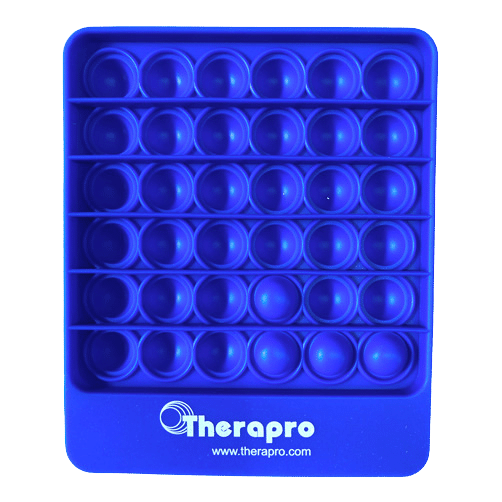
Fidgets.  There are many fidget options available. Fidgets can bring arousal levels up or provide input that is calming all depending on the specific characteristics of the fidget.  Fidgets that provide light touch input (like the Tactile Tiger) tend to help bring arousal levels up while fidgets that provide deep pressure or are resistive in nature ( like the Thera-band hand exerciser) can help calm an over responsive sensory system.  For more information on fidget check out Therapro’s Find Your Fidget Handy Guide! 

Access to the right sensory tools in the learning environment can make a significant difference in a student’s ability to learn and attend.