Tag Archives: therapist resources

Explore curated resources for therapists, including intervention tools, educational materials, assessment supports, and treatment strategies. Designed for therapists and educators, these resources help professionals plan effective sessions, support diverse client needs, and stay current with best practices in therapeutic and educational settings.

Developing the Brain from the Bottom Up: A Sensorimotor Approach

May’s Therapro Saturday Seminar was a follow-up to last month’s seminar entitled: Developing the Brain from the Bottom Up! Pam Formosa, MA, OTR/L returned with her colleague and Co-Founder of Brain Fit Academy in Hopedale, MA, Christina Schlupf, MA Licensed Educator and ABA technician. They presented: The Listening Program™ and Reflex Integration: A Powerful Combination!

Brain Fit Academy uses a neuro-developmental approach to help students improve overall processing through Reflex Integration and to teach students skills to empower them for success. The Listening Program ™ (TLP), based on the work of French ENT, Alfred Tomatis in 1944, has developed over the years and today, Alex Doman carries on Tomatis’ work, focusing on using sound, music, and technology to improve brain function. TLP can be described as an auditory stimulation therapy that uses music to train the brain by strengthening neurological pathways with the outcome of improving learning, communication, information processing, and more.

Pam and Christina clarified the essential differences among hearing, listening, and auditory processing. They explained that hearing is a passive function, listening is a dynamic function, and auditory processing is also a dynamic function that involves the brain using what it hears to make sense of what is being heard. With a thorough review of the auditory system, we learned how sound frequencies affect brain and body function in a hierarchical manner. Pam and Christina shared an interesting fact about embryonic development: as early as 16 weeks gestation, the fetus responds to the mother’s voice and sounds outside the womb through bone conduction.

TLP utilizes transmission of vibrations through bone, called “bone conduction.” It involves listening to personalized music 5 days per week typically over the course of 20-40 weeks. TLP uses headphones to transmit sound through air (ear canal to the cochlea) and bone (vestibular system) simultaneously. The merits of bone conduction can be seen in several crucial areas including improved vestibular processing, which manifests itself in improved postural control, improved sensory awareness; speech and language development; and stress reduction and regulation of the parasympathetic nervous system. The potential benefits of TLP are astounding!

Pam and Christina presented a case study of an 11 ½ year old child with a clinical diagnosis of Auditory Processing Disorder to illustrate how they might use Reflex Integration in conjunction with The Listening Program™ to achieve positive therapeutic outcomes. Using formal checklist inventories to assess and quantify 6 areas of listening as a baseline of function before beginning treatment, and then again, following treatment, was examined. Changes in the child’s function were quantifiable and impressive between weeks 2 and 20 of treatment. Areas of significant improvement included Receptive and Expressive Listening and Language, Auditory Processing, Listening to the Body, Behavioral and Social Adjustment, Level of Energy, and integration of the Moro, TLR, and ATNR Reflexes.

The Listening Program ™ is one of many tools you’ll find in Brain Fit Academy’s toolbox that can help remediate neuro-developmental immaturity. Used in conjunction with Reflex Integration, it is a powerful therapeutic modality with great potential to help students achieve improved functioning through brain “re-organization.”

Attendees shared their enthusiasm about the seminar:

“The information was enlightening and applicable to my work with preschool students with Autism.” -Jo-Ann F., Teacher

“Understanding elements that we may be missing, yet can relearn. Hope at the end of the tunnel.” – Anonymous, Parent

“Excellent information & will leave with ready to use activities/tx.” – Jennifer P., Occupational Therapist

“I think teachers need to understand the basics of Primitive Reflexes. This can really impact a child’s learning and behavior in the classroom.” – Ann Marie H., Teacher

Thank you, Pam and Christina!

Filomena Connor, MS, OTR/L
Feeding Therapy Tips: Overcoming Treatment Plateaus

I get emails all the time asking for advice and tips on how to get kids to eat. Many of these children are in feeding therapy but are having difficulty progressing toward the acceptance of food and liquid. I have said this before but will say it again, these kids are hard, feeding intervention can be challenging and what works for one child may not work for another. As a feeding therapist, I am a believer in working on the goal of “improved acceptance of volume and variety of foods” from the standpoint of health and nutrition (kids need to eat from all food groups) and also because if a child is orally feeding then they are using and developing their oral-pharyngeal muscles which helps with oral motor skill development. I cannot stress enough that these children are all unique and need to be assessed individually but I thought I would try to come up with a top ten (really twelve) list of ideas to break the plateau. I hope these ideas help to generate some progress!

Feeding Therapy Tips:

  1. Look more closely at the medical reasons for refusing food. This might include gastroesophageal reflux, constipation, food intolerance, eosinophilic esophagitis, increased work of breathing, respiratory problems, dysphagia, or poor appetite. Consider working closely with a primary care physician, developmental pediatrician or gastroenterologist to obtain further assessment and trial some medical management strategies.
  2. Refer to a multidisciplinary Feeding Team. Sometimes two or more heads are better than one meaning a feeding team may be able to assess a child who is not progressing and come up with some new ideas to jump-start things. Typically, you can find a multidisciplinary feeding team in a children’s hospital. We do this all the time for our kids in NC!
  3. Increase the child’s appetite. Some of the children we work with have a history of poor appetite, volume limiting, or have been tube fed and do not have a reference for hunger/fullness. An appetite stimulant may help in getting a child eating (this tends to be more effective after medical management strategies have been implemented or when you are certain the child is not in pain).
  4. Manipulate tube feedings. Many clinicians have the goal of getting a child to bolus feeds to simulate normal eating but for some children, especially those with underlying abnormal motility this will not necessarily encourage intake. Manipulating tube feeding schedules to allow a significant amount off time off the tube to develop hunger or an opportunity to orally feed or changing the type of formula to something predigested which may have a faster gastric emptying time can be effective strategies to encourage intake.
  5. Alter supplement intake. Sometimes when a child is drinking a supplement either for meals or extra calories they develop a preference for the sweet taste of the formula and may refuse food to get the formula or because they are full. Try altering how the supplement is given by offering smaller amounts during meals (example, 4 oz instead of 8 oz), giving it after meals or at snacks only.
  6. Consider an intensive feeding program. I am always surprised to hear that feeding therapists do not know these programs exist. There are intensive feeding programs around the country (in the U.S.), typically housed in a childrens hospital, ( I admit I am not sure what is available in other countries) that will provide intensive feeding intervention daily for 4-8 weeks depending on the program. Intensive feeding program are not all the same. These feeding programs have different philosophies on intervention and vary on length of treatment and follow-up. I always give advice to caregivers who are interested to pick a program based on their child’s needs and not just based on geographical location. Many insurance companies will cover these or a portion of the cost if a child has “failed” out patient treatment.
  7. Try a different therapeutic technique. There are many different therapeutic techniques and strategies some more formal than others to encourage intake. If you are using an oral-sensory based feeding approach and are stuck consider trying some behavioral strategies.
  8. Reach out to your colleagues. There are many professional involved in feeding each with a unique skill set to bring to the table. Try reaching out to a feeding therapist from another discipline, a different profession or an expert for ideas. Many clinicians will be open to discuss a client over the phone or via email to generate some ideas.
  9. Take a break from therapy. Sometimes a child or a parent may need a break especially if they have complicated medical needs, may be in and out of the hospital with illness or surgical needs, or have other extenuating circumstances. There are children where oral feeding may not be the priority. For these children we want to make sure they are receiving proper nutrition for weight gain and growth until they are ready to work on oral feeding.
  10. Work closely with caregivers and give homework. Include caregivers in therapy and have them participate in actively using the feeding techniques. Provide homework so that caregivers can practice therapy strategies daily at home with their children. This builds confidence in the caregiver that they can successfully feed their child and provides the child with positive daily practice! Additionally, if you watch caregivers feed their children you can coach them through difficult meal time behaviors. I often think of myself as a feeding coach.
  11. Match the child’s diet texture to their oral motor skills. Many (actually most) of our clients have some oral motor delay. The child’s diet (food textures) should be consistent with their oral skills. If a child is being given foods that are above their skills level, the result will often be poor intake, refusal, long meal times, food pocketing or holding, and expelling. I have seen children make immediate improvement in mealtime just by taking them back to purees or mashed foods, or making a portion of their meal purees with limited solids (determined by their stamina for chewables).
  12. Work on cup drinking. This if often a good way to move a child off of a feeding tube because it is a direct correlation in terms of calories and nutrients. If the child can drink what is going into the tube (and the child’s weight is good), then it can be deducted from the tube feeding. There are often many options for formulas or supplements to choose from. If the child will not drink the tube feeding formula (or it may be an enteral only formula or one with little to no taste), talk with a dietician and obtain samples of alternative supplements with comparable calories and nutrients or about having the caregivers make their own high cal supplement. It can be motivating for caregivers to see the tube feedings decrease.

Guest Blogger: Krisi Brackett MS SLP-CCC

Info about the author:

Krisi Brackett MS SLP/CCC is a Pediatric Feeding and Dysphagia Specialist with over 20 years of experience. She is currently Co-director of the UNC Pediatric Feeding Team at the NC Children’s Hospital, UNC Healthcare, Chapel Hill, NC. She is also an adjunct faculty member at the Division of Speech and Hearing Sciences, UNC– Chapel Hill. Krisi publishes the popular feeding blog, www.pediatricfeedingnews.com and is co-author of the first chapter in Pediatric Feeding Disorders: Evaluation and Treatment, published by Therapro. Krisi lectures nationally, sharing information on medical management and therapeutic strategies for handling this special population.

Pre-Vocational Training: Part 1- Opportunity

By Angela Mahoney

The other day while shopping at a local grocery store, I ran into a former student. I couldn’t believe that this young man I taught in middle school, who like many students faces a unique set of challenges, was now a high school graduate with a job. As soon as we began talking I could see the pride and confidence beaming from him while he bagged my groceries. As I turned to leave, he shared how he remembered learning how to bag groceries in my class. I couldn’t believe it. That moment solidified my purpose for educating professionals and parents about pre-vocational training, and underscored my passion for education.

Pre-vocational planning is a program designed to prepare students for a successful transition to meaningful, paid work in the community. It commonly involves training in the basic work skills required for a typical employment setting. Wherever your child’s path might lead following high school, the strong foundation of these skills provided will help contribute to his or her success. What I am suggesting is early intervention coordinated to promote age-appropriate growth during the critical years of middle school, ages 11-14 — a ‘pre-vocational’ intervention if you will. Let’s build that skill base!

There are many opportunities both at school and at home for vocational tasks to be introduced, discussed, and practiced. The keys to solid growth in vocational skill level are opportunity, consistency and repetition. Consider what your child is currently working on in both environments. Then, ask yourself if you can add additional experiences to build a strong vocational foundation.

OPPORTUNITY:

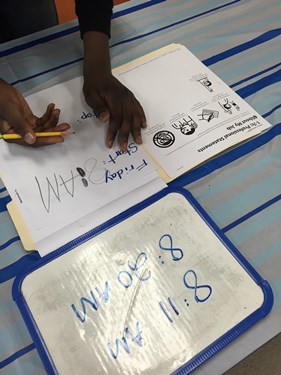
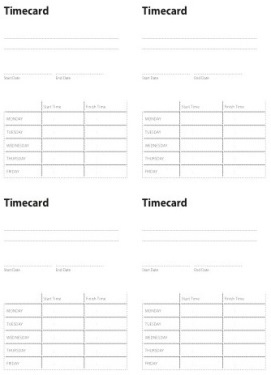
    • Create a small ‘work skills center’ in your home. Have a place for your child to ‘sign in/out’ each time for ‘work’. This builds a sense of responsibility and work readiness.

Pre-Vocational Training timecard examplesPre-Vocational Training time activity

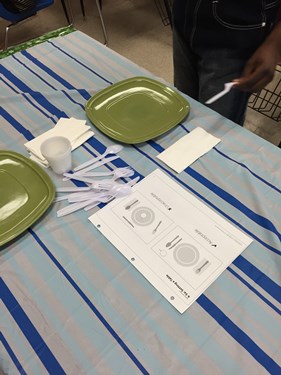
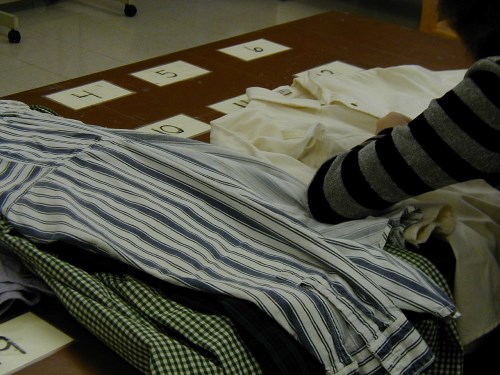
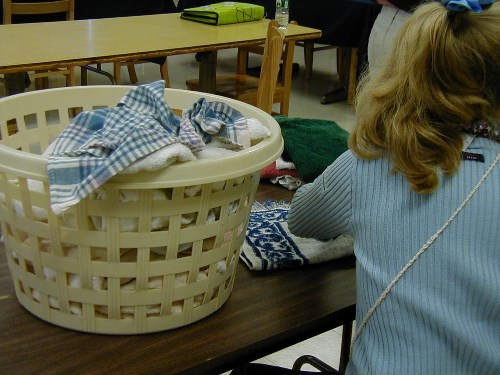
    • A variety of tasks can be introduced and completed in this space. For example, if your child will be working on setting the table, have them sort utensils in this space first to prepare for the job. Other examples of ‘work’ that can be completed in this space are filing by letter or word, collating and stapling papers and buttoning shirts. The ‘work space’ is to be utilized as a routine space for learning vocational tasks that are purposeful and rewarding for your child to complete with independence.

I Can Work table setting Pre-Vocational Training examples

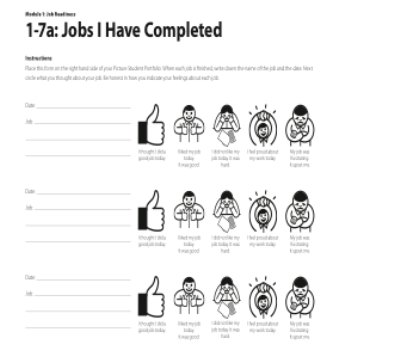
    • Additionally, have your child track the ‘jobs’ completed as well as reflect on how they felt about the job. Reflecting allows for discussions and connections to things your child likes to do as well as tasks they do not like to complete. It can be hand written, a happy face and a sad face, even a thumbs up and thumbs down! Find what way your child responds to best to keep him or her engaged and invested in the tasks.

1prevoc051prevoc06

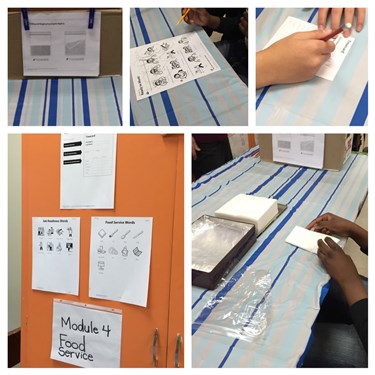
    • Create a way to make chores meaningful and connected to future goals. Knowing how to set a table is related to working in a restaurant. Folding towels is one task that might be required in the hotel industry. Buttoning and folding shirts is connected to working in a retail setting. There are countless ways to tie in hands-on activities at home, while introducing job connections to see if an area of interest stands out. The goal is for your child to learn what work environment and tasks they would be interested in vocationally.

1prevoc071prevoc08

  • Check with your child’s teacher at the middle and high school level for in-house job opportunities such as recycling, mail delivery and cafeteria set up and break down.
  • In middle and high school, inquire about off-campus job experiences in a variety of settings such as grocery stores, offices and hospital. It is important to begin the real life job experiences at the middle school level when possible. Speak with your child’s teacher for more information.

Everyone deserves to be a contributing part to this society and with a strong vocational foundation set at the right time, everyone can.


Angela Mahoney, M.Ed., is currently a special education case manager at Rogers Park Middle School in Danbury, Connecticut. Angela has worked with students of all ages in a variety of settings for the past thirteen years. Her career includes a tenure at a private school where she worked with over seventy-five middle school and high school-aged students on a weekly basis, running an inclusion-based elementary program for students with autism, as well as co-teaching core academic classes as part of a team comprised of fellow middle school educators.

Angela is the author of I Can Work! A Work Skills Curriculum for Special Needs Programs.