All posts by Guest Blogger

Dyspraxia Tips: Teaching & Treating Coordination Challenges

Dyspraxia is one type of sensory processing disorder (SPD) that makes it difficult for children to plan and perform motor tasks such as stringing beads or riding a bicycle. Children with dyspraxia may

  • Appear clumsy
  • easily break things because they use too much force or
  • struggle to fit their arms into sleeves or sequence steps to shoe tying

Children with SPD often have more than one of the 6 subtypes that impact how their brains interpret and respond to what they see, hear, feel, smell, taste and how they move. They may seem extra active or lethargic, super sensitive or oblivious, have difficulty controlling their body while using their hands or can’t discriminate what part of their body was touched or is in pain.  Let’s take a look at a few strategies that may help children with dyspraxia and other types of SPD as well as children who are typically developing.

Simplify for Success

Nobody likes failure; especially young children who have poor coordination to stack rings, string beads or lace boards.  Consider purchasing, making or adapting these types of activities to make success easy and frequent. Try using

  • an extra large tube as a ring stack and rings to stack. The one shown in the photo is made by wedging a swimming noodle into a juice container and has a motorized pen inserted on top to make it vibrate.  Vibration helps children to focus on what their hands are doing.
  • thick cord and shower curtain rings for stringing instead of offering string and beads. Many toddlers will find this an easier introduction to stringing.
  • lacing boards with a few extra big  holes and thick cord. I attached the photo of a horse to this lacing board that I used with clients during Hippotherapy (therapy using a horse as a therapeutic tool).
 

Practice Makes Perfect

Design activities to require repetition. When a child closes a jacket there is usually only one zipper to connect or a few buttons. Many children benefit from the repetition of closing several button squares. As I describe in my book From Rattles to Writing: A Parent’s Guide to Hand Skills, these are made by sewing a large button or round plastic piece (see photo) to fabric. Then cut a slit into another piece.  As your child develops skill, offer button squares with smaller buttons.
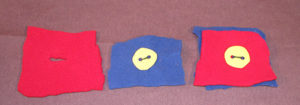
Button Squares teaching activity for treating dyspraxia

Zippers teaching activity for treating dyspraxia

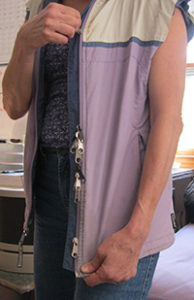
Many children are able to close a zipper once the slider is connected.  But connecting the slider onto the zipper is very tricky. In the photograph you see me wearing an old jacket and attaching several zipper sliders.  The sliders are sold in zipper repair kits or you can remove nice big ones from broken backpacks and suitcases. I have taught adults with developmental disabilities to zip their own jackets after practicing connecting and pulling up several slider every day.

Let’s Take Apart
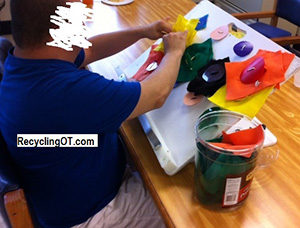
Button Board teaching activity for treating dyspraxia

Opening buttons, screw caps, zippers and knots seems to be a lot easier than closing them.  One of the strategies I describe in my book From Flapping to Function: A Parent’s Guide to Autism and Hand Skills is to teach children to “ take- apart” before teaching them to “put-together”. In this way they will become familiar and successful with the materials before learning the more challenging motor skills of tying, buttoning, snapping, screwing lids etc. It is much easier to remove the fabric pieces from the “buttoning board” shown below and children will have many opportunities to practice. This board was made by drilling holes into a book stand and tying the “buttons” onto cord that is knotted through the holes.
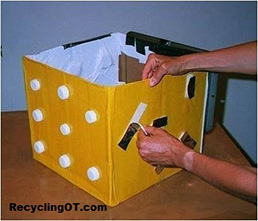
Manipulation Box teaching activity for treating dyspraxia

In my book The Recycling Occupational Therapist I describe how to make activities that are perfect for opening and taking apart. The Manipulation Box shown in the photograph has screw covers, Velcro strips, pull lids, and magnets attached to a cookie sheet so that children can remove a variety of objects to drop inside.

Keeping It Fun

Yes, practice is important but we need variation and to add sensory stimulation to keep it fun. That’s why I love

  • form boards and ring stacks that make music
  • adding a motorized pen inside containers to make insertion tasks vibrate
  • using materials such as Velcro and elastic cord that feel good to pull
  • toy animals with clothing fasteners to manipulate
  • using pretend play toys such as “Feed the Bunny”
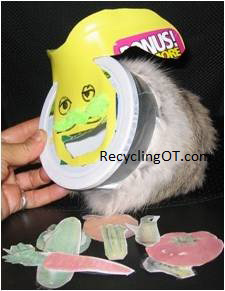
Bunny Insertion Task teaching activity for treating dyspraxia

I covered an oatmeal container with fur, attached a face to the lid and photocopied some food items. Now “Feed the Bunny” is more than a plain old shape sorter. This great for working on choice making (i.e. shall we feed bunny a carrot or tomato?), identifying pictures, counting and of course promoting a healthy diet.  I hope that you have fun implementing some of these strategies!

Here are some great Therapro products I recommend that you might use in addition to the activities I’ve discussed:
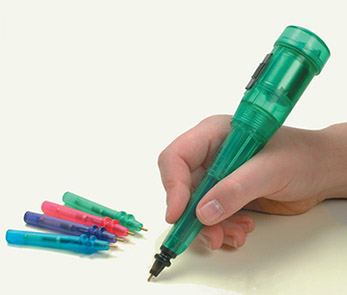
Squiggle Wiggle Writer Pen
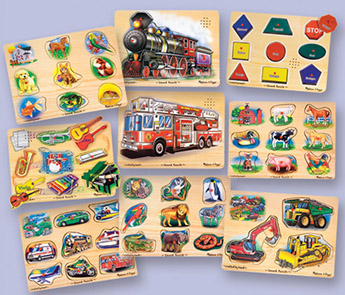
Sound Puzzles
Sound Puzzles
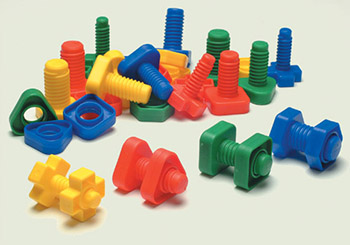
Giant Plastic Nuts and Bolts
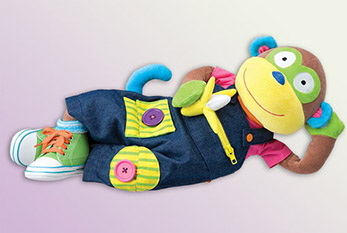
Learn to Dress Monkey


Guest Blogger: Barbara A. Smith.

Barbara A. Smith has worked with children and adults with developmental disabilities for over 40 years! She is the author of the Recycling Occupational Therapist, From Rattles to Writing: A Parent’s Guide to Hand Skills and From Flapping to Function: A Parent’s Guide to Autism and Hand Skills. Learn more about her work at RecyclingOT.com.

Getting Creative with Sweatshirts and Seat Cushions!

 Sensory Processing disorders (SPD) impact how children and adults respond to sensory stimulation such as sound, touch, what they see and movement. One basic principle of occupational therapy for individuals with SPD is to provide controlled, graded and individualized sensory stimulation to promote functional skills such as playing catch or writing one’s name. This means that activities such as tossing bean bags into containers while the child is suspended on a swing can be:

  • Controlled – as the therapist responds to the child’s reactions. For example, the therapist might push the swing faster, slower or in a different direction,
  • Graded- as the therapist chooses the type of swing used, how long the activity lasts, how heavy the bean bags are and how far away the container is positioned, and
  • Individualized – according to the child’s sensory, emotional and motor needs. For example, the child may wear a squeeze vest during the activity, name an animal each time the bean bag is thrown or have a special friend hold the container.

What is a Sensory Diet?

Parents can implement individualized sensory strategies at home in what is called a “Sensory Diet”. This is like a recipe book of activities and adaptations that the therapist designs for parents to carryover at home, school or in the community. It is important to frequently discuss with the therapist how these strategies are working out since children grow and change rapidly along with their sensory needs in different settings.

In my book From Flapping to Function: A Parent’s Guide to Autism and Hand Skills, I describe the 6 different subtypes of SPD and some general strategies to use with children who have each type. These strategies usually impact the following 3 sensory systems:

  1. Tactile – uses sensory receptors in the skin to interpret sensations, such as light and heavy touch.
  2. Proprioception – uses receptors in joints and muscles to tell us where the body is and how it is moving in relation to objects and space.
  3. Vestibular – tells our body how to respond to the pull of gravity and movement of the head. It is also called the balance system.

Now for the fun part…

child sitting on a seat cushion

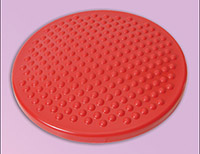
Many children with or without SPD LOVE deep, heavy pressure experiences and movement. This includes children on the autism spectrum or those with other types of developmental disabilities. One very simple strategy is to provide some type of “dynamic seating”. This simply means that the child can bounce, wiggle, rock or move around in some other way while seated. Many teachers incorporate seat cushions and ball chairs in the classroom to help students focus. The Disco Seat is one popular product. An inexpensive alternative is to sit on a deflated ball, as I am doing in the photo. Don’t have one available while eating out or sitting in the movie theater? Consider rolling up a sweatshirt for the child to sit on or curl up inside of to get a full body squeeze.

 
a child using a homemade seat cushion

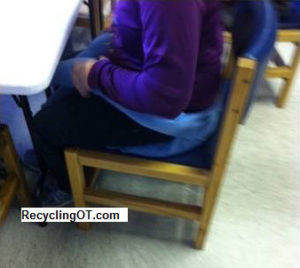
Speaking of sweatshirts, I have had great success in helping a young lady named Judy to be more focused and less agitated by placing a Disco Seat cushion inside the body of a sweatshirt. The photo shows Judy sitting on the cushion, enjoying some gentle bounces with the sleeves slung over her lap.

 
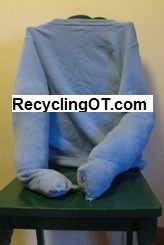
example of using a sweatshirt to make an innovative seat cushion

The sleeves are heavy because I put bags filled with sand inside of them. Next I sewed the wrist and shoulder ends of the sleeves closed so that the bags wouldn’t fall out. This adaptation can be used in a various of ways. The sweater may be placed over the back of a chair so that the heavy sleeves are draped over the child’s shoulders and body. Placing the cushion inside the sweater is optional.


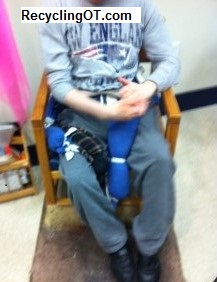
A young man named Eddy, craves extreme movement and is typically agitated unless in a rocking chair, bungee seat or swing. You can see in the photograph that his chair is adapted to not tip over given all of his body rocking. He LOVED when I attached the sweatshirt with enclosed seat cushion to the back of his chair so that he could slam his back into it while rocking. I know that he enjoyed the deep pressure bouncy sensation because he became calmer, quieter and smiled. The heavy sweatshirt sleeves are draped over his lap. I did my best to capture how I set this up in the following video while maintaining his privacy.

example of an  innovative seat cushion

Seat cushions and lap bags that are a lot nicer than the ones I make with a deflated ball, sand and plastic bags are sold by Therapro, Inc. Whether you are reading this blog post as a caregiver, therapist or other type of professional, I hope that adding these simple sensory strategies to your tool box helps the people you love or work with improve their quality of life. This is why I love being an occupational therapist!

 
Disc O'Sit
Disc O’Sit
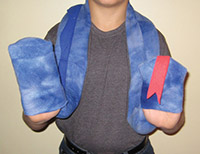
Weighted Snake Wrap
Weighted Snake Wrap
 
Barbara A. Smith

Guest Blogger:  Barbara A. Smith.

Barbara A. Smith has worked with children and adults with developmental disabilities for over 40 years! She is the author of the Recycling Occupational Therapist, From Rattles to Writing: A Parent’s Guide to Hand Skills and From Flapping to Function: A Parent’s Guide to Autism and Hand Skills. Learn more about her work at RecyclingOT.com.
Using RTI-P to Manage Therapy Caseloads

S'Cool Moves

A physical therapist called me from Ohio wanting to know more about the S’Cool Moves products, but what she really needed from me were some insights that I’ve gained from doing what I do for the last twenty years. She was a therapist making the huge shift from clinical practice to educational practice in schools. She told me that she was the ONLY physical therapist for the entire district and was spread really thin. Let’s call our therapist Amber. Amber said that the teachers seemed to want to know what they could do in the classrooms for all the students to improve foundation skills. But how was she going to reach all these teachers and satisfy the IEP goals for her huge caseload?

It was interesting. Do you know where my mind went to help Amber create a framework? It went to sharing about the Response-to-Intervention model (RTI). RTI was designed as an alternative to the discrepancy model used to determine if a child qualified for special education services. With RTI, methods of intervention are validated and data collected prior to referring a child for special education testing. Though some report RTI working well, for others it’s a mixed bag depending on how it is being implemented.

What if we could use RTI personally? Let’s call it the RTI-P model. During our conversation, I found myself explaining to Amber how RTI models work and personalizing the model for her. She got off the call with clarity and new tools to help guide her as she navigates her new position.

Today’s thought is, “How can we use RTI-P to organize our jobs and therapy caseloads?” Think in terms of tiers. RTI has three tiers. The first tier includes interventions and strategies we can use with all students in the classroom. The second tier includes modifications we need to make for small groups of students who are having difficulty with the class-wide strategies. The third tier focuses on individual strategies for the most involved students.

In your caseload, what students do you have that you could support in the classroom setting, Tier 1? Are there opportunities for you to present some strategies during staff meetings or on PD days to support teachers and students in the classroom?

Now think about Tier 2. What students need small group support either in the classroom or within designated smaller group environments?

And finally, Tier 3. What students are very involved and need your one-on-one, hands-on support?

Once you create your own personal framework, then you can figure out what materials or products will help you reach your goals, but first create your RTI-P framework.

For instance, Therapro’s Drive Thru Menus works well with all student in a classroom so this could be considered as an important tool for Tier 1 intervention. For small groups of students who are working on improving visual-motor integration, consider

  • Origami Fun for Beginners – 55 fun-to-do projects! Includes 96 sheets of authentic origami paper in a gorgeous array of colors and designs.
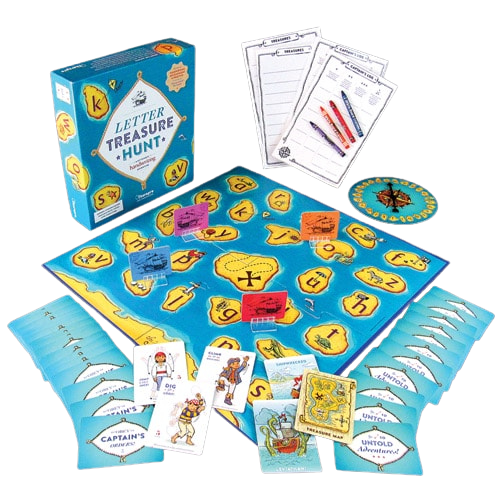
  • Letter Treasure Hunt Game – Handwriting fun!
    1. Sail your ship to an Alphabet Island,
    2. Follow Captain’s orders when you draw a card,
    3. Collect your treasure by writing the letter in the Captain’s log.

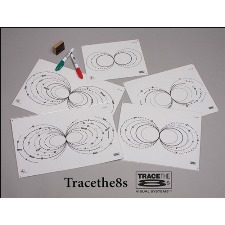
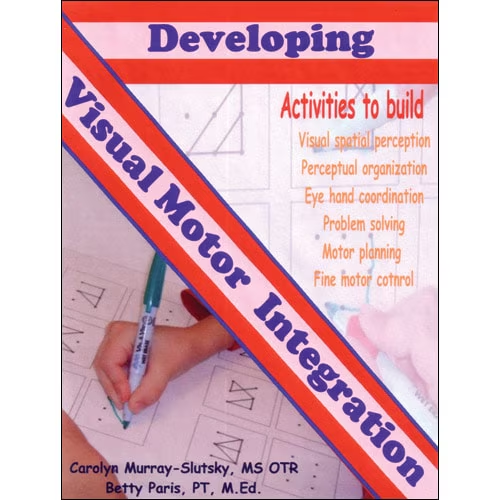
For students needing one-on-on intervention, add Developing Visual Motor Integration and Trace the Eights to your intervention strategies.


Let me know if the RTI-P makes sense to you and how you’ve used it to be more effective in your job and less stressed!

Thanks for all you do for children, Dr. Debra Em Wilson

Guest Blogger: Dr. Debra Em Wilson. I’m excited to join Therapro as a guest blogger. I am a reading specialist and the founder of S’cool Moves. I enjoy collaborating and appreciate this opportunity to connect with the Therapro community.