As we head into 2013, we want to share with you just a few of our great new products:
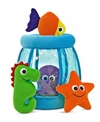
Fill and Spills are all-purpose toys for Early Intervention great for eye hand coordination and fine motor development. The multi-textured toys jingle, rattle, hum and crinkle when they are shaken or squeezed.
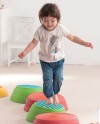
If you are looking for the “just right” gross motor challenge, these adaptable Rainbow River Stones are for you. Six brightly colored durable plastic “stones” of varying sizes (2 pieces of each size) invite many possibilities of balance activities, motor planning activities, and obstacle courses.
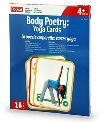
Not only do therapists like yoga, but children do too. Our new Body Poetry: Yoga Cards are split into three levels: easy, intermediate and challenging. The easy-to-follow teacher guide includes stretching exercises and follow up activities to integrate yoga into other areas of the curriculum.
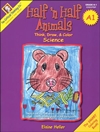
Two outstanding perceptual workbooks, Perceptual Motor Adventures and Half and Half Animals are filled with activities for developing pre-reading and pre-writing skills.
We are in final preparation for our 2013 catalog. These products plus many others will be included. We hope you’re as excited as we are!
Here at Therapro we have a BIG focus on handwriting – from Programs, to Practice Worksheets, to Grips and Tools for maintaining proper positioning. Since positioning is the foundation for good handwriting, we recommend emphasizing these skills right from the beginning.
The best position for handwriting is with the wrist in extension. This extension provides the support necessary to get the hand into a tripod position to hold the pencil.
We’ve noticed two trends recently that can hinder proper handwriting development:
Children have been learning to write, and using pencils much earlier
Children have a tendency to “hunch” their shoulders due to poor muscle tone
People don’t put babies on their stomachs anymore, meaning they don’t learn to push up – leading to weaker arm and shoulder muscles
The reason these can be an issue is because they’re using the wrong muscles of the hand – what happens is they get a “death grip” on the pencil from holding it wrong, and keeping the wrist in the wrong position.
If babies don’t gain arm and shoulder strength, this can manifest itself when first grade teachers introduce handwriting. Low muscle tone leads to poor posture and grip, which become evident when the child first learns writing skills.
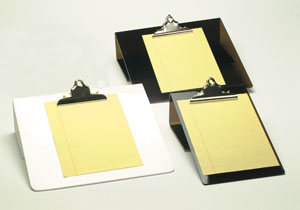
The way to get out of these bad habits is to put the wrist into extension. Since you don’t want them writing all over your walls (we don’t, at least!), the solution is a slanted surface. Having an incline of at least 20 degrees is the ideal angle for wrist extension and proper handwriting technique. Getting the writing surface more toward vertical will straighten the wrist and provide the support needed to hold a pencil correctly.
Our Write Slant Boards were first developed for the adult market, but are great to use with kids, and in the classroom. The slant board not only puts the wrist in extension, but it is also good for vision, visual tracking, and strengthening posture.
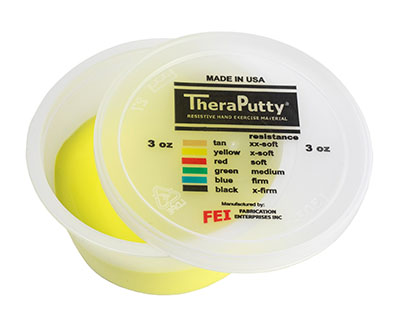
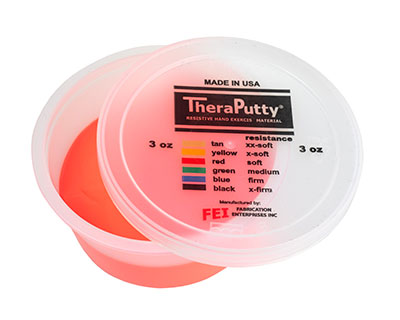
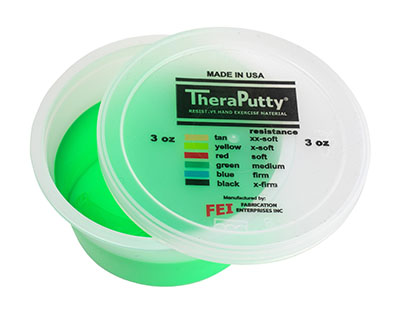
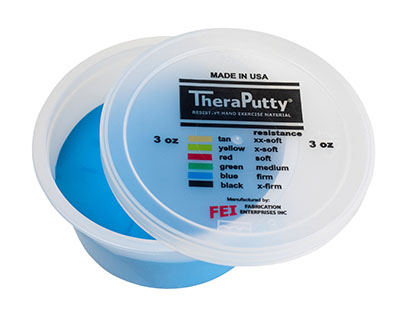
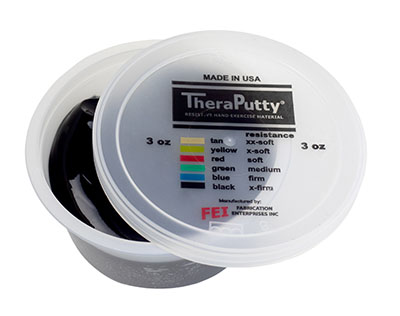
Therapy putty is great for many reasons: developing a pincer grasp, picking things up, strengthening muscles, and hand therapy, among others.is a versatile and effective tool for hand strengthening, fine motor development, and sensory input. At Therapro, we offer a full range of resistance levels to meet the needs of clients of all ages and abilities. Whether you’re working on pincer grasp, improving range of motion, or building strength, there’s a putty that’s right for you.
One of the most frequently asked questions we get is:
Which color therapy putty is best for my child or client?
Putty colors correspond to resistance levels, making it easy to select and progress over time. Here’s a quick guide to help you choose:
🟡 Yellow (X-Soft)
Best for: Very weak grip strength, early rehabilitation, or young children. This softest resistance is ideal for those just beginning hand therapy. It’s easy to manipulate and perfect for hiding small objects to encourage grasp and exploration.
🔴 Red (Soft)
Best for: Mild weakness or progressing from X-soft. Red offers a gentle challenge that helps strengthen without overloading. Great for continued development of hand strength and coordination.
🟢 Green (Medium)
Best for: Moderate strength needs, including general strengthening and functional use. This level is often used in clinics and schools. It provides enough resistance for effective hand workouts while remaining easy to manipulate.
🔵 Blue (Firm)
Best for: Older children, teens, or adults needing a higher challenge. Firm putty increases the strengthening effect, making it ideal for progressing clients or those with behavioral or sensory regulation needs
⚫ Black (X-Firm)
Best for: Maximum resistance, proprioceptive input, or sensory-seeking individuals. This ultra-firm option is extremely dense and provides intense feedback. It’s often used with adolescents or clients needing heavy work for calming and focus.
💡 Tip: Firm putties like Blue and Black can be difficult to cut and package – that’s how strong they are!
How Much Putty Should I Use?
We recommend buying enough putty to fully engage the hand — especially for activities like hiding small items inside. This encourages grasping, pinching, and active finger isolation. For clients with limited hand range, more volume makes manipulation easier.
Putty Use Tips and FAQs
“My child doesn’t like this color—can I choose another?” Yes! While color indicates resistance, you can choose based on preference as long as the strength level is appropriate. Many families refer to it by color (e.g., “the yellow one”) for ease.
“How do I remove therapy putty from fabric or hair?” Therapy putty is silicone-based, so it usually comes off hard surfaces easily. But accidents happen! If it ends up on fabric, in hair, or on carpet, check out our putty removal guide for practical tips.
⚠️ Caution: Lighter resistance putties (especially Yellow and Red) can stretch into stringy threads and may stain porous surfaces. Always use putty on non-porous, easy-to-clean surfaces like kitchen counters or therapy trays.

 Here at Therapro we have a BIG focus on handwriting – from