Category Archives: Fine Motor & Hand Skill Development

Explore tools, games, and activities that support fine motor skill development including grasp, dexterity, hand strength, and coordination essential for functional tasks.

Integrating Fine Motor Practice into Centers and Push-In OT

Therapro's Hand Skills and Refinement Kit

An important goal for school-based occupational therapists is to make therapy functional, inclusive, and accessible, especially within the general education setting. Supporting fine motor skills in push-in OT is a practical way to meet students where they are, and the Therapro Hand Skills Development and Refinement Kit is a go-to resource for doing just that. With ready-to-use materials designed for classroom use, this kit helps therapists promote fine motor development right where students learn best: in the classroom

This ready-to-use kit makes it easy to embed meaningful, goal-directed activities into daily routines—whether setting up a fine motor center, co-teaching during morning rotations, or working side by side with a student during a push-in session.


Why Use a Kit in the Classroom?

Fine motor challenges often show up in everyday school tasks, like cutting, writing, opening containers, or manipulating classroom tools. Rather than pulling students out of class, bringing therapy to them increases participation, generalization, and confidence. Using a structured kit like this means therapists can quickly set up engaging, developmentally appropriate activities with minimal prep and maximum impact.


Classroom Centers: Fine Motor Skill Building for All Students

In many classrooms, the teacher rotates small groups through learning stations. Occupational therapists can collaborate with teachers to include a Fine Motor Center using components from the kit. Here are some examples of center activities using included items:

  • Link ‘N Learn Links: Students connect links by color or pattern, working on bilateral coordination and hand strength. Try timed races or spelling challenges using linked letter cards.
  • Plastic Coins + Mini Dice: Use for grasp and release, sorting by size, or simple coin/dice math games to combine cognitive and motor skills.
  • Charm and Round Pop Beads: Encourage students to snap together and pull apart to build finger strength and precision.
  • Jumbo Tweezer: Pick up beads, coins, or classroom manipulatives for a fun twist on sorting or math tasks.

Each activity strengthens key hand skills while aligning with academic or classroom goals, making OT strategies visible and relevant.


Push-In Sessions: Targeted Goals, Real-Time Coaching

During push-in OT sessions, therapists can work directly with students at their desks or in small groups using the kit for skill-specific interventions. Some favorite applications:

  • Nut & Bolt Pairs: Great for developing bilateral coordination and fine motor precision.Try pairing this with a visual scanning or matching game.
  • Eye Droppers: Use with water or colored liquid on a laminated target sheet for pincer grasp refinement and hand stability.
  • Spinning Tops: A motivating tool for wrist stabilization and isolated finger movement—plus they’re fun!
  • Smiley Face Wind-Up Toy: Wind and release to work on grasp strength and bilateral sequencing, then challenge students to estimate distance or race them.
  • Standard Pencil: Practice proper grasp, pencil control, and name writing during writing tasks.

The variety of tools makes it easy to individualize for different goals, from improving endurance for writing tasks to strengthening prehension patterns.


Tips for Success

  • Build routines around the kit—students love knowing what to expect each week.
  • Create task cards with visual cues to promote independence at centers.
  • Use classroom themes (e.g., math, science) to tie fine motor activities to curriculum goals.
  • Share progress with teachers and families using simple checklists or observation notes.

Final Thoughts

The Therapro Hand Skills Development and Refinement Kit offers a practical, engaging, and inclusive way to support fine motor development where it matters most—in the classroom. Whether you’re creating a fine motor center or joining in a push-in session, this kit makes it easier to integrate therapy into the flow of learning.

Want to learn more or grab a kit for your school? Check it out here.

Tools for Developing Scissor Skills

On September 19, 2023, Kelly Wilk-Downs, OTR/L presented Therapro’s first FREE Webinar of this school year, Cutting Made Simple. She offered a comprehensive look at the:

  • Development of scissor use
  • Selecting appropriate scissors for students
  • Prerequisite skills needed for learning to cut with scissors

This blog post comes on the heels of Kelly’s webinar; in this post we are reviewing some tools available at Therapro that are perfect for encouraging the development of scissor skills in beginner scissor users and beyond!

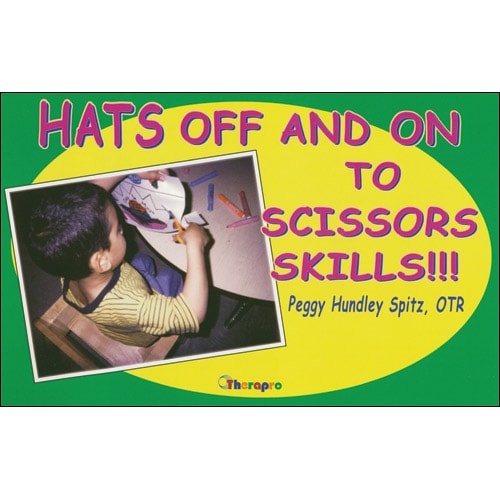
Cover of the book Hats Off and On to Scissors Skills a book for Developing Scissor Skills

Hats Off and On to Scissor Skills: Exclusive to Therapro is a creative publication called Hats Off and On to Scissor Skills, by
Peggy Huntley Spitz, OTR. This book consists of 25 themed hat designs that can be made for 4
progressive levels of cutting skills:

  • Straight line cutting and/or random snipping
  • Curved line cutting
  • Simple shape cutting
  • Complex shape cutting

This is a fun and unique activity book that will help you create an enjoyable project for the
developmental progression of scissor skills!

Comprehensive Scissor Assessment Kit used for Developing Scissor Skills

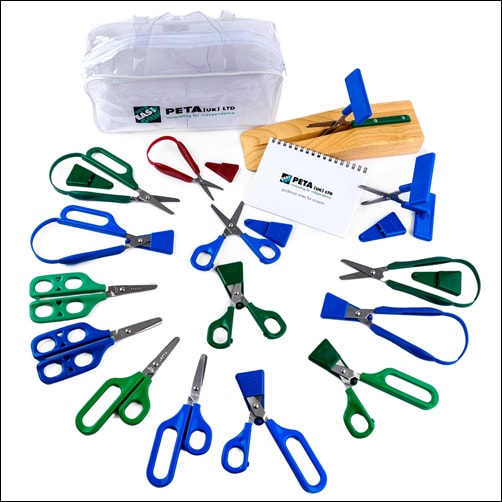
Comprehensive Scissor Assessment Kit: Therapro offers a variety adaptive scissors that will ensure active participation from all students
learning cutting skills, including those with limited hand function due to weakness, incoordination, and other functional limitations. Check out Therapro’s Comprehensive Scissor Assessment Kit, which includes 15 scissors of 10 different styles, plus a carry case and Manual.

Therapro carries a variety of scissors to meet the different needs of scissor users as they are progressing developmentally. Here is a sample of some of our favorite scissors.

Easi-Grip Loop Scissors for early scissor skills

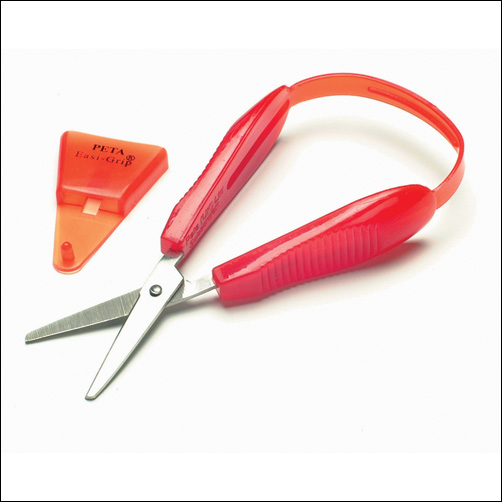
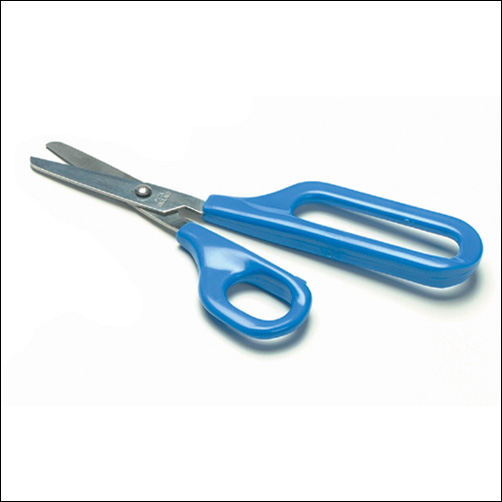
Easi-Grip Loop Scissors : Easi Grip Loop Scissors are available in two sizes; the Mini Easi-Grip Loop Scissors are great for pre-school children while the standard Easi Grip Loop Scissors are made for the adult sized hand. These scissors are self opening for either right or left hand. They are operated by using pressure between the thumb and fingers or palm and fingers.

Self Opening Scissors

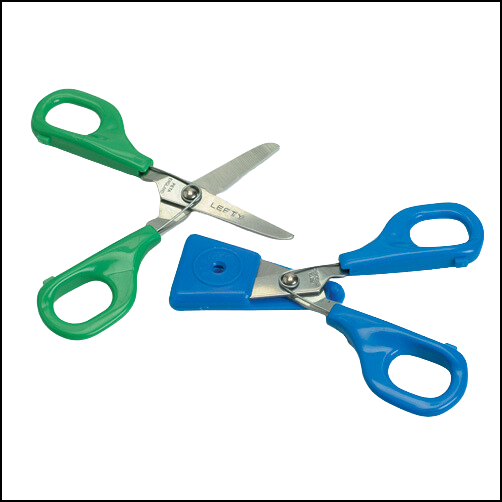
Self Opening Scissors : The Self Opening Scissors are available for left and right handed users. These scissors reopen automatically after hand pressure has been released.

Long Loop Scissors

Long Loop Scissors : The Long Loop Scissors are also available for left and right handed users. These scissors allow the user to use whole hand strength to operate. They also provide greater finger contact, which offers better control.

Mounted Table Top Scissors

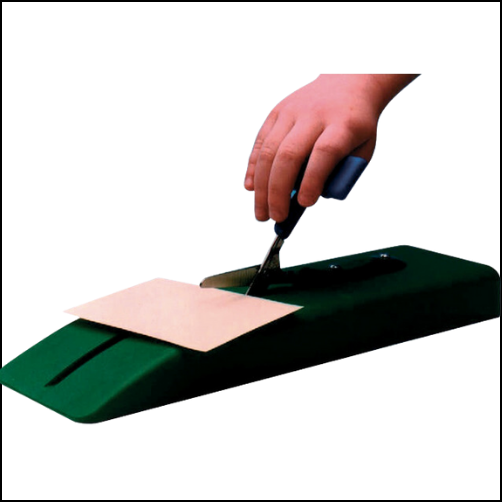
Mounted Table Top Scissors : The Mounted Table Top Scissors offer stability with scissors attached to a base. To operate users simply depressing the large handle.

Be sure to check out all of the scissors and scissor activities available at Therapro!

Guest Blogger: Filomena Connor, MSOTR, Retired

schoodles logo

Using Schoodles School Fine Motor Assessment (SFMA) as Part of a Strengths-Based Assessment


What does a ‘strengths-based’ assessment mean to you? In the past, it may have simply
involved listing a student’s strengths and then moving on to their needs. However, a
strengths-based assessment can be a powerful tool for promoting self-confidence,
motivation, and independence. This type of assessment highlights areas for growth and
improvement, while simultaneously showcasing a student’s positive attributes. By utilizing
a strengths-based approach, parents, staff, and students can all view the student in a
different, more positive light.

Using a criterion-reference tool like Schoodles, you can more effectively locate areas where
a student excels, as well as areas that require further support. Unlike standardized tools,
Schoodles offers the flexibility to provide verbal prompts, visual demonstrations, task
grading, or other aids to help students complete challenging tasks.
Here are some strengths/needs we can observe during testing:

  • Good attention to task/ may need support to move from activity to activity
  • Demonstrates interest and curiosity about all of the materials/may need a limited amount of materials in front of him to work to his potential
  • Highly sociable/may need some social time before beginning hands-on tasks
  • Quick learner/excellent candidate for 6-10  week burst of service to improve skills
  • Easily understands and follows visual versus verbal directions/may benefit from visual supports to move through the day
  • Loves to use his hands/ may benefit from fidgets or may need to be presented with one task at a time and given extra time to explore hands-on activities.

To effectively support students, we must shift our attention from their limitations to their capabilities. It is a common misconception that a strengths-based focus disregards a student’s challenges. We can describe a student’s skills in neutral or positive terms, highlighting attributes that help them succeed. While we do not ignore struggles or weaknesses, we strive to reframe them in a constructive manner.

You could start by reviewing your previous documentation to initiate a shift toward strengths. Highlight all the positive statements in green, all neutral statements in yellow, and all negative statements in red. By doing this, you can aim to minimize negative statements and ultimately eliminate them altogether.

When writing reports, it’s important to provide a positive summary of your data while still including any challenges. Here are some helpful tips:

  • Place all test scores at the bottom of your report.
  • Use positive or neutral descriptive language only.
  • Focus on what the student CAN do.
  • Reframe subjective language into objective language.
  • Highlight areas of potential growth.

By using Schoodles‘ SFMA alone or in combination with other tools, you can gain valuable
information about student strengths in a relatively short amount of time. Focusing on
student strengths during information gathering, report writing, and sharing will help
facilitate a sense of student efficacy in the students, their parents, and staff.

Guest Blogger Marie Frank OTR/L, Schoodles Co-Owner