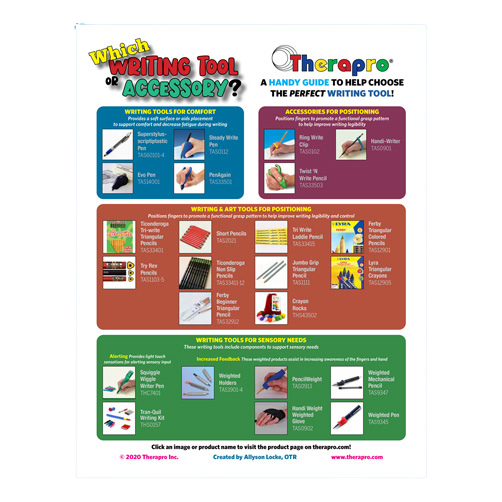
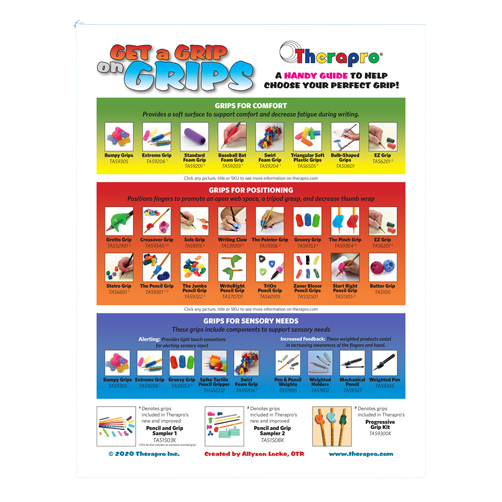
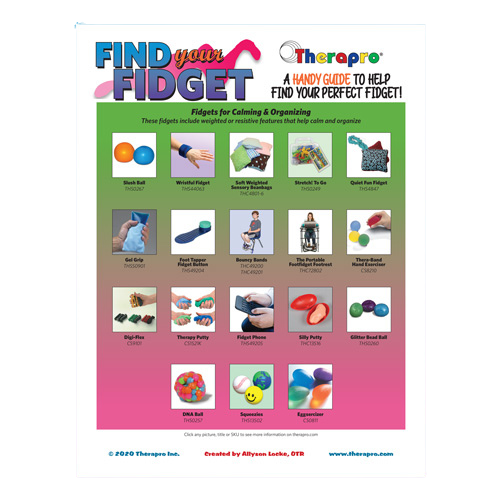
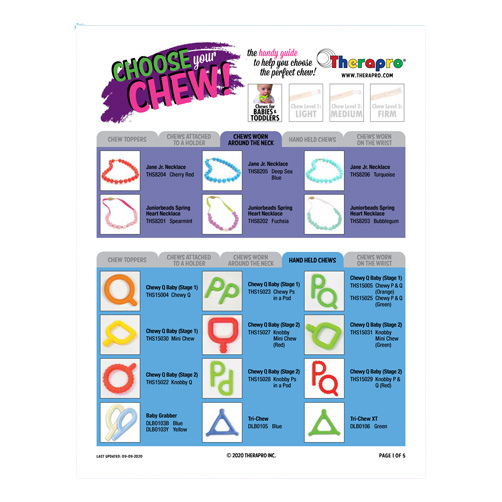
Category Archives: Therapist Resources

Comprehensive resources, strategies, and tools designed to support therapists in delivering effective care and ongoing professional growth.

child playing with blue sticky object

Keeping Skills Sharp All Summer Long: Summer 2022 Edition!

Allyson Locke M.S., OTR/L & Sarah Glovasky M.S., OTR/L

Summer is fast approaching but that doesn’t mean kids need to lose the skills they developed over the last academic year! Last year, we posted a blog filled with summer activity ideas geared toward preventing the “summer slide”.  As therapists, we know summer activities provide numerous opportunities to develop and keep skills sharp for the upcoming school year.  So we are bringing back the topic with this new post.  New this year are more activity ideas and contributions from Sarah Glovasky M.S., OTR/L! As always, appropriate supervision is recommended!

Get Messy!

Messy play is a great way to develop the sensory skills needed for important school tasks like handwriting and social interactions.  Summer is the best time for these messy activities because they can be done outside leaving the mess outdoors. An added bonus is that it is usually warm enough for a quick wash with the hose before going back inside.  A few ideas to try:

  • Hide objects (like rocks, sticks, or mini animals)  in a pile of mud, shaving cream, or leaves. How fast can you find them? How many can you find in 10 seconds? Not only is this a great sensory activity it helps strengthen the visual perceptual skills needed for academic tasks like reading! 
  • Stomp in rain puddles, roll down a grassy hill, or skip through a soft patch of dirt. These big body movements help develop the vestibular and proprioceptive systems which are so important for self regulation! 

When it is too hot or too rainy to go outside there are still plenty of opportunities for sensory exploration that are a bit less messy! 

  • Make a sensory collage with items found in the recycling bin! How many different textures can you incorporate? What textures do you like to feel? As a bonus, ripping, crumpling and rolling paper, tissue, and cardboard are all great ways to strengthen the muscle of the hand.  For more ways to use recycled materials check out Second Hand Therapies
plastic container scooping water and dumping it into a yellow bin filled with water, an example of an activity for keeping skills sharp in summer
Jug Scoop
From: Second Hand Therapies: Recyclable Strategies & Useful Tools

Make Art!

Art projects afford great opportunities to develop the small muscles in the hand.  This muscle development is critical for academic tasks like writing with a pencil and cutting with scissors. Get creative with your art projects, try:

blue turtle made of playdough with a green shell and colorful dots- an example of an activity for keeping skills sharp in summer
  • 3D Art.  Three dimensional art helps kids build form and space concepts.  Building a fairy castle outside is a great way to learn about size concepts.  Inside, building with blocks, clay or even pillow cushions is a great way to explore how these concepts work.  To add a sensory component try using scented dough
  • Tie-Dye Prints: This is a great outdoor activity! First color an old bed sheet or large piece of paper with washable markers. Next use a spray bottle, filled with water, to squirt the drawing. Watch the colors mix and swirl together! Using a spray bottle not only helps build the muscles in the hands it is also great for bilateral coordination! For a smaller scale version, use an eyedropper to wet the paper! 
  • Draw pictures in the dirt or other mediums like pudding (great for kids who like to explore with their mouth!) Use a stick, rocks, or fingers to draw with! We still love the Ed Emberly drawing books when you need drawing inspiration, stencils are another helpful tool! Drawing is so important for early writers and is great for visual perceptual development!

Play With Bubbles!

Many skills can be targeted with simple bubble activities. Eye hand coordination and oral motor development are just a few!  Blowing bubbles is also great for attention and regulation; to learn more about this check out the book M.O.R.E.: Integrating The Mouth With Sensory And Postural Functions. For fun with bubbles, try:

  • Making Bubble Art!  Make bubble paint by putting a small amount of bubbles and a dab or two of food coloring in a bowl (use different bowls for different colors). Use a bubble wand and dip it into your favorite color. Blow the colored bubbles right at plain paper and watch the designs come alive! 
  • Play Catch! Chasing after, stomping on, and catching bubbles are great ways to get some extra energy out. It is also a great way to develop eye-hand coordination and the visual skills needed to complete academic tasks like copying from the board.  To make bubbles easier to catch try using Touchabubbles
  • Make A Mountain of Bubbles! For a fun indoor activity, fill a small dish bin or other similar size, shallow bucket with lots of dish soap and a few inches of water.  Use a straw to slowly blow into the water to make a mountain of bubbles.  To really work the muscles in the mouth try a long straw or one with lots of twists like the Connector Straws

With these fun activity ideas the learning doesn’t have to stop when school is out. Keep skills sharp and be ready for the upcoming school year! 

Making April Autism ACCEPTANCE Month

Claire McCarthy

April brings the beginnings of warm weather. It brings more time spent outside and the return of the birds who went south for winter. It also brings Autism Awareness Month. Fundraisers are held for local and nationwide autism related organizations. Facebook and Instagram are full of memes, posts, stories, and quotes about autism. This is all great, but what happens on May 1st? What happens when the posts get buried under cute animal videos and the fundraising moves onto the next mission?

Now, don’t get me wrong. I think awareness is wonderful. However, most of the world is very aware of autism now. They know organizations exist for it. There are plenty of tv shows and movies that portray autistic characters. We see autism in the news. What we need to be striving for is Autism Acceptance. We need to be striving for a world where autistic individuals are valued as community members, coworkers, and friends. A world that values and honors autism 365 days a year instead of 30.

To begin the move towards Autism Acceptance, there are some key terms we should know.

  • Neuro diversity: a viewpoint that brain differences are normal, rather than deficits
  • Neurodivergent: people who have diagnoses such as ADHD, autism, OCD, dyslexia, etc.
  • Neurotypical: individuals of typical developmental, intellectual, and cognitive abilities
  • Ableism: discrimination in favor of able-bodied or neurotypical people

Most of us on this blog are familiar with autism. For those who may not be, it is defined as “a developmental disorder of variable severity that is characterized by difficulty in social interaction and communication and by restricted or repetitive patterns of thought and behavior”. It is deficit based. There is nothing wrong with acknowledging the challenges seen in an autistic individual. However, let’s flip that around with a quote from NeuroTribes and define neurotypical: “Neurotypical syndrome is a neurobiological disorder characterized by preoccupation with social concerns, delusions of superiority, and obsession with conformity. There is no known cure.” Makes one think a little, doesn’t it?

To continue on a path of autism acceptance, we also need to target the myths around autism. One I hear all the time is, “S/he can’t be autistic. S/he speaks so well.” The DSM-5 and DSM-5-TR say nothing about verbal communication deficits in regards to autism. “Accompanying language impairment” can be added to an autism diagnosis, but having typical spoken language skills does NOT mean an individual is not autistic.

Another common misconception is that every child who receives an autism diagnosis must receive Applied Behavior Analysis (ABA) services and must be eligible for an Individualized Education Plan (IEP) when they reach 3 years of age. Yes, ABA is one of the few evidence based autism specific teaching methods. This research dates back to the 1960s when autism rates were 1 in 2,500 people. This research was done on individuals that would be considered “low functioning” and often had accompanying Intellectual Disability. Autistic learners needs to be seen as individuals the same way that neurotypical learners are seen.

That last paragraph brings me to another issue that gets in the way of autism acceptance- functioning levels. Parents and therapists are so quick to get caught up in levels. Many people think that a functioning level can tell you all about the autistic individual. One of the problems with levels, though, is that it makes it harder to see past the diagnosis. When someone is diagnosed with “high functioning autism” people have a hard time understanding their challenges, honoring how hard that individual works day to day to appear high functioning, and sees less need for services. When someone is diagnosed with “low functioning autism” people don’t see their competence, assume lower intellectual capacity, and lower their expectations for the individual.

What can we do as therapists, parents, family members, and friends to change from Autism Awareness to Autism Acceptance? A simple place to start is to change our vocabulary. Try to ditch “red flags” or “symptoms” and replace them with “characteristics” or “learning profile.” Don’t be afraid to use “the A word” in your every day life. Talk about individuals being autistic the same way you would talk about someone wearing glasses or having black hair. Encourage children to ask questions about themselves or others. Using statements such as “don’t stare” or “mind your business” inadvertently tell children that what the autistic child or adult is doing is “wrong” or something to be ashamed of.

Along the lines of observing behaviors, remember that all behaviors serve a purpose. A tantrum or “noncompliance” is not the child being difficult or trying to upset an adult. They are letting us know they have had enough, do not understand what we are trying to do, or do not understand why we are trying to do something. Self-stimulating behaviors should not be a target in therapies. These are physical needs to self-regulate and make sense of a neurotypical world. The more an autistic individual suppresses the need to stim the more the individual will need to eventually “get it out” and it will likely be in a way that is not fun for them or others such as self-injurious behavior or a meltdown.

Some people may be reading this and thinking, “But what about all of the challenges? What about those who may never be able to live independently or have challenging behaviors day after day?” This blog is in no way saying that these challenges should be ignored. In fact, that would be just as ableist as saying the positive characteristics of autism should be ignored. What needs to be thought about is that we are not out there to “cure autism” or “teach a child to look typical.” We are out there to make an autistic person who has challenges become an autistic person with as little barriers in their life as possible.

One of the best things we can do is to listen to autistic voices. Autistic adults and children can teach us more about autism than any study or textbook can even begin to. Families who have loved ones with autism are also a wonderful resource. If it hasn’t been said clearly enough, the best thing to remember is that autistic individuals are just that- individual. They will all have different thoughts, feelings, and beliefs in regards to THEIR autism. Autism Acceptance begins with understanding that and valuing each individual for exactly who they are.

More Than Just A Slant Board!

Slant boards are an invaluable therapeutic tool. They are a staple feature in classrooms and an added bonus to a well-equipped homework station. The versatility of slant boards allows for endless uses; they can be used at desks or tables during seated work, on a counter when working in a standing position, or even on the floor when working in the prone position (pro tip- this is a great way to develop important postural muscles!).  Some great benefits to using slant boards are:

Improve Pencil Grasp!
Writing on a surface that is positioned at an approximate 20 degree angle will put the wrist in the optimal extended position. This positioning encourages better pencil grasp and fine motor control.  Therapro’s Better Boards are lightweight and portable, making it easy to access the benefits of an angled writing surface just about anywhere!

Increase Attention & Focus!
Bringing visual information closer to eye level helps increase visual attention and focus.  It can also help decrease eye strain.  Place reading material on a slant board (or even a book holder) helps bring materials closer to eye level. 

Improving Posture!

Placing work materials on a raised surface, like a slant board, can help to decrease the rounded back posture. (Pro tip, ensure the angle of the slant board is at least at 22 degrees! ) The Aluminum Adjustable Slant Board and Adjustable/Collapsible Lightweight Slant Board both feature an adjustable angle, making it easy to find the perfect height!

Increasing Accessibility!
Many slant boards feature a clip to hold and stabilize papers. This feature is beneficial for one handed access or when bilateral coordination is decreased.  Write Slant Boards have an extra large clip for even easier access!

Slant boards are a great therapeutic tool for solving a variety of visual perceptual, fine motor and postural challenges!

Allyson Locke M.S., OTR/L & Sarah Glovasky M.S., OTR/L