Clinical Tools for Treating Childhood Apraxia of Speech: Recap

Lisa Mitchell, M.S., CCC-SLP is an expert in Childhood Apraxia of Speech (CAS) and recently shared clinical tools for treating CAS

October’s Saturday Seminar speaker, Lisa Mitchell, M.S., CCC-SLP is an expert in Childhood Apraxia of Speech (CAS). She is a pediatric speech language pathologist, Clinical Director and co-owner of Clearly Speaking, a private practice in Hampton Falls, Dover and Londonderry, NH. Lisa has been recognized for extensive training and expertise in CAS by Apraxia-Kids.

On October 26th, Lisa shared her passion with attendees who are speech language pathologists, occupational therapists, OT students, and teachers, with her presentation entitled Armed and Ready for Monday Morning! 26+ Valuable Clinical Tools for Treating CAS (Childhood Apraxia of Speech) from A-Z. She organized her talk in a unique way that highlighted “Tips and Strategies for Treating CAS” in an A through Z format. She discussed some of her favorite publications including those by Pam Marshalla, such as Successful R Therapy, and Apraxia Uncovered.

Lisa explained that CAS is typically part of a broader diagnosis and is a challenging diagnosis to treat. She discussed the importance of collaboration with others on the team, i.e. OTs, who are working with the student on motor issues. Difficulty with motor planning can lead to errors in speech production. With a motor speech disorder, the student has difficulty achieving smooth movement from one sound to another. So, as the complexity and length of words increase, the student has more difficulty. As we can imagine, the child’s level of frustration increases when they are trying to talk.
Wind-Up Toys for reinforcers. Lisa touched on a controversial area for speech/language pathologists’ treatment – oral motor exercises. She discussed how using exercises not attached to speech for children with CAS, such as blowing whistles, bubbles, etc. will not help a child talk. However, using a whistle to help position the lips for speech is useful if the whistle is removed and the student is then given a syllable to produce using lip rounding.

Lisa is a gifted presenter and her passion for her CAS work is evident! She offered a hefty toolbox of ideas and strategies for treating CAS. With such a varied audience today, her tip that was very powerful and resonated with us all was that team collaboration, including parents, strongly benefits a child with Childhood Apraxia of Speech.

Here are some of the appreciative comments from those who attended Lisa’s seminar:

“Very insightful and great ideas for therapy. Enjoyed the insights on co-treating.” – Beth M., COTA/L

“I would recommend this seminar to a colleague. I would like to learn more
about collaboration of OT/PT/SLP – how to work together.”
– Maria L., Speech/Language Pathologist

“Easily explained and well thought out.” – Tai M., Occupational Therapy Grad student

“Learned a lot and was easy to understand.” – Anonymous, Occupational Therapy Grad student

Thank you, Lisa!

Filomena Connor, OT, MS, OTR
October 26, 2019

Making Sensory Connections Through Mock Sense-Ability Activities

Karen Moore, OTR/L, author of the Sensory Connection Program

On September 14th, Therapro’s Saturday Seminar Series featured Karen Moore, OTR/L, author of the Sensory Connection Program. Karen’s passion is mental health practice, where she has had extensive experience in acute psychiatric care and in various residential settings with adult and adolescent psychiatric patients. Her career-long commitment to the study and use of sensory modalities for treatment in psychiatric care culminated in the writing of her book, The Sensory Connection Program: Activities for Mental Health Treatment. Her subsequent publications include: The Sensory Connection Program: Self Regulation Workbook and The Sensory Connection Program: Curriculum for Self Regulation. Karen has presented workshops on sensory related treatment to programs and facilities throughout the country, including presentations for “at risk” youths, special needs students, and behavioral programs for adolescent treatment.

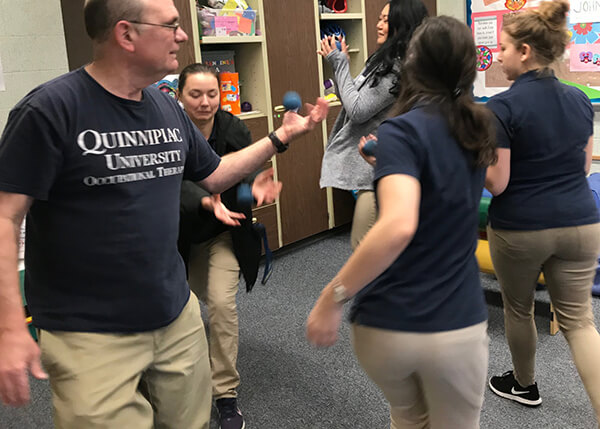
Karen’s seminar involved active participation by all the attendees in a simulated Sense-ability Group while sitting in a circle and being challenged motorically, socially, cognitively, and with sensory activities. Karen demonstrated how to adapt the group to target certain behaviors and skills of individuals in the group with the goal of each participant feeling competent and positive. Karen’s style was encouraging, supportive, and at the same time fluid in targeting the needs of each participant. Her anecdotes from her practice were enlightening. Karen described the Sense-ability Group Stages 1-6 along with activities the facilitator might use in each. These stages include the Awareness Stage, Moving and Breathing Stage, Conversing Stage, Active/Interacting Stage, and Learning Stage. Attendees tried out many novelty as well as familiar games in the group such a Hot Potato, to spark interest and energize a sluggish group; ball play with Koosh Ball, parachute games for movement and interaction; Theraband rowing for strengthening and reciprocal movement; Thumball to help express emotion, and many many more! Karen referred all to her website sensoryconnectionprogram.com for full instruction and details for every stage of the Sense-ability Group.

Karen is a Therapro author, and all of her publications are available through the Therapro website. She recommends both the manual and handbook of The Sensory Connection Program: Activities for Mental Health Treatment. These activities can be adapted and interchanged easily for a wide range of purposes, ages, and settings. All of Karen’s books use a person-centered treatment approach that begins with self-awareness and then moves on to self-regulation and eventually to self-care.

In summary, a Sense-ability Group is a highly adaptable, supportive group for those who experience a variety of symptoms that might include, depression, anxiety, psychosis, disorganization, poor self regulation, sensory problems, difficulty with social skills, physical challenges, and much more. The facilitator designs the group to ensure that the participants have a successful, enjoyable experience. Every group is different and is modified by the facilitator depending on the environment, the mood of the group, the participants, etc. Activities might include movement, sensory, physical, cognitive, and social experiences. The goal of the group is that each participant feels competent and improves function.

Thank you, Karen, for sharing your knowledge, expertise, and dedication to mental health treatment by modeling how a Sense-ability group can be a highly effective occupational therapy treatment modality… and lots of FUN!

Take a look at just a few of the glowing comments from those who attended Karen’s seminar:

“It accentuated how incorporating sensory games can enhance engagement, self-regulation & learning all at once.” – Christine C.B., Occupational Therapist

“Awesome ideas for sensory based social skills learning. Great intro & walk through of the materials.” – I.D., Occupational Therapist

“Very hands on and applies to so many different levels of abilities and ages!!” – Beth M., Occupational Therapist

“Hands on. Lots of group ideas. Real life examples. Very comprehensive. Holistic approaches. Many recommended activities & resources.” – Joann W., Occupational Therapist

Thank you, Karen!

Filomena Connor, OT, MS, OTR
September 14, 2019

6 FAB Strategies to Improve Pediatric Therapy Behavior

By John Pagano, Ph.D., OTR/L

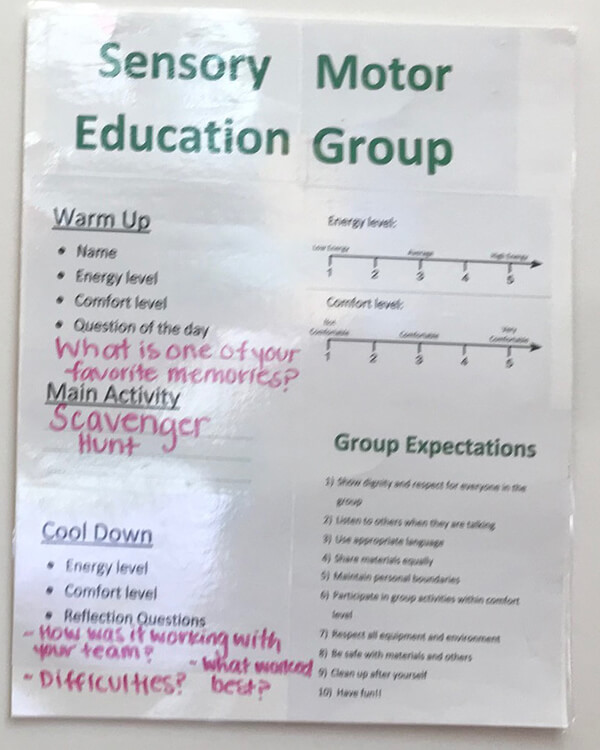
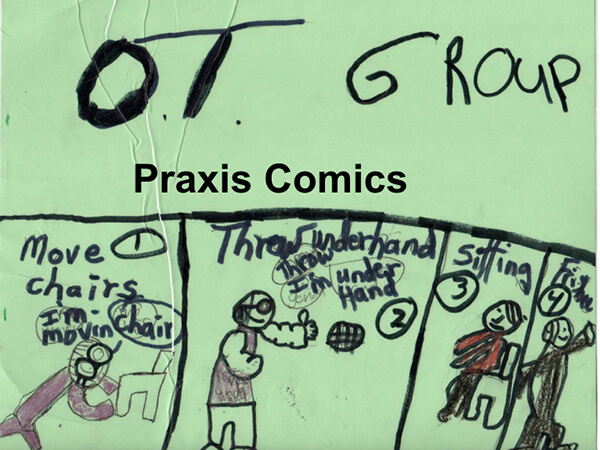
  1. Increase structure – Especially with students (e.g. sensory seekers) who trash your therapy room getting increasingly dysregulated, increase the structure. One way is by starting the session with all the toys locked up, and listing or assembling pictures of all the activities the client will do in order, before starting the session. Praise the client and check off each activity after they complete it and clean up, then unlock and begin the next activity. Another option for motivating clients when developing the activity list is to alternately have them choose the first activity and the therapist chooses the next one. Groups can also be structured with pictures listing the activities in order, or by having group members draw and review a praxis comic depicting the group activities in sequential order.
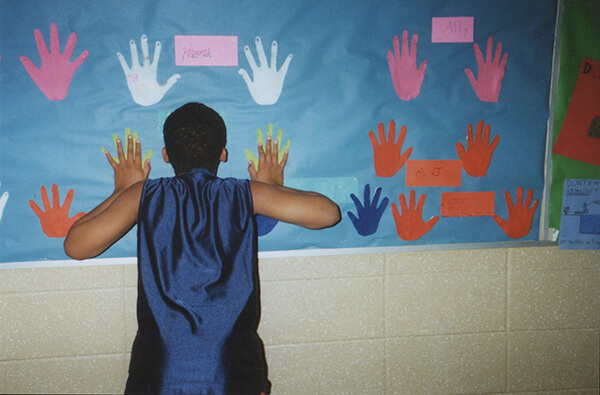
  2. Preferred Activities & Choices – Clients will work better if given choices between 2 or more activities, and presented with tasks they like to do. To assure that therapeutic goals are addressed you can present 2 choices addressing the same therapeutic goals (e.g. for deep pressure to reduce arousal offer wheelbarrow walking or wall pushups).
  3. Alternate seated with preferred gross motor tasks – For evaluation and treatment sessions it is often helpful to alternate seated fine motor writing tasks with preferred gross motor activities.
  4. Intersperse Easy – Instead of giving 10 challenging tasks, help improve the client’s motivation and effort in trying challenging new tasks by presenting 5 new tasks (covering all the concepts in the original 10 tasks you were going to teach), and alternating so every other task is something the client likes to do and has mastered, then reinforce him for doing it correctly.
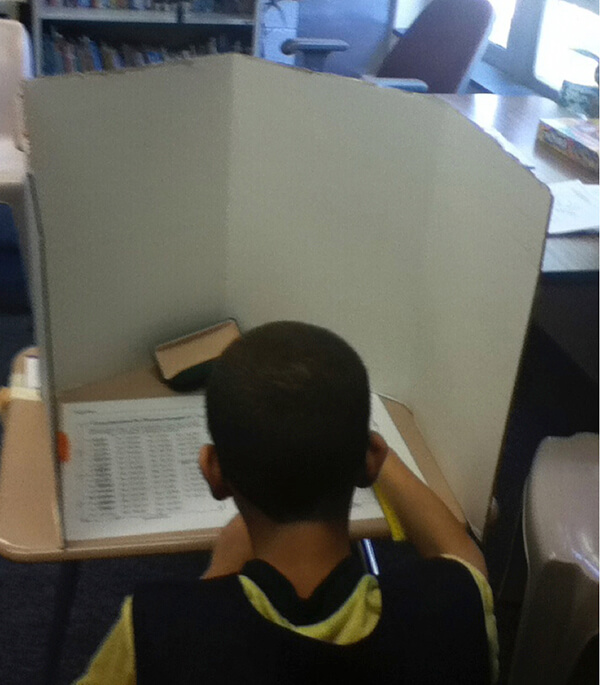
  5. Reduce distractions – Especially in groups or the classroom, minimize problematic sensory distractions to improve attention. Study carols help minimize visual distractions, while noise canceling headphones are useful for auditory distractions. It often helps to give the teacher noise canceling headphones to help a student who has difficulty behaving appropriately due to the loud sound of fire drills.
  6. Increase sensory stimulation of challenging therapy tasks – Particularly for students who are under-responsive it can be helpful to add sensory input that accentuates therapy and academic tasks. This can be done by highlighting important print, plus signs, emphasizing the guide lines of the paper, or simultaneously having the student listen to and read a story.
  7. Getting clinic clients to leave – Many skilled clinic therapists who use sensory integration strategies have a problem getting clients to leave when their session ends. While it’s a compliment showing the client enjoys and can learn better during therapy, it’s a problem because the therapist has another client waiting and aggressive behavior in the clinic is bad for business. Think about this ahead, and if it is a problem structure the last task in a special room with only the door leading outside unlocked. Use this as a last activity room with their parent present (a good place to review home programs), give five and two minute warnings, do deep pressure calming sensory activities, then escort them out and give them a prize if they leave appropriately.
John Pagano PhD OTR/L, presenter for Therapro's webinar 6 FAB Strategies to Improve Pediatric Therapy Behavior

John Pagano, Ph.D., OTR/L is an occupational therapist who developed FAB Strategies® to help students with complex behavioral challenges. He just completed his first book called FAB Functionally Alert Behavior Strategies.  Dr. Pagano has been presenting FAB Strategies® workshops internationally for over twenty years, and is known for his humorous interactive presentations.  

He will be offering a free Therapro webinar on Tuesday, 10/29/19:  Integrating Behavioral, Sensory, & Mindfulness Interventions in your Pediatric Therapy and a seminar at Therapro on Saturday, 11/16/19: Advanced Treatment Strategies for Youth with Complex Behavioral Challenges. For more information about these events, please refer to the Therapro website at www.therapro.com and click on the News & Events tab.