Tag Archives: fine motor

Developing fine motor skills with fun activities is essential for young learners to gain control of the small muscles in their hands and fingers. These activities support everyday tasks like handwriting, buttoning, cutting, and using tools effectively. Implementing fine motor skills activities can enhance classroom participation, build independence, and strengthen the foundation for academic and life skills.

schoodles logo

Using Schoodles School Fine Motor Assessment (SFMA) as Part of a Strengths-Based Assessment


What does a ‘strengths-based’ assessment mean to you? In the past, it may have simply
involved listing a student’s strengths and then moving on to their needs. However, a
strengths-based assessment can be a powerful tool for promoting self-confidence,
motivation, and independence. This type of assessment highlights areas for growth and
improvement, while simultaneously showcasing a student’s positive attributes. By utilizing
a strengths-based approach, parents, staff, and students can all view the student in a
different, more positive light.

Using a criterion-reference tool like Schoodles, you can more effectively locate areas where
a student excels, as well as areas that require further support. Unlike standardized tools,
Schoodles offers the flexibility to provide verbal prompts, visual demonstrations, task
grading, or other aids to help students complete challenging tasks.
Here are some strengths/needs we can observe during testing:

  • Good attention to task/ may need support to move from activity to activity
  • Demonstrates interest and curiosity about all of the materials/may need a limited amount of materials in front of him to work to his potential
  • Highly sociable/may need some social time before beginning hands-on tasks
  • Quick learner/excellent candidate for 6-10  week burst of service to improve skills
  • Easily understands and follows visual versus verbal directions/may benefit from visual supports to move through the day
  • Loves to use his hands/ may benefit from fidgets or may need to be presented with one task at a time and given extra time to explore hands-on activities.

To effectively support students, we must shift our attention from their limitations to their capabilities. It is a common misconception that a strengths-based focus disregards a student’s challenges. We can describe a student’s skills in neutral or positive terms, highlighting attributes that help them succeed. While we do not ignore struggles or weaknesses, we strive to reframe them in a constructive manner.

You could start by reviewing your previous documentation to initiate a shift toward strengths. Highlight all the positive statements in green, all neutral statements in yellow, and all negative statements in red. By doing this, you can aim to minimize negative statements and ultimately eliminate them altogether.

When writing reports, it’s important to provide a positive summary of your data while still including any challenges. Here are some helpful tips:

  • Place all test scores at the bottom of your report.
  • Use positive or neutral descriptive language only.
  • Focus on what the student CAN do.
  • Reframe subjective language into objective language.
  • Highlight areas of potential growth.

By using Schoodles‘ SFMA alone or in combination with other tools, you can gain valuable
information about student strengths in a relatively short amount of time. Focusing on
student strengths during information gathering, report writing, and sharing will help
facilitate a sense of student efficacy in the students, their parents, and staff.

Guest Blogger Marie Frank OTR/L, Schoodles Co-Owner

hand holding a pen and writing

Good Handwriting Starts At The Core!

What do the muscles of the core have to do with good handwriting? The simple answer is, a lot! The five main muscles of the core are the pyramidalis, rectus abdominus, external obliques, internal obliques, and transversus abdominis. These muscles are important for many day to day activities; for a deeper dive into this topic check out the free, recorded webinar Postural Control as a Base of Support for Upper Extremity Participation presented by Celine Rosati Skertich and Linda Merry. When it comes to handwriting, the core muscles are key to providing the stability from which our hands can work from. Without the stability provided by the core muscles, the arms would have difficulty positioning the hands and the hands would have difficulty holding writing utensils steadily. In order to make handwriting successful, it is important build a strong foundation from which students can work from! In this blog we will explore fun ways to develop and strengthen core musculature.

Alternative Seating

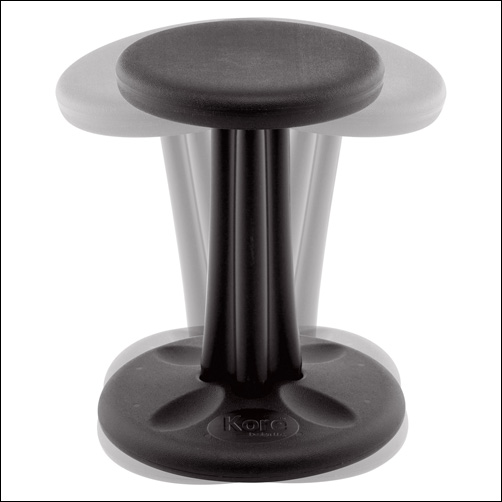
black kore wobble stool

Adding dynamic movement to seated tasks, is a great way to build core muscle strength. There are a multitude of alternative seating options that allow for dynamic movement while sitting. Examples include, The AlertSeat, Kore Wobble Chairs, and therapy balls. For more information on this check out the blog post, Flexible Seating Options in The Classroom & Home Learning Environments. It is important to remember that using alternative seating to strengthening core muscles should be done during fun, non demanding activities such as watching a movie or playing an easy table game.

Scooter Board Fun

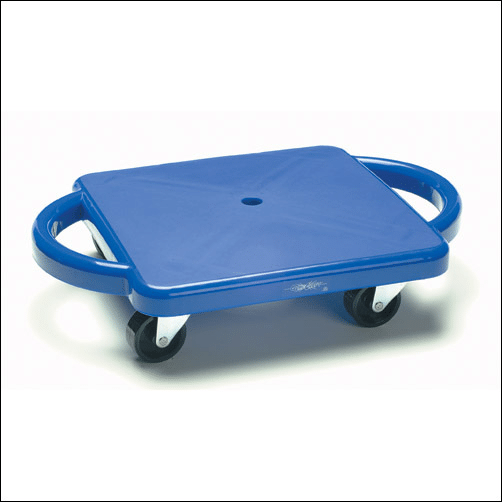
Scooter Board

Scooter board activities are fun and engaging; depending on positioning, scooter board games can be a great way to strengthen either the front or the back core muscles.

Scooter board activities done while positioned on the stomach (‘superman position’; think belly down, arms and legs lifted and extended) are great for strengthening the extensor muscles. For a fun game try scooter board- bean bag tag. To play, players lay belly down on the scooter board with a set of beanbags on the scooter board directly under their chest (this encourages the extensor positioning). The goal of the game is to drop beanbags on opposing players’ backs. To do this they would use their arms to push their scooter to their opponent and then drop the beanbag on their opponent’s back.

Scooter board activities done while positioned on the back in the ‘tucked position’ (think knees in toward the chest, arms flexed, and head lifted) are a great way to target the flexor muscles. Scooter board monster stomp is a great example. To play, tape pictures of monsters (or anything of interest) to the wall, at a low level, 1-2 feet from the floor. The player lays on their back on the scooter board and assumes the ‘tucked’ position. The player’s teammate (or therapist) gently pushes the player to the first monster (a small push on the shoulders will usually do the trick!). The player’s job is to stomp the monster with his feet with enough force to propel him back to his teammate who will direct him to the next monster. Use caution here, this game takes a lot of strength! As soon as the player shows signs of fatigue (i.e. difficulty holding his head up) players should switch turns.

For more fun scooter board game ideas check out the Scooter Board Activities Fun Deck.

Balance Games

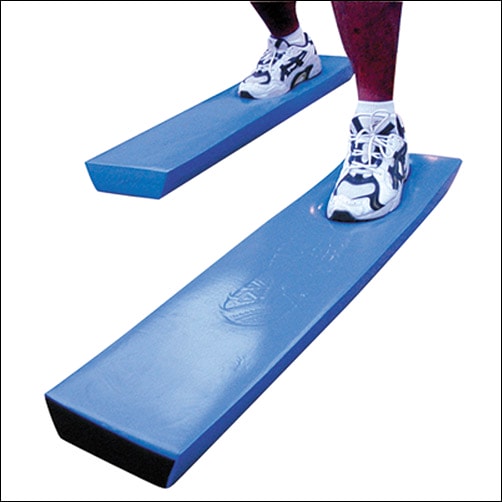
Balance Beam

Balancing requires core stabilization, a great way to strengthen those muscles! A simple game of catch becomes a core strengthening challenge just by standing on a wobble board or air filled cushion. A core workout can be done while completing an obstacle course simply by adding a balance beam component or stepping stones. Another great option is to explore the many different yoga balance poses!

Handwriting is an intricate process that requires more than just putting pen to paper; the core muscles provide the essential stability from which our hands work off of. Building a strong foundation, before we put pen to paper, will increase handwriting success and lessen frustration.

Activities That Build Fine Motor Skills

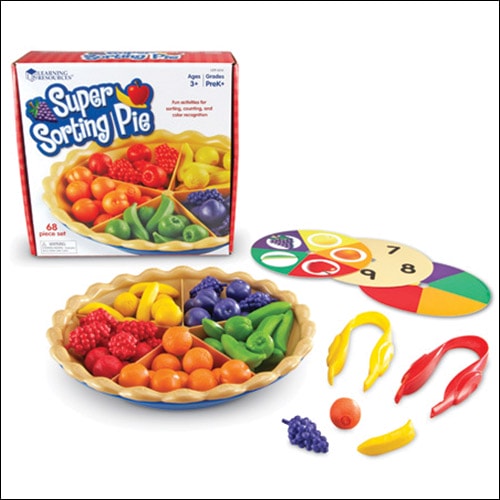
Fine motor skills are vital for many functional activities like zippering our coats, writing our name, and opening lunch containers. In this post we will take a dive into fine motor skill development and explore toys and activities that are appropriate for every skill level.  

Level 1

Fine motor skill development begins with the simplest hand movements; reaching, swiping, and gross grasp. As development progresses things like visually guided reach, purposeful release, and a better ability to hold medium and small sized objects develops. Poking, pointing, and the ability to use the thumb and first fingers to hold small objects are major milestones during this period. For children at this developmental stage activities that support the growth of the proximal muscles (core and shoulders) are important because it is these muscles that will support later fine motor skills. Activities that are done while on the tummy and activities that involve pushing and pulling are great choices at this stage.

Level 2

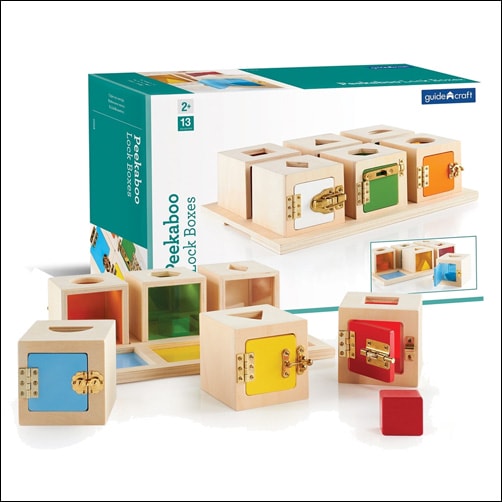
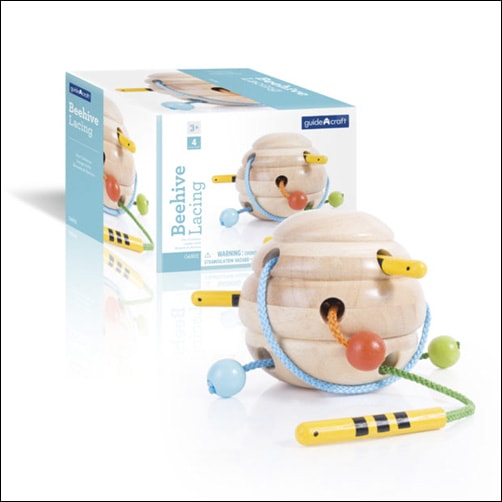
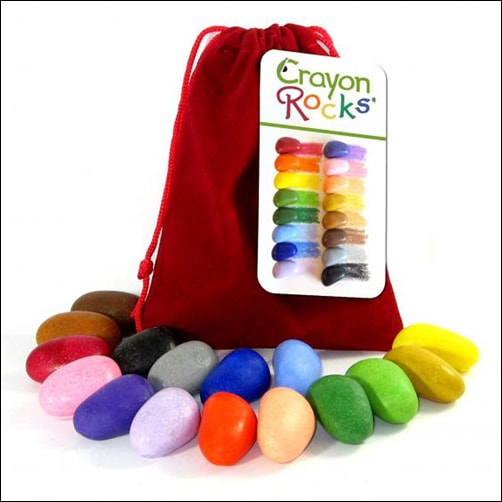
The next stage of fine motor development is marked by the ability to begin to use simple tools like crayons, scissors, and spoons. Activities like Lock Boxes are still great choices but now simple arts and crafts, lacing, and building activities can also be enjoyed. These increasingly more complex activities will lend to the development of the hand skills that are needed for greater independence with self care activities like feeding and dressing.

Level 3

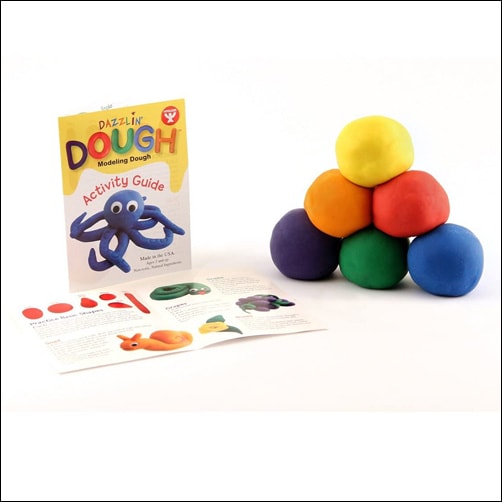
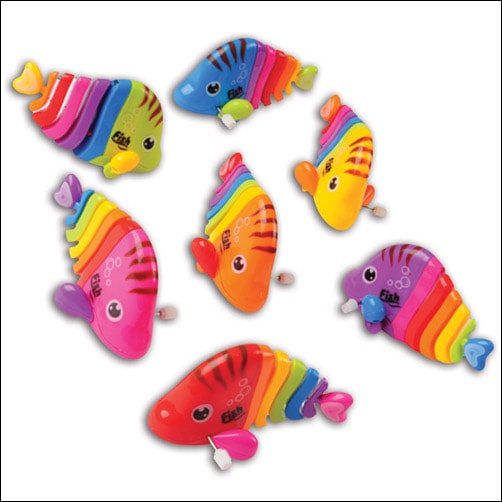
The next stage of development is marked by the ability to complete tasks that require the separation of the two sides of the hand; the ‘power side’ and the ‘skilled side’. The power side of the hand is what we use when we engage in activities that require strength like opening a jar; actions like squeezing a toy or playing in putty or playdough are great ways to develop these muscles.  The skilled side of the hand is what we use when we engage in activities that require refined movements like writing, tying, or fastening a button.  To develop these muscles we must engage in activities that predominantly require the use of the thumb and first two or three fingers; actions like winding the small knob on a wind up toy, using the first fingers to grab, grasp or manipulate objects, and using one finger to push a button or lever are all great ways to develop these muscle. The development of the separation of the two sides of the hands is important for academic and self care tasks.

Level 4

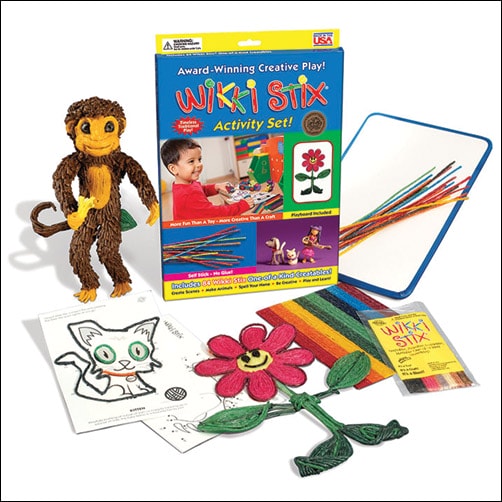
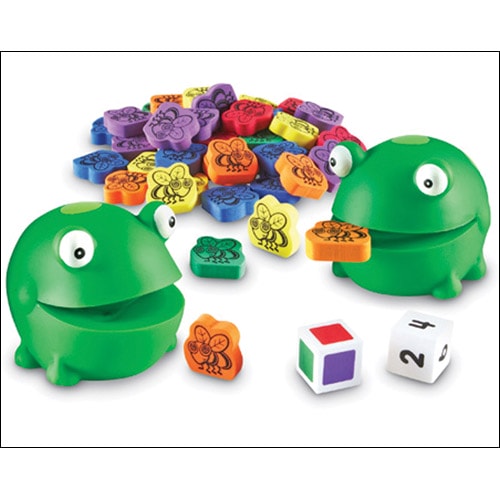
Hallmarks of this stage of fine motor skill development include the skilled coordination between the two sides of the body and a mature pencil grasp. Games like Froggy Feeding Fun and activities with Wikki Stix or Playdough are still great but now activities that require refined skill can also be introduced.

Choosing activities that are developmentally appropriate will ensure not only engagement but will also promote continued fine motor skill development.