The Chewy Tubes Oral Motor Tools family offers a wide range of products designed to support oral motor de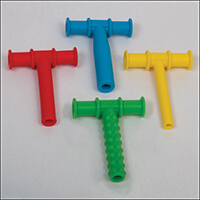 velopment and sensory needs in children and adults. These safe, durable, and versatile tools are ideal for improving chewing, biting, and self-regulation skills, making them an essential part of occupational and speech therapy. Whether used for sensory input or as part of a therapeutic intervention, Chewy Tubes help individuals develop the necessary oral motor skills to thrive in daily activities.
Which of the Chewy Tubes oral motor tools is right for your child? With this guide, you’ll be able to pick the perfect resistance and style.
Yellow (smooth)
The Yellow Chewy Tube is used with a smaller jaw, typically infants and children up to 2 years old and individuals who cannot open the jaw very wide. The Yellow Chewy Tube features a narrow stem of 3/8″ OD.
Red (smooth)
The Red Chewy Tube is typically used with toddlers, older children and adults to provide a smooth surface for practicing biting and chewing skills. The Red Chewy Tube features a stem of ½” OD.
Green (knobby)
The Green Knobby Tube offers increased sensory input from the raised bumps along the bitable stem. It provides a slightly firmer bitable surface. The Green Knobby Tube features a stem of 9/16″ OD.
Blue (smooth)
The Blue Chewy Tube is the largest and firmest of the Chewy Tubes. It is intended for adolescents and adults with developmental disabilities, autism or sensory integration disorders. The Blue Chewy Tube features a stem of 5/8″ OD.
Red Super Chew (knobby)
The Red Super Chew offers a solid yet bumpy surface for practicing biting and chewing skills. The closed loop handle is easily grasped by little fingers. The Red Super Chew features a stem of 9/16″ OD.
Green Super Chew (smooth)
The Green Super Chew offers a solid and smooth surface for practicing biting and chewing skills. The closed loop handle is easily grasped by little fingers. The Green Super Chew features a stem of ½” OD.
Ps & Qs provide a smooth and solid surface for practicing biting and chewing skills. The Q is wide enough for bilateral chewing activities and the P is especially easy to grasp by small fingers or those with low muscle tone.
Chewy Tube handles have corrugated ridges to assist the grasp – especially useful for those who are visually impaired.