Tag Archives: self-care

Self-care skills includes essential daily living tasks such as dressing, grooming, feeding, and personal hygiene. Resources, assistive technology, and adaptive strategies empower individuals to build functional independence across settings and age groups.

Self Care with Flair

Self Care with Flair: Webinar Recap

On Tuesday, July 28, Therapro was happy to host another successful webina, Self Care with Flair. Presenters Ginger McDonald, OTR/L and Bhanu Raghavan, MS, OTR/L spoke to viewers about Self Care With Flair and teaching independent living skills. These wonderful ladies have over fifty years of combined experience working with students across a variety of settings. Throughout the presentation they drew from these years of experience to provide illustrations of how a consistent, step by step approach works for teaching self care skills. Viewers left the webinar with helpful takeaways, including: 

Mastery of self care skills is critical for a child’s self esteem. The presenters spoke passionately about the importance of mastering self care skills early on and how this can  improve a child’s self esteem. To exemplify this they discussed toilet training: a skill needed for acceptance in a school setting, community involvement, and employability in later years.  

Use a team approach. The presenters described what they called the partiship triad, where parents or caregivers, teachers, and therapists work together in the teaching of both the self care skill itself and the prerequisite hands skills needed for successful participation. As one viewer noted, “Lots of information for both OT, teachers and parents. Love the team approach and having more information in the book will be an asset for every classroom.” – KF

Use a uniform approach. The presenters discussed the importance of consistency between everyone involved in the teaching process; from grandma, to the therapist, to the classroom teacher. Using consistent language and teaching approaches promotes learning and retention.  In the Self Care With Flair program, the same steps, the same pictures, and the same cues are used, leading to successful learning outcomes. Another useful aspect of Self Care With Flair is that the visuals can be shared with everyone working with the child, ensuring consistency across settings! As one viewer stated, “This is an excellent resource. The work has been done – rhymes, pictures, repetition. It speaks for itself!” – AH

Use rhythms. Rhymes are easy to memorize and make learning the steps of a task so much easier. Rhymes are also a great way to promote consistency across multiple environments and to help with self correction. The presenters pointed to research that supports the use of rhymes for teaching the steps of a task.

Teach Prerequisite Skills. Another important point that was covered in the webinar was the importance of addressing the foundational hand skills needed for success with self care tasks. In the book Self Care With Flair, each prerequisite skill needed for the given self care task is listed with the self care task itself. The final chapter in Self Care With Flair includes activity ideas  to address the essential hand skills needed (finger strengthening, finger to thumb opposition, forearm strengthening, lateral pinch, power grasp, thumb strengthening and wrist extension).  
The presenters also discussed modifications to meet the needs of all users, teaching tips to use when introducing these tasks, and ideas for personalization. Check out the recording of the webinar, and be sure to check out our free resources page for examples from the book!
Tips to Help Special Needs Kids Tolerate Grooming and Hygiene

Occupational therapists are the “ADL specialists” on a treatment team. Building independence in self-care isn’t always the problem we are addressing.  For younger kids or multiply challenged children of any age, simply tolerating experiences like nail cutting, haircuts and face washing can be the hardest part of the day. Helping children and their families to make grooming and hygiene less of an issue can improve children’s sense of safety and control.  It can even build the relationship between caregivers and children.

When evaluating a child’s aversion to ADL’s, look to the comprehensive OT evaluation.  While the Sensory Profile or the SPM will highlight specific challenges in oral or tactile domains, looking at a child’s level of motor, visual-perceptual and behavioral functioning provides a more complete picture of the child.  Postural issues, issues with endurance, attention, or identifying unique behavioral/emotional expression of frustration will suggest potential treatment pathways or complications.

Prior to Grooming And Hygiene Activities:

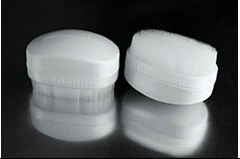
Directly address sensory-based issues in a comprehensive manner.  Use of the Wilbarger Protocol, creation of a sensory diet and selecting tools to desensitize aversive response can support even the most agitated child. Brief activity on a Therapy Ball can increase postural activation while modulating arousal prior to ADL’s. Other children benefit from other oral/facial input before tooth brushing or having their face washed.

Wilbarger Therapressure Brush

During ADL’s:

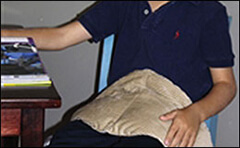
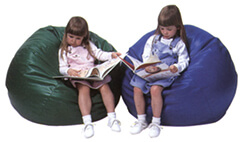
The use of sensory and behavioral activities can help increase and lengthen tolerance.  Some children benefit from sitting in a Beanbag Chair during grooming to provide calming input and postural stabilization.  A visual timer supports a child to understand that the activity will end and provides an objective measurement.  This could reduce the child’s use of whining or aggression directed at the caregiver.   A Weighted Lap Pad can be helpful calming input to an agitated child.  Children with sensory seeking as well as sensory sensitivity often prefer a weighted object with texture.

Bean Bag Chair
Bean Bag Chair

Time Timer
Time Timer

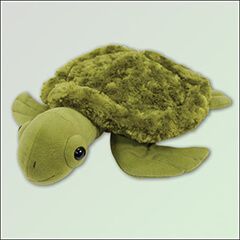
Weighted Turtle
Weighted Turtle

Sit Tight Weighted Lap Pad

When the ADL Task is Completed:

Aversive responses can continue long after a child demonstrates minimal or no observable aversive response in a treatment session. Why?  Because children are more than a stimulus-response cycle. They develop a sense of anticipatory anxiety and have habitual reactions that can be triggered even without sensory input.

Replacing old behaviors with more functional new habits may require slowly adapting ADL routines to decouple sequences that elicit aversion.  An example of this would be allowing a child who is agitated during feeding to briefly play with washable items after a meal but before cleaning his hands.  Any residual agitation from distressing feeding experiences could dissipate partially or totally before the caregiver uses deep pressure input to wipe the child’s hands.

Supporting children for ADL tolerance and eventual independence requires us to use our task analysis and evaluation skills in creative and complex ways.  Building tolerance and independence is our initial goal, but successfully navigating daily ADL experiences will have wide-ranging effects. Improving grooming and hygiene experiences helps families feel calmer around ADL’s in general, improves communication, and deepens trust between caregivers and children.


Guest Blogger: Cathy Collyer, OTR, LMT, PLLC

Cathy Collyer, OTR, LMT has treated children with neurological, orthopedic and sensory processing disorders for over 20 years. She is the author of The Practical Guide To Toilet Training Your Child With Low Muscle Tone. Learn more about her work at tranquilbabies.com.
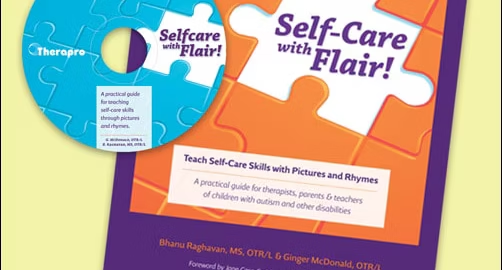
Self-Care with Flair: A Curriculum

Creative authors, Bhanu Raghavan, MS, OTR/L and Ginger McDonald, OTR/L developed a unique curriculum for increasing independence with self-care skills. The program instructs how to teach the skills of dressing, grooming, toilet training, and eating by using a uniform approach with pictures and rhyming while employing visual, verbal, and tactile/kinesthetic cues. Each task is broken down into steps through activity analysis. In June of this year, Bhanu shared her expertise with therapists, caregivers, and children in Guatemala. Here is the account of her experience.

Visit the Self Care with Flair! webpage.

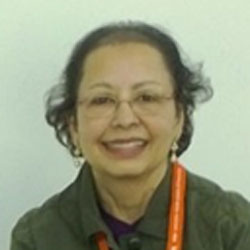
Bhanu Raghavan, MS, OTR/L

Self-Care with Flair! goes international once again…

Teaching basic self-care skills to children can be tedious and is often not prioritized in school or at home, even though these skills are critical for successful transition into the community. Occupational therapists are often consulted for support with this task.  A uniform approach to teaching daily living skills is critical to helping the child generalize the skills to all situations. Learning can be delayed when small differences in method and/or terminology confuse the child or when the number of steps prove to be overwhelming for the child, parent and/or teacher. Occupational therapists, Bhanu Raghavan and Ginger McDonald, authors of Self Care with Flair!, have shared their expertise in teaching self-care skills in a creative, fun way with therapists across the globe. Their methodology involves teaching self-care skills using rhymes to promote mastery and retention within a short period of time. They have based their method on evidence-based research that demonstrates that novel experiences such as rhymes and rhythm trigger the brain to sustain attention. In 2015, they presented at the British Occupational Therapy conference about their effective strategies for teaching self-care skills from their book to a packed audience.

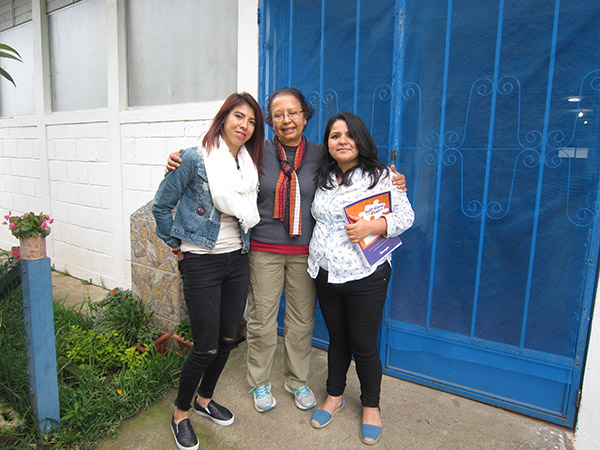
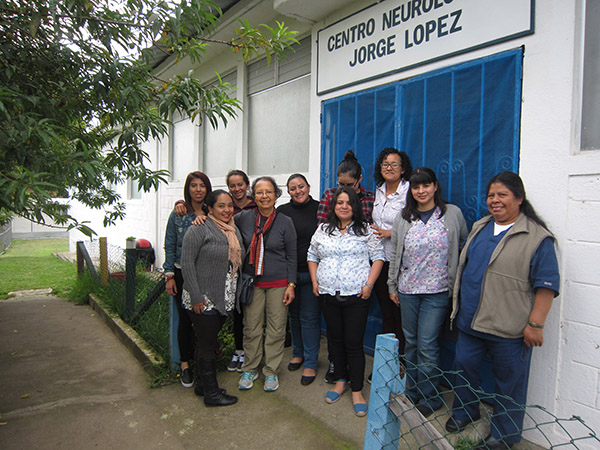
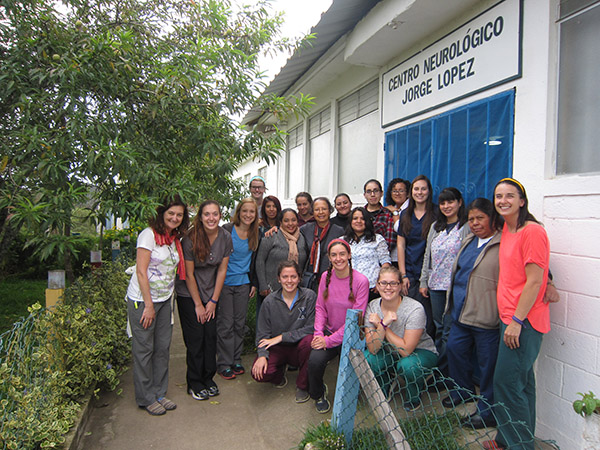
In June 2017, when Bhanu accompanied a team of students, therapists and Professors from Xavier University (Cincinnati, Ohio) to participate in a weeklong volunteer service project in Guatemala at the Missionaries of the Highways, a clinic and residential facility for children with a variety of physical and mental disabilities. Over the course of the week, many questions about teaching self-care skills to children with disabilities arose. Bhanu shared strategies from Self Care with Flair! when she presented an in-service to the staff.  During that week, strategies from Self-Care with Flair! were shared with parents and caregivers as well. Although Spanish is the national language of Guatemala, the illustrations (300+) in the book made teaching/learning quite simple and universal.

Using Self-Care with Flair! Bhanu aided the staff, parents, and caregivers in understanding that the brain learns and retains when visual, auditory and kinesthetic cues are embedded in the teaching/learning process, resulting in success for life.

At the end of the week-long service project, the staff of the Missionaries of the Highway acknowledged the ease of use and success of the Self Care with Flair! approach to self-care activities and requested a copy of the book, which was gladly given to them (See photos).  Much to Bhanu’s delight, one of the OTs at the facility volunteered to translate the rhymes in the book into the Spanish language as needs arose!  The week was a joyful learning experience for all!!

Self-Care with Flair!


Bhanu Raghavan, MS, OTR/L

Bhanu RaghavanA graduate of Indiana University and The Ohio State University, Bhanu has over 25 years of experience in pediatrics. She is certified in pediatric NDT and the READY Approach (Bonnie Hanschu) for Sensory Integration Disorders. Frequently, she presents workshops on topics related to self-care independence, sensory processing disorders and fine motor/handwriting skill development to therapists, teachers and parents/caregivers. She works at Centerville City schools, OH. She is a firm believer of the following Confucian principle: “I hear and I forget, I see and I remember, I do and I understand.”