Tag Archives: sensory strategies

Sensory strategies are techniques used to help children manage responses to sensory input, such as sounds, textures, or movement. These strategies support self-regulation, attention, and participation in learning environments. They are essential for helping children stay calm, focused, and engaged throughout the day.

How to Build a Sensory Room at Home, Tips from the Experts

Porch, the home services platform, recently reached out to Therapro for help with their latest article, How to Build a Sensory Room at Home, Tips from the Experts. The question needing an answer was, what are the best tactile sensory tools to include in home sensory rooms? Therapro’s team of experts had a lot to say on this topic! Read on to see what Therapro shared and be sure to check out the full article.

Tactile sensory tools offer a rewarding experience. There are many options to choose from. Therapro’s top picks include:

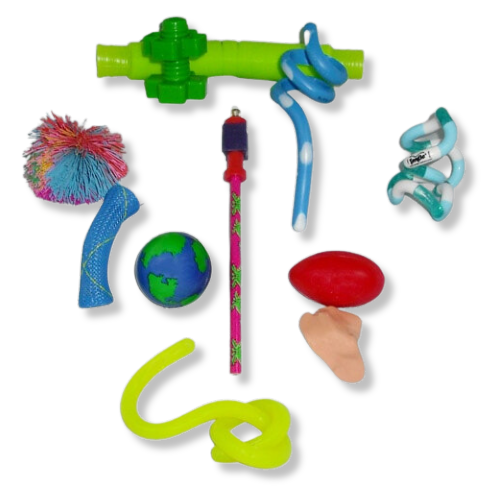
Assortment of tactile sensory tools for home sensory room

FidgetsFidgets are small, portable and versatile tactile sensory tools that are a great addition to home sensory rooms. Fidgets can offer calming or alerting input depending on their characteristics.  To help users better decide which fidget is best for them, the team of occupational therapists at Therapro has put together a free handy guide, Find Your Fidget that is available for download at therapro.com! Pro tip: Fidgets are also a great transition object to help with the move into and out of the sensory space! 

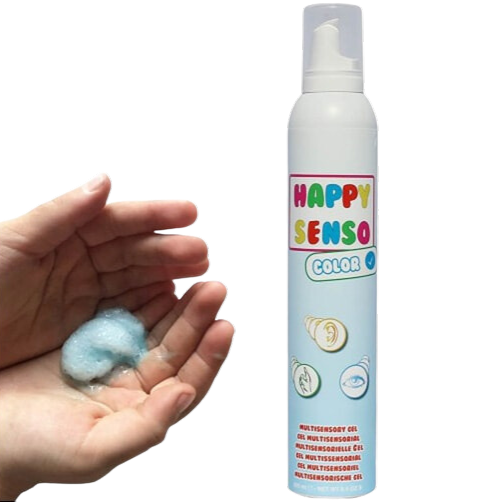
Happy senso tactile sensory gel in 
 a bottle and sensory gel in the palm of two hands

Happy Senso: Happy Senso is a sensory gel that offers a unique multisensory experience. It can be sprayed directly into the palms of the hands or on a flat surface (like a table). Squish, press, and slide hands along the cool gel and listen to the crackling and popping sounds it makes.  It is available in four different scents and colors for an enhanced sensory experience.  

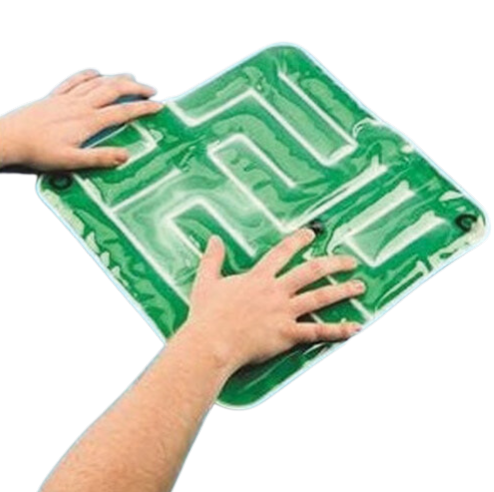
Green gel filled tactile sensory tool  with fingers pushing small black chips inside the gel pad through a maze

Gel Activity Pads: Gel pads are exactly what they sound like, gel-filled pads that can be pressed and squished with the hands, fingers, or even feet!  Available in four different styles, activity ideas are endless; play games (like tic tac toe) or simply enjoy the combined visual and tactile sensory experience. As an added bonus, these gel pads offer slight weight and so can double as a weighted lap pad! 

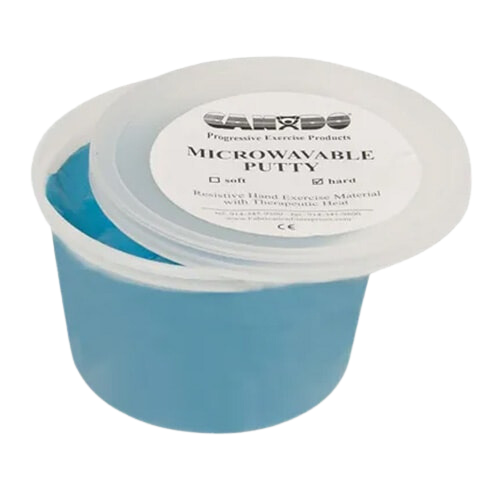
Theraputty Microwavable Exercise Putty:  Exercise putty is a great fidget option that can offer a calming/ grounding experience to users.  Theraputty Microwavable Exercise Putty is a unique putty that is microwavable, allowing users to experience a calming warmth sensation while they knead, roll, or squish the putty. 

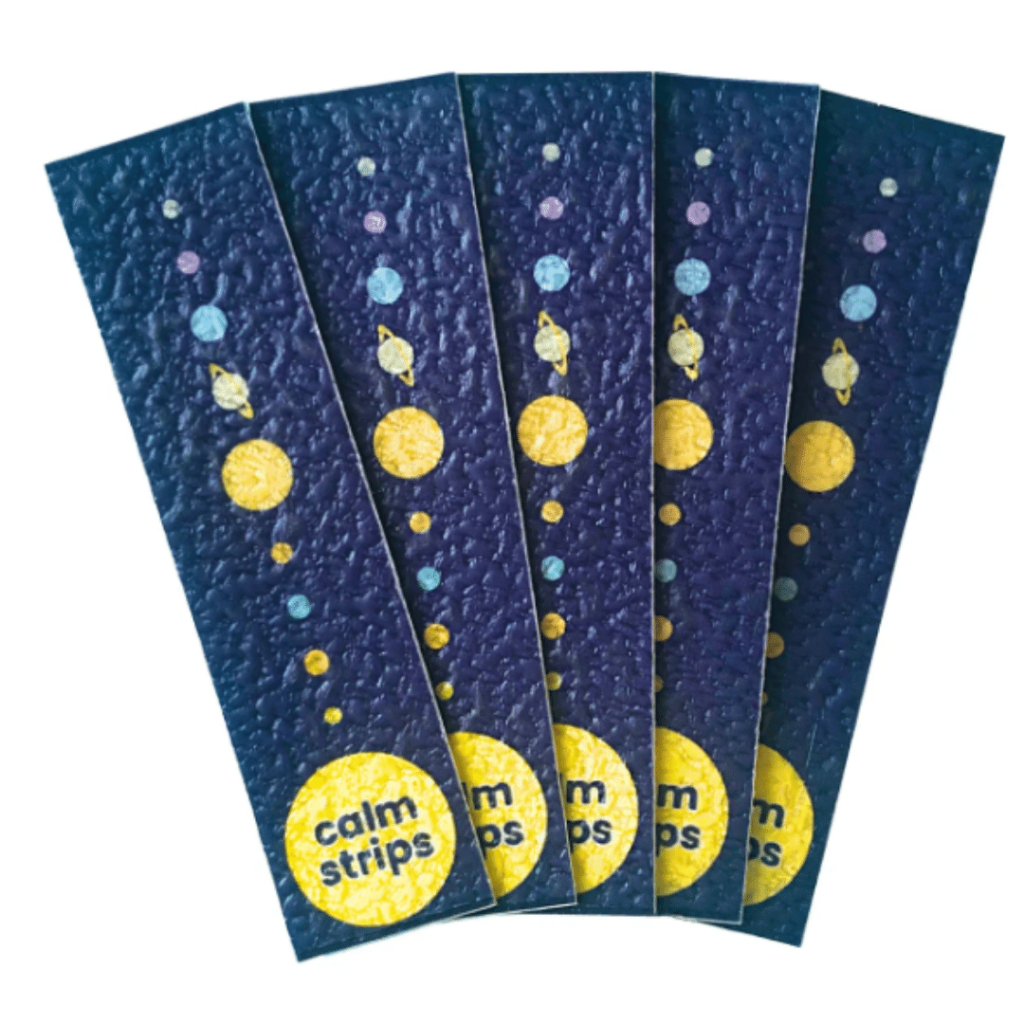
The system calm strips, five rectangular strips with dark blue background and the planets arranged in a line

Calm Strips: Calm Strips are textured sensory stickers with a special reusable adhesive that are designed to be picked, touched, scratched, and peeled over and over again.  These tactile sensory tools are a perfect addition to home sensory rooms. They can be adhered to any surface to add an additional tactile sensory experience and help regulate restless energy.  

When it comes to building your sensory space, Therapro is the resource for families and professionals. Be sure to check out all of Therapro’s sensory resources at therapro.com!

The Guide to the Perfect Sensory Space

The school and classroom provide a wealth of sensory information. Whether or not your students have special needs, processing sensory information can be a real challenge and also impact their behavior (e.g. difficulty paying attention, sitting still, working cooperatively with others, etc.).

Sensory processing difficulties arise when the brain can’t sort, organize, or integrate sensory messages. It’s like a “traffic jam” in the brain, with a few snippets of sensory information “stuck in circulation”. When this happens, certain parts of the brain don’t receive the sensory information they need to do their job1.

Providing a sensory space helps students to calm down and is a way to avoid disorganization. It’s a simple solution for improving social-emotional behaviors and beneficial for cognitive development.

What is a sensory corner?

A sensory corner is a designated area inside your classroom that is dedicated to supporting the sensory development of all students. It allows the child to take refuge there completely independently. Their withdrawal into this space helps them regulate their emotions and energy level in order to be more available to learn and interact with others.

A sensory space stimulates the primary senses, sight, hearing, smell, touch, vestibular and proprioception without creating overload because the senses are chosen on a voluntary basis.

The benefits of a sensory corner clock

The very preciouses moments, lasting at least 15 minutes, improves mood management by taking care of one’s emotions, increasing feelings of security, and help reduce agitation and apathy (lack of energy). No wonder they allow for the improvement in attention and quality of concentration.

Regulating our senses is important in maintaining our mental and physical well-being and self-esteem. The sensory space allows for wonderful one-on-one or supports a moment of guided learning, if the space is sufficient to accommodate the adult and the child.

How to design a classroom sensory space tools

  • It must be welcoming, comfortable and a defined space. The area has boundaries and is large enough to accommodate at least one seat (armchair, cushion, carpet, etc.).
  • Make sure the child will be isolated from ambient noise or the hallway.
  • Make sure you can adjust the light intensity or filter it. Some children will seek intense light while others will benefit from dim lighting.
  • Try to find a corner of the class where the student can have some privacy, out of sight of their peers. To enclose this space, you could use a curtain or furniture such as a bookcase or shelf.
  • Ideally, provide storage for the items or equipment that your corner will offer. The space should not be overloaded with things.

The objective is to be able to immerse yourself in a “cocoon-bubble” atmosphere in order to experience better sensory stimulation and enjoy all the benefits.

The effectiveness of a sensory corner has nothing to do with your allocated budget. It’s therefore not necessary to invest in expensive and sophisticated equipment.

What equipment should you provide in your sensory corner?

Your sensory corner can evolve over time and according to the needs of your students. Here are some suggested items that can stimulate the senses.

Touch

Smell

  • An accessory or cushion that you can put a few drops of essential oils on (ex: lavender)
  • Scented putty
  • Small cotton sachet (for the bottom of a drawer) with different smells

Sight

You could display or make available inspirational thoughts, relaxing music, pictures to color, breathing strategies, a timer to give child perspectives about time.

And the most important part

Once your sensory space has been established, take the time to show it to your students and teach them how to use it, when, and why so that they understand the purpose of this space.

It’s also important to display the tools and resources available in the space. Don’t hesitate, for example, to demonstrate breathing techniques in a large group so that they know how to repeat them when alone.

Having a space like this is a great way to implement social-emotional learning strategies in your classroom.

And now, play on!

-The manimo team

1Sensory Spaces in School 2021. National Council for Special Education, NCSE-Sensory Spaces in Schools

Attachable FootFidget® Footrest

Flexible Seating Options for Home & School

In this post we take a dive into flexible seating options that are available for classroom and home  learning environments.

First, What Does Flexible Seating Mean?

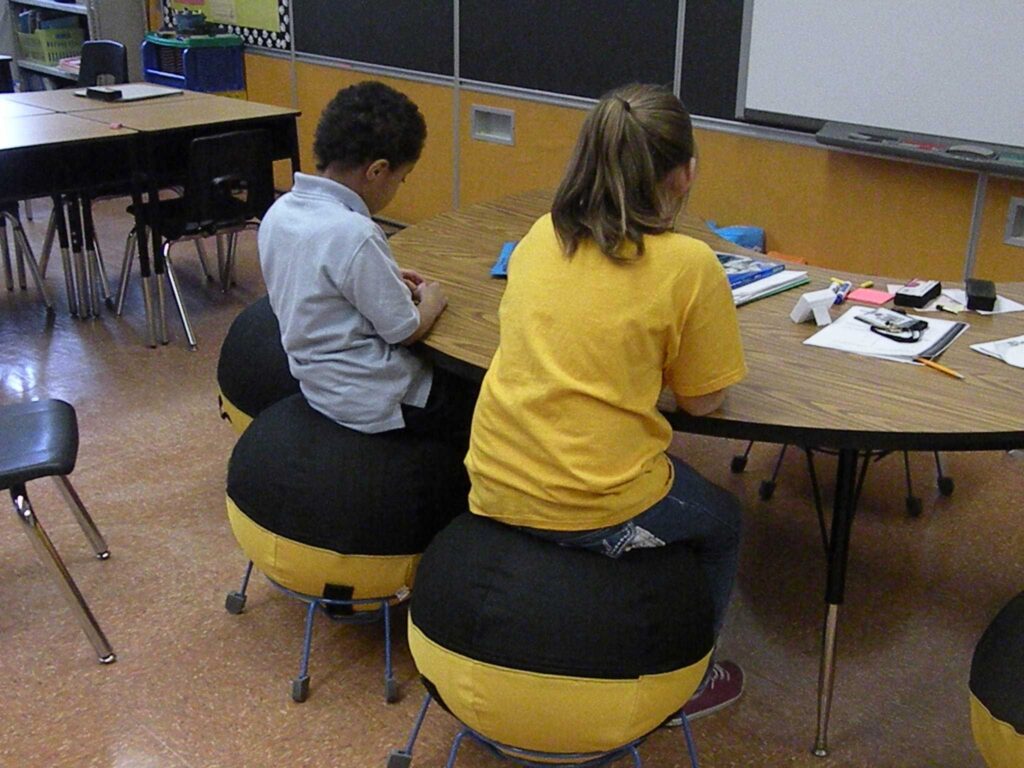
Sometimes called alternative seating, flexible seating is simply a seating option that is different from ‘traditional’ seating arrangements and is often used to address a sensory need. Traditional seating arrangements may be things like the desk chair students use in a classroom, the dining room chair at the eating table, or the office chair at a work desk. Flexible seating arrangements may be a therapy ball in place of an office chair, or it may be a beanbag in place of the traditional student desk setup. Read on to learn more!

Next, Understand the Importance of Flexible Seating Options in Learning Environments.

Having a variety of seating options helps to ensure all learners have a setup that is most effective for their learning style. Some options may help to address underlying sensory needs, while other options provide the movement that is preferred by students when learning (Cole et al., 2021, 72).   Having just the right seating arrangement can make the difference between a successful learning experience and one that is full of distractions, position changes, and learning sessions that don’t last as long as they should.

Finally, Pick the Right Seating Options. 

Understanding the need (or needs) you are trying to address will help you determine the best seating option(s).

For the wigglers, movers, and bouncers who just need a little extra sensory input to focus and sustain attention, try a seating option that provides movement (vestibular) or light touch (tactile) input. A seating option that provides tactile or vestibular input will help the sensory system that is seeking movement, get it in a way that is more conducive to learning and working. 

chair with wobble feet attached

Wobble Feet: These are simply four, rubber-domed domed shape ‘feet’ that slip onto a standard chair leg.  The Wobble Feet provides a subtle rocking and a soft bounce feel.  These are especially popular for users who are looking for a “low profile” option; they can be slipped onto a regular classroom chair and are small enough that they are not very noticeable in the sea of classroom chairs. 

Sensory Spots: Spot Sensory Seats and Senso Seat Pads are flat pads that have a textured side.  This textured side provides subtle sensory input without much challenge to postural stability. They can be used in just about any seating situation and can easily roll up when moving seats.

red and blue senso spot seats, round disks to sit on with a textured side
wiggle seat sensory cushion, butterfly shape, basketball shape, flower shape, and monster shape

Cushions: Air filled or foam cushions can be added to just about any chair, bench or even used on the floor.  They are usually round or wedge-shaped but newer versions now offer fun shapes like monsters or flowers.  The amount of air, that can be added, to the air filled cushions is typically adjustable allowing for users to increase or decrease the amount of movement offered.  Cushions are generally portable making them a great option for those who change work areas throughout the day.  For even more convenience options with handles are now available!

Wobble Stools: The Kore Wobble Chair offers a seating option much like sitting on a stool, with the exception of the innovative rounded bottom that allows the user to rock in all directions.  In addition to the rocking movement, the stool’s shape allows more freedom to move the legs in different positions.  

Black wobble stool
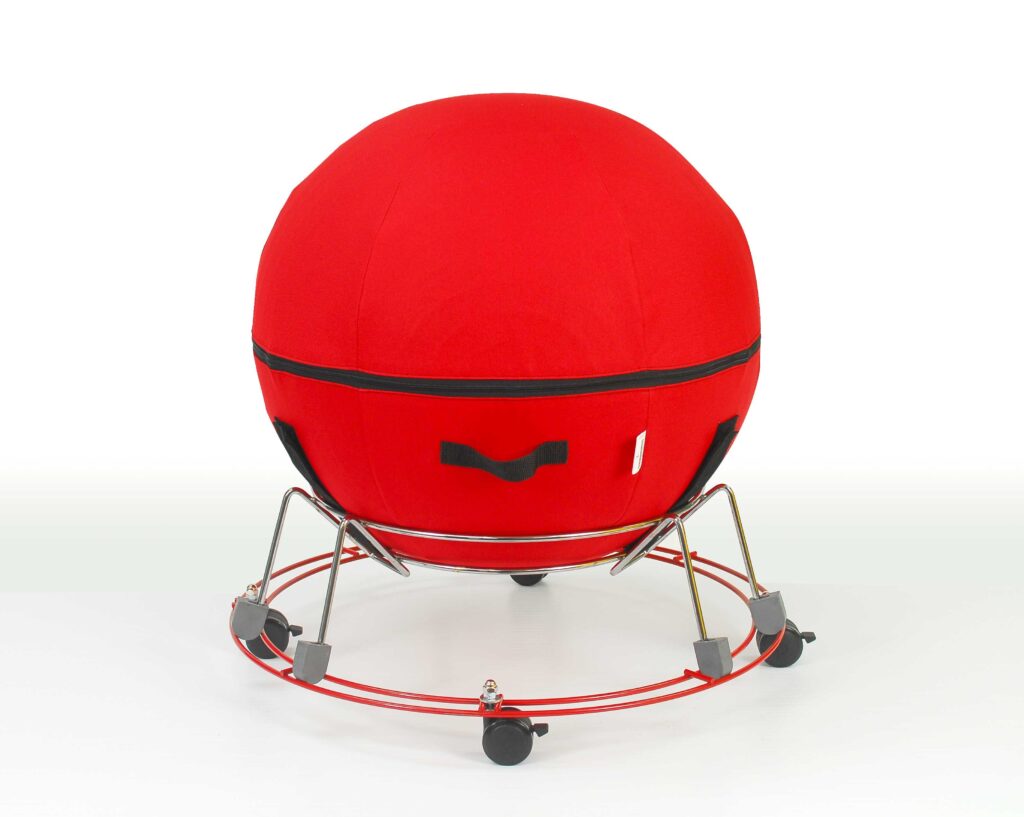
the alert seat a large round ball inside a metal base with wheels for sitting

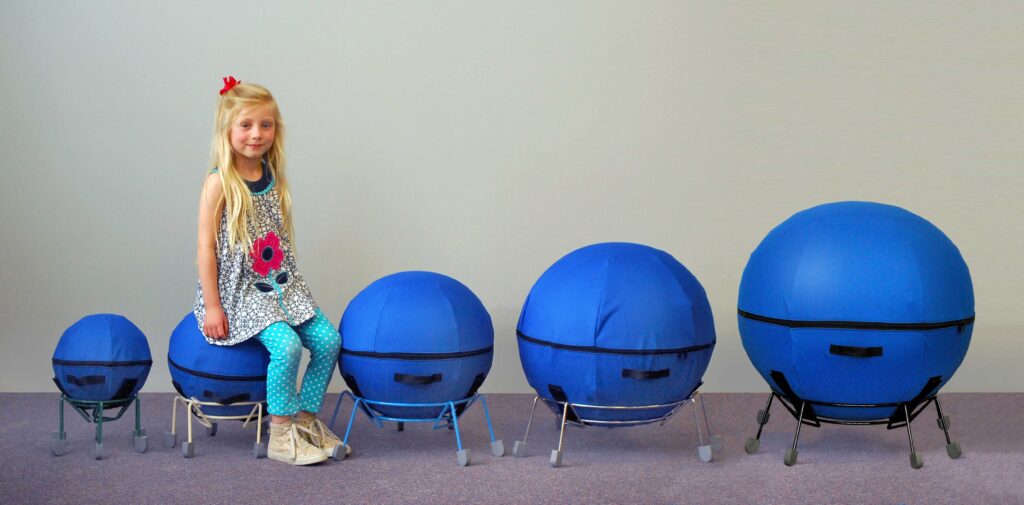
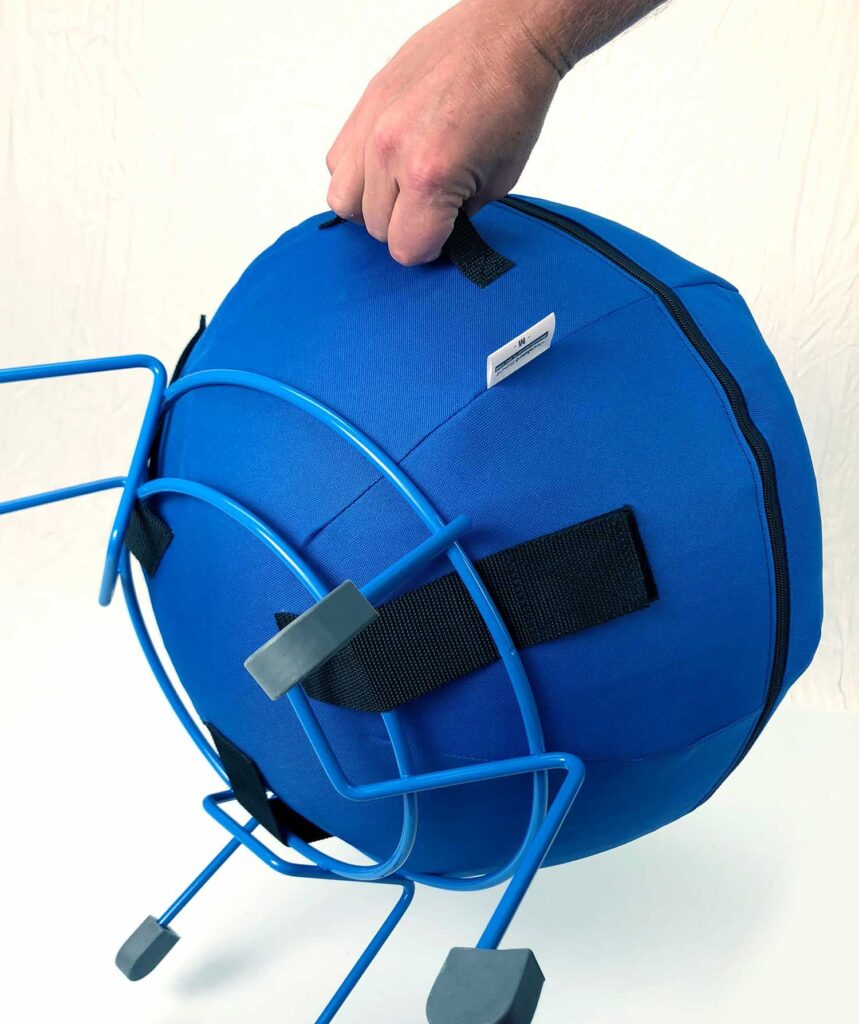
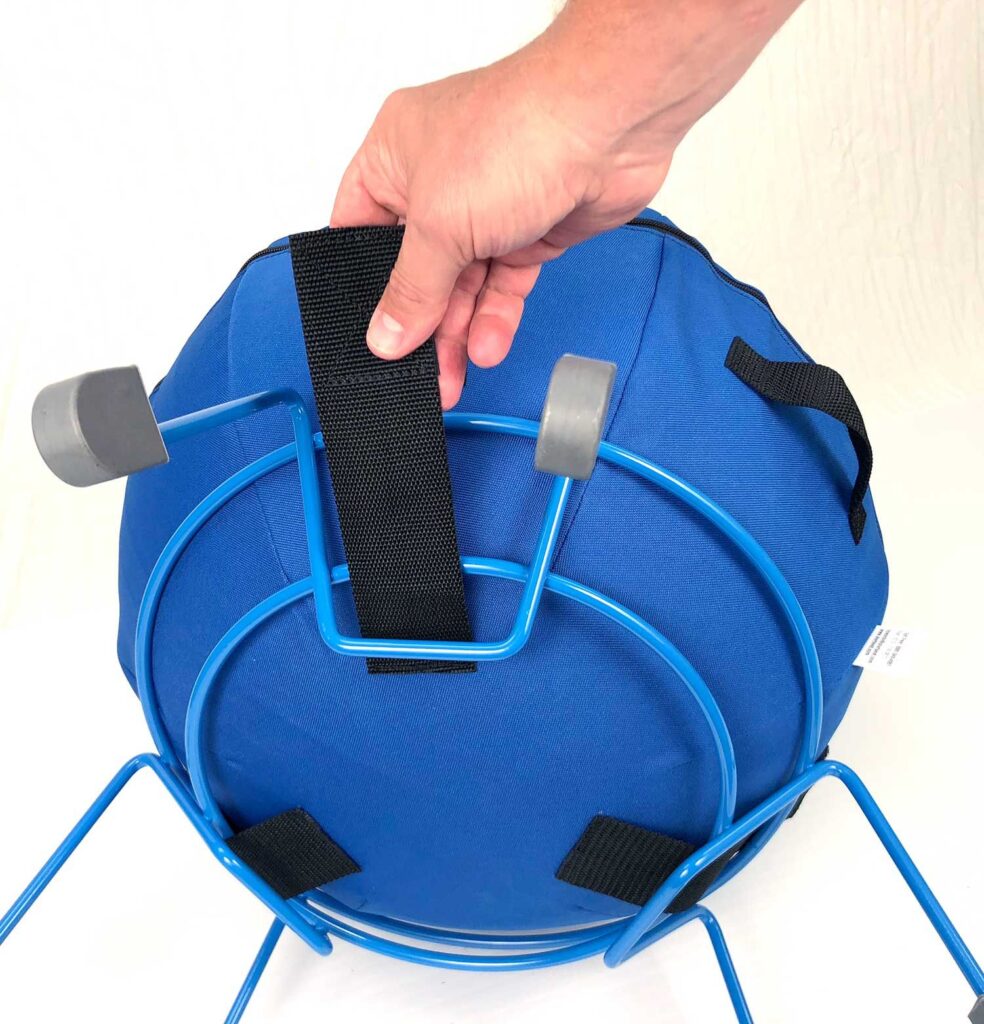
Ball Chairs: Ball chairs come in all shapes and sizes. At the most basic level a large therapy ball is used in place of a chair. This is a great option for users who need a lot of input but therapy balls are unstable and can be difficult for users with poor postural control.  A base can be added under the ball to help prevent the ball from moving out of position.  Another option is to use a peanut or egg shaped ball; these balls have an elongated shape that increases stability for the user.  The  Alert Seat puts the traditional therapy ball on a wheeled base, allowing for more mobility.  The Ball Chair Deluxe takes the shape of a traditional office chair but replaces the seat with a large inflated ball.

For the fidgeters, hair twirlers, and those with a little extra nervous energy, try a seating option that provides deep pressure input or gives the big muscles a chance to work. This type of input can help calm an anxious or overstimulated sensory system. Try:

foot swing, a small plastic stand that goes on the floor under a work space. it has two pedals to place the feet. the peals move back and forth

Body fidgets. Unlike smaller, handheld fidgets, body fidgets allow other parts of the body to interact with the fidget, leaving the hands free for work.  Foot fidgets can be attached to chair or desk legs, allowing users to kick, push and pull the heavy elastic bands with their feet.  For users who frequently change work spaces, portable foot fidgets are available; these can be placed under the workspace and interacted with in the same manner. The footroller is a unique body fidget; fidgeters place their foot on the roller, spinning it forward, backward, or both ways. Another unique option is the Foot Swing; the foot swing allows for a silent swinging motion of both feet, independent of each other. 

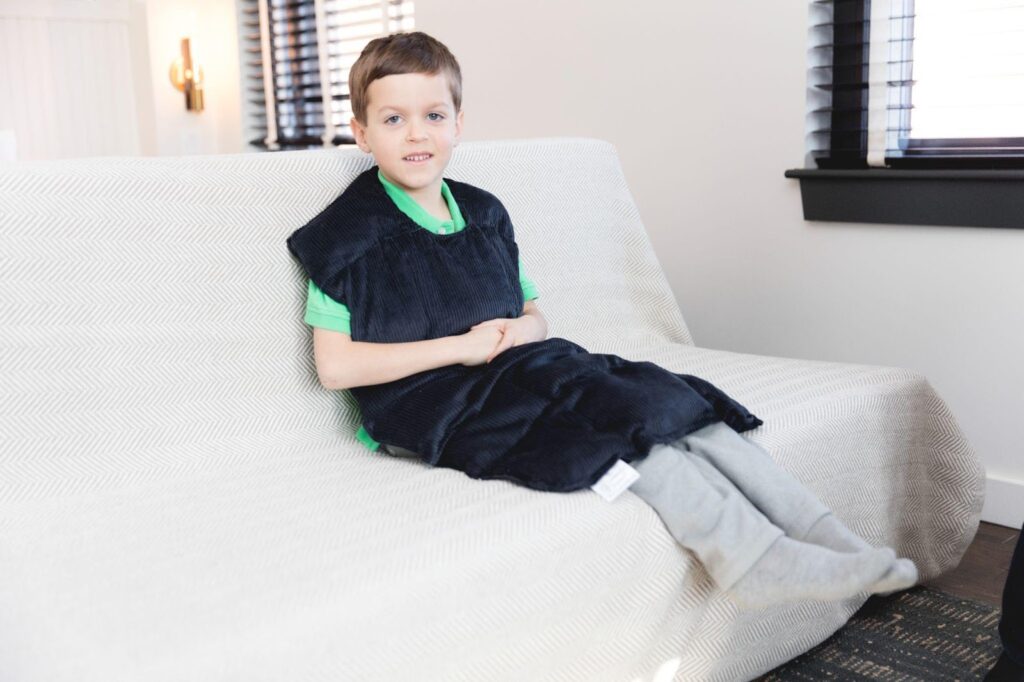
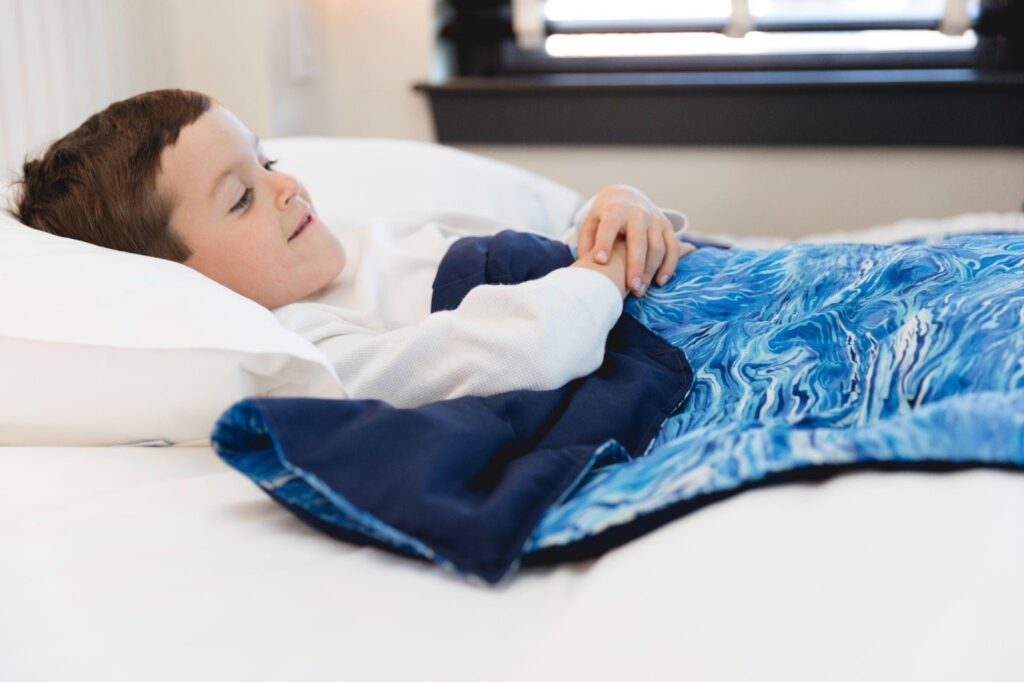
Weight. Adding weight to the lap or shoulders is a great way to center, orient and calm an over responsive or anxious system. An added bonus, many offer textured covers for additional tactile input.

boy sitting at a desk with ta weighted neck wrap around his neck and resting on his shoulders

For those who just need a change of scenery, setting up an alternative work spot is a great way to refocus.  Some options include: 

  • Standing at a counter height work space or taping work to a wall are options to allow for standing positions while working. To add a little dynamic movement, try standing on a foam wedge or air cushion.
  • Laying Down.  Working while laying on the stomach is a great way to provide proprioceptive input through the shoulders joints (perfect for those needing calming and organizing input).  This position also gives students who are struggling with postural instability to get more support so they can focus on their work and not on staying stable!  Use yoga mats or cushions to provide comfort and a clipboard or slant board as a work surface. 
  • Get Cozy.  Another option for a position change is sitting in a bean bag, Howda Designz Chairs or the Comfy Cozy Peapod Chair.  While not the best option for all types of tasks these options are great when the activity involves reading or listening. The deep pressure input provides calming and organizing input.

Having a variety of seating options available in any learning space is a sure way to increase focus and attention.  Identifying options that are appropriate for the user and the environment is key for successful implementation. 

Reference:

Cole, K., Schroeder, K., Bataineh, M., & Bataineh, A. (2021, April). Flexible Seating Impact on Classroom Environment. The Turkish Online Journal of Educational Technology, 20(2), 62-74.