Category Archives: Fine Motor & Hand Skill Development

Explore tools, games, and activities that support fine motor skill development including grasp, dexterity, hand strength, and coordination essential for functional tasks.

Sensory Exploration with Pumpkin Carving

It is October, and it’s time to harvest not only pumpkins and apples, but also the sensory exploration this time brings. Have you ever broken down all the sensory input that the simple task of carving a pumpkin can provide? If you have the opportunity to go to a farm to pick your own pumpkin, take advantage of it. The experiences that you and your child will share stay with you forever.

Read on for all the ways a trip to pick your own pumpkin is sensational fun.

pumpkins on a fence ready for carving and sensory exploration

Pumpkin Carving Sensory Experiences

Senses

At the Farm

At Home

Visual

  • The leaves changing colors
  • The bright orange pumpkins
  • The roots and vines through the pumpkin patch
  • The blue sky
  • The animals at the farm
  • Browsing through different designs for the pumpkin
  • Tracing the design unto the pumpkin

Tactile

  • Feeling the breeze
  • Touching the Leaves


  • Feeling the grooves on the pumpkin
  • Scooping the pulp
  • Sifting through the pulp to separate the seeds

Auditory (hearing)

  • Shoes crunching the dead leaves and dry ground
  • Tractor on the farm
  • Hearing other people talking
  • The animals making noises
  • Singing Songs as you prepare to carve the pumpkin
  • Listening as the carving tool cuts through the pumpkin


Olfactory (smell)

  • The smell of the hay
  • The smell of the grass
  • Baked goods at the farm
  • The smell of the pumpkin pulp
  • The smell as you bake the pumpkin seeds or other desserts

Proprioceptive

  • Carrying the pumpkin from the patch to the car
  • Climbing up the ladder to go on the hay ride
  • Carry the pumpkin to the table
  • The feeling of carving the pumpkin (this must be done with adult supervision and using the appropriate tools)

Vestibular

  • Going on a hay ride
  • Sitting on a rocking chair while enjoying some of the baked goods

Gustatory (Taste)

  • If the farm has a bakery, get some of their delicious baked goods
  • Bake pumpkin seeds (see recipe below)

Pumpkin Seeds Recipe

  1. Separate the seeds from the pulp.
  2. Rinse and dry the seeds (sometimes they have to dry overnight).
  3. Preheat the oven to 250 degrees F (120 degrees C).
  4. Spread pumpkin seeds in a single layer on a baking sheet. Sprinkle to taste with the seasonings of your choice. For sweet seeds use Cinnamon, nutmeg and brown sugar, for salty seeds use garlic powder, salt and pepper.
  5. Toast for 45 minutes, stirring occasionally, until dry and toasted. Larger seeds may take longer.

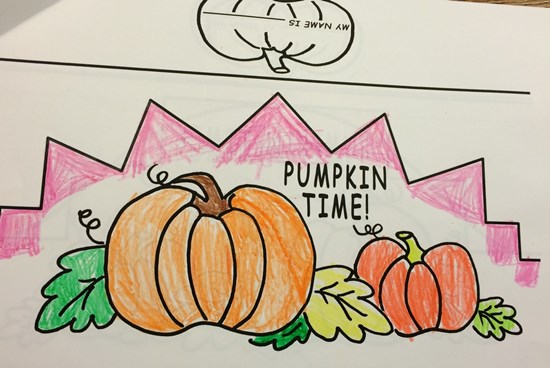
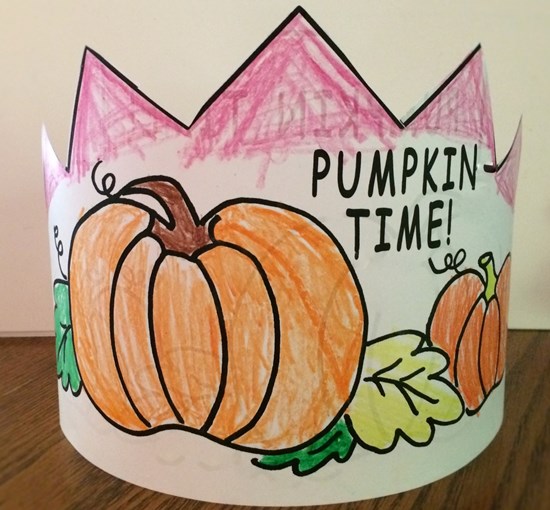
For more seasonal activities get Therapro’s Hats Off and On to Scissors Skills– you get to practice scissor skills and make hats for every season. Below are pictures of a Pumpkin Time Hat.

Also see our seasonal writing readiness workbooks and our Pre-writing curriculum enrichment series!

Please share other ideas and ways you can have sensational fun this fall.
pumpkin2
pumpkin3

Straws Galore Fine Motor Activity: Free Activity of the Month

If you’re searching for cost-effective, hands-on ways to build hand skills, look no further than Therapro’s Second Hand Therapies cards. This versatile set of 40 activity cards features creative tasks using recycled materials, including the engaging straws fine motor activity, Straws Galore. With each card highlighting hand functions, difficulty levels, and needed materials, they’re perfect for therapy sessions, classrooms, or home use. Straws Galore encourages scissor use, bilateral coordination, patterning, and more—all through the fun of making colorful straw jewelry.

Below is a sample of Straws Galore, one of the activities in Second Hand Therapies.

When using straws to make jewelry, not only are the kids using fine motor skills, they are practicing their scissor skills, eye hand coordination, color recognition, size differentiation, counting, learning patterns, and so many more skills.

Materials:

  • Straws of varying sizes and colors
  • Yarn, pipe cleaners, or embroidery thread
  • Tweezers
  • Medium-Sized Bowls

Directions:

  1. Hold the straw with your non-dominant hand. Use your dominant hand to cut the straws into small to medium-sized pieces. Collect the pieces in a bowl.
  2. String the straw pieces onto yarn or pipe cleaner as though they were beads.
  3. Practice removing the straw pieces using tweezers for pinch strength development.

Variations:

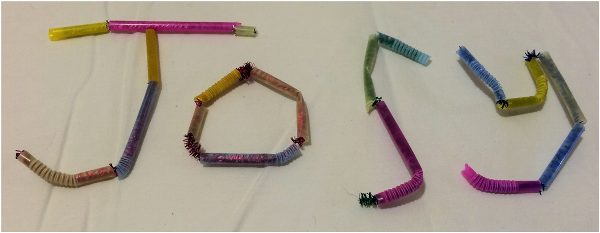
  1. Instead of jewelry, make letters with the straws. Have the child spell his name.
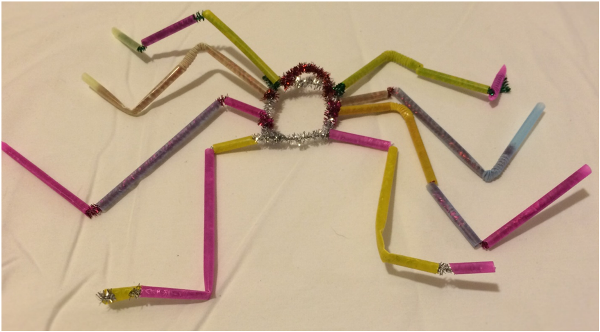
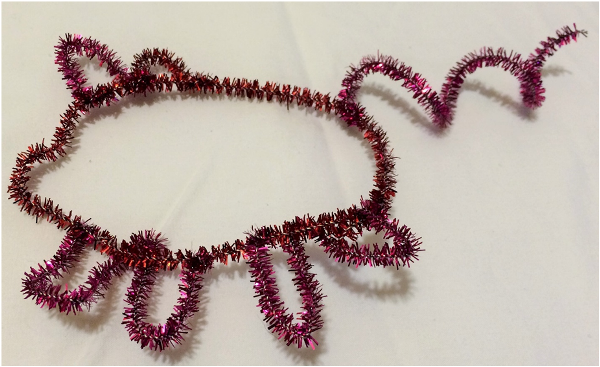
  2. Get creative and make animal silhouettes.
  3. Give the child a challenge. What can you make with 3 pieces of straw?
  4. Sprinkle glitter on the bowl containing the straw pieces for an added color fest!
  5. Use different scissors, such as scrapbooking scissors, for different edging on your straw pieces.

What did you make with your straws?
A Spider made from straws, and example of a Straws Fine Motor Activity
Name spelled with straws, and example of a fine motor activity that can be done with straws
A animal shape made with straws

👉 Explore Therapro’s Second Hand Therapies and bring purposeful play to your practice.

Whether you’re a therapist, educator, or caregiver, this resource empowers you to creatively support fine motor development using low-cost, easily sourced materials. The Straws Galore activity is just one example of how these cards combine fun and function. Start building engagement, independence, and essential skills today—one recycled material at a time.

The Peabody Developmental Motor Scales Test

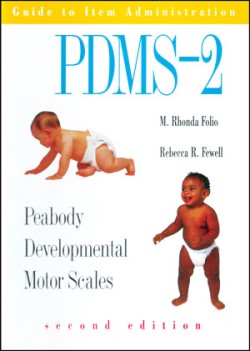
The Peabody Developmental Motor Scales Test-Second Edition (PDMS-2) examines both gross motor and fine motor skills. This test is for children from birth through age 5. The evaluation assesses a child’s development, and also provides training and treatment to improve motor skills. The assessment generally lasts about 45-60 minutes, and provides an in-depth analysis. The Second Edition has been in use since 2000 and is a statistically reliable and valid norm-referenced assessment.

The Peabody Developmental Motor Scales (PDMS-2)When you order the PDMS-2 COMPLETE Kit, you’ll receive an Examiner’s Manual, a Guide to Item Administration, a Picture Book, 25 Profile/Summary Forms, 25 Examiner Record Booklets, the Motor Activities Program Manual and a Peabody Motor Developmental Chart. The PDMS-2 is also offered without the Motor Activities Program Manual (PDMS-2 TEST Kit).

You will also receive the Object Kit and the Shape Cards Kit which both contain sets of test objects to help achieve a standardized administration of the test; the Object Kit includes a black shoelace, six square beads, a wooden pegboard, three wooden pegs, 12 one-inch cubes, a large button strip, a bottle with a cap, a formboard with shapes, a lacing card, a measuring tape, and a roll of masking tape. The Shape Cards Kit includes blackline masters and three shape cards.

The test scores consist of a Gross Motor Quotient, a Fine Motor Quotient, and a Total Quotient. The Gross Motor Quotient is made up of the Reflexes, Stationary, Locomotion, and Object Manipulation subtests. The Fine Motor Quotient includes the Grasping and Visual-Motor Integration subtests. Lastly, the Total Quotient combines both the Gross and Fine Motor subtests.

To reduce scoring and reporting time and errors, the new PDMS-2 Online Scoring and Reporting System has been developed and is purchased separately. It is web-based software that is PC, Mac and iPad compatible. Some of the software Scoring features include:

  • converting PDMS-2 item scores or subtest scores into standard scores, percentile ranks, and age equivalents
  • generating composite quotients
  • comparing PDMS-2 subtest and composite performance to identify significant intra-individual differences

The software Reporting features also include:

  • a printed report of the student’s identifying information and PDMS-2 performance including short-term and long-term treatment goals and objectives
  • score and print reports using as few as one subtest score or only Gross or only Fine Motor scores
  • save or print text or PDF file using two report options:
    • standard clinical report (2 page summary of test scores)
    • detailed clinical report (fully customized 6- to 8- page analysis indicating treatment goals and objectives

Additional features of this web-based software include:

  • pull-down menus to easily navigate among software functions
    fields for storing detailed examiner and testing information
    on-screen subtest and quotient comparisons

A first-time base subscription provides an entire year of unlimited online scoring and report access for up to five users.