Category Archives: Sensory

Investigate evidence-based sensory integration strategies and therapeutic tools designed to help individuals of all ages regulate sensory input, enhance emotional regulation, and improve behavior, attention, and participation across a variety of environments.

6 FAB Strategies to Improve Pediatric Therapy Behavior

By John Pagano, Ph.D., OTR/L

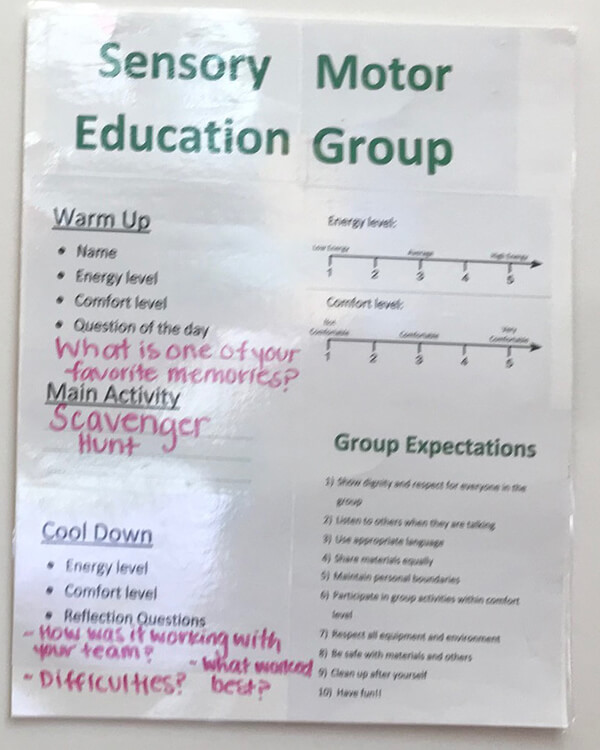
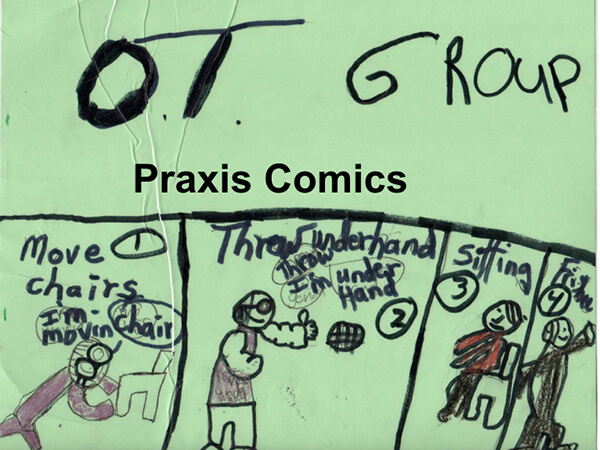
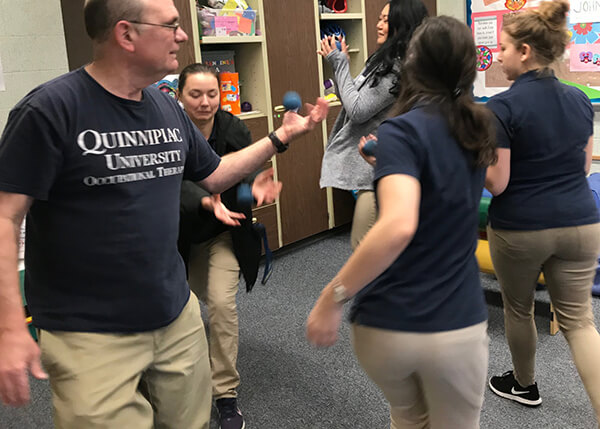
  1. Increase structure – Especially with students (e.g. sensory seekers) who trash your therapy room getting increasingly dysregulated, increase the structure. One way is by starting the session with all the toys locked up, and listing or assembling pictures of all the activities the client will do in order, before starting the session. Praise the client and check off each activity after they complete it and clean up, then unlock and begin the next activity. Another option for motivating clients when developing the activity list is to alternately have them choose the first activity and the therapist chooses the next one. Groups can also be structured with pictures listing the activities in order, or by having group members draw and review a praxis comic depicting the group activities in sequential order.
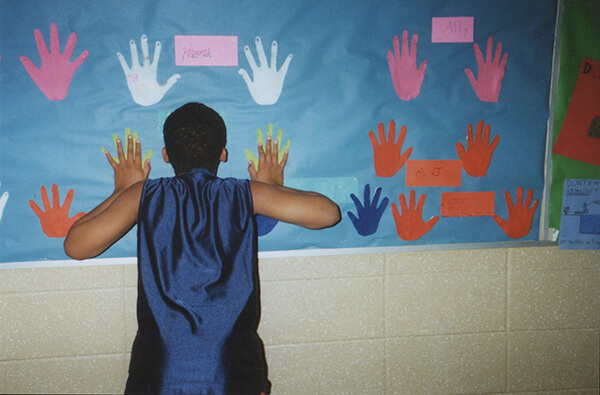
  2. Preferred Activities & Choices – Clients will work better if given choices between 2 or more activities, and presented with tasks they like to do. To assure that therapeutic goals are addressed you can present 2 choices addressing the same therapeutic goals (e.g. for deep pressure to reduce arousal offer wheelbarrow walking or wall pushups).
  3. Alternate seated with preferred gross motor tasks – For evaluation and treatment sessions it is often helpful to alternate seated fine motor writing tasks with preferred gross motor activities.
  4. Intersperse Easy – Instead of giving 10 challenging tasks, help improve the client’s motivation and effort in trying challenging new tasks by presenting 5 new tasks (covering all the concepts in the original 10 tasks you were going to teach), and alternating so every other task is something the client likes to do and has mastered, then reinforce him for doing it correctly.
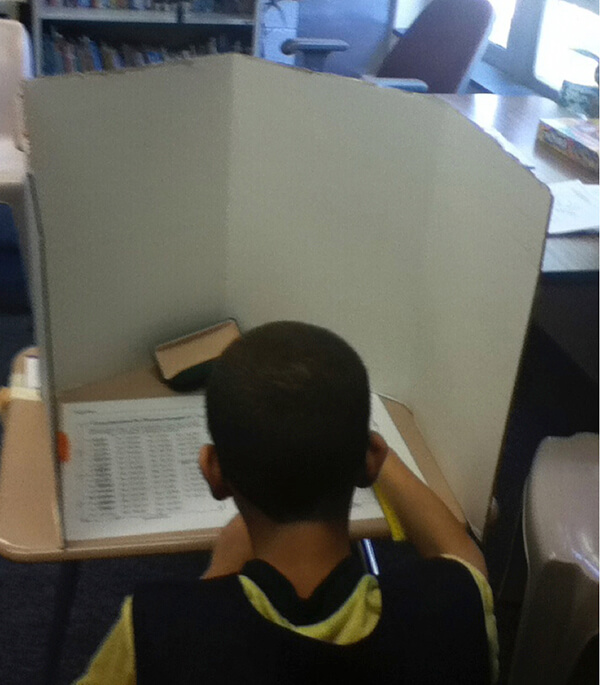
  5. Reduce distractions – Especially in groups or the classroom, minimize problematic sensory distractions to improve attention. Study carols help minimize visual distractions, while noise canceling headphones are useful for auditory distractions. It often helps to give the teacher noise canceling headphones to help a student who has difficulty behaving appropriately due to the loud sound of fire drills.
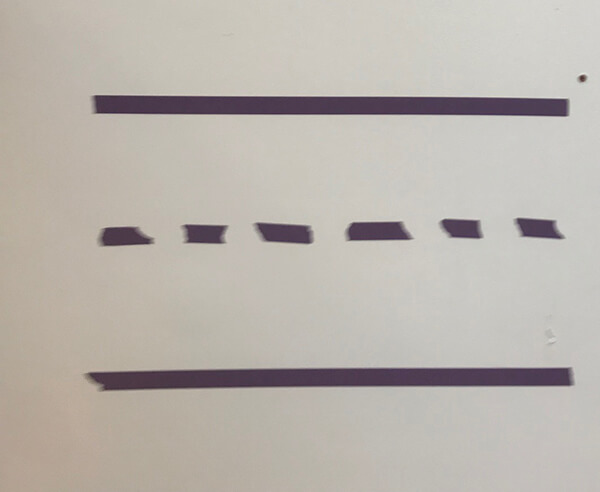
  6. Increase sensory stimulation of challenging therapy tasks – Particularly for students who are under-responsive it can be helpful to add sensory input that accentuates therapy and academic tasks. This can be done by highlighting important print, plus signs, emphasizing the guide lines of the paper, or simultaneously having the student listen to and read a story.
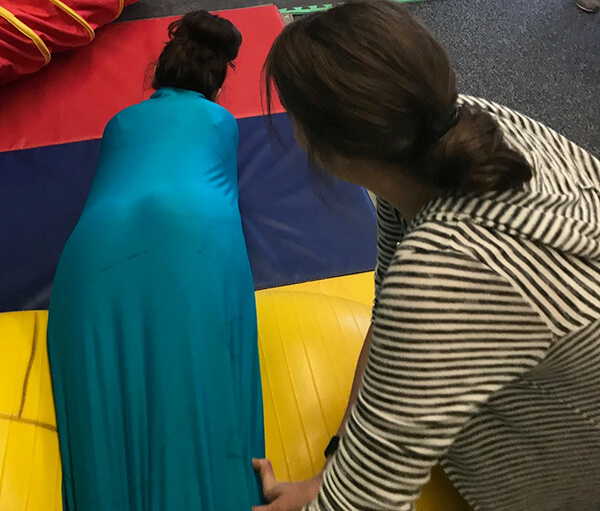
  7. Getting clinic clients to leave – Many skilled clinic therapists who use sensory integration strategies have a problem getting clients to leave when their session ends. While it’s a compliment showing the client enjoys and can learn better during therapy, it’s a problem because the therapist has another client waiting and aggressive behavior in the clinic is bad for business. Think about this ahead, and if it is a problem structure the last task in a special room with only the door leading outside unlocked. Use this as a last activity room with their parent present (a good place to review home programs), give five and two minute warnings, do deep pressure calming sensory activities, then escort them out and give them a prize if they leave appropriately.
John Pagano PhD OTR/L, presenter for Therapro's webinar 6 FAB Strategies to Improve Pediatric Therapy Behavior

John Pagano, Ph.D., OTR/L is an occupational therapist who developed FAB Strategies® to help students with complex behavioral challenges. He just completed his first book called FAB Functionally Alert Behavior Strategies.  Dr. Pagano has been presenting FAB Strategies® workshops internationally for over twenty years, and is known for his humorous interactive presentations.  

He will be offering a free Therapro webinar on Tuesday, 10/29/19:  Integrating Behavioral, Sensory, & Mindfulness Interventions in your Pediatric Therapy and a seminar at Therapro on Saturday, 11/16/19: Advanced Treatment Strategies for Youth with Complex Behavioral Challenges. For more information about these events, please refer to the Therapro website at www.therapro.com and click on the News & Events tab.

Integrated Learning Concepts: Reflex Integration for Postural & Ocular-Motor Skills

June Smith, OTR/L’s presented the Saturday Seminar Integrated Learning Concepts: Practical Strategies to Promote Reflex Integration with Postural/Ocular-Motor Based Learning

June Smith, OTR/L’s May 4th seminar entitled: Integrated Learning Concepts: Practical Strategies to Promote Reflex Integration with Postural/Ocular-Motor Based Learning clearly demonstrated how integration of primitive reflexes provides a foundation for the development of postural and ocular motor skills that affect learning.

June has broad experience as an occupational therapist and has an insatiable appetite for learning. As evidenced in her presentation, she is able to skillfully apply what she has learned to her practice. Many attendees noted how beautifully June weaves her knowledge and experience into her practice to develop innovative, effective treatment strategies. She is a collaborative therapist who enjoys sharing her passion with others. Currently, she is a clinician and mentor at South Shore Therapies, a private sensory integration clinic in Massachusetts. She has developed a Vision Clinic with Developmental Optometrists to promote visual efficiency in those with learning challenges. June has lectured nationally on Brain Gym ® and Integrated Learning concepts.

Four primitive reflexes were discussed in depth today: Moro Reflex, Tonic Labyrinthine Reflex (TLR), Symmetrical Tonic Neck Reflex (STNR), and the Asymmetrical Tonic Neck Reflex (ATNR). June provided general guidelines to determine when a primitive reflex is adaptive and when it is maladaptive. She discussed treatment considerations relevant to each primitive reflex. It was helpful that June had many clinical examples through videos/photos showing how primitive reflexes that are not fully integrated manifest themselves in children and videos/photos of treatment strategies that help integrate the reflexes. Throughout her talk, she drew from her Brain Gym® training, Svetlana Masgutova (Reflex Integration-MNRI), Sheila Frick, and others.

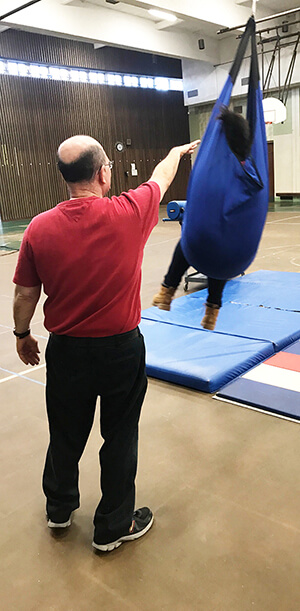
For a child who displays the TLR reflex long after it is typically integrated, June said we may see a host of associated behaviors such as the Moro Reflex where the child is toe walking due to an excessive extensor pattern; saccadic eye movements with reading difficulties; a poor sense of direction, developmental coordination disorder (DCD), Postural Ocular Disorders; hypersensitivity to vestibular activity where the child has motion sickness, dislikes gym class, and/or may have gastrointestinal issues; and has difficulty with extension prone or with neck flexion in supine. In general the child has poor balance of extension and flexion when the reflex is not integrated. Her treatment strategies include “going with the reflex” with fluid movement and gradually adding demands as tolerated, and finally working “against” the reflex. June’s treatment suggestions included activities involving facilitating head movement in all planes, linear vestibular input, using an 18″ Gymnic ball in 90/90 hip and knee flexion, and activation of the vestibular system.

June’s suggestions for therapeutic and reading materials include Rappin’ on the Reflexes: A Practical Guide to Infant Reflexes; See It. Say It. Do It!, whose author is a Developmental Optometrist; Developing Ocular Motor and Visual Perceptual Skills; and Understanding and Managing Vision Deficits: A Guide for Occupational Therapists, 3rd Ed.

June is a vibrant, generous, and gifted speaker whose knowledge and clinical expertise is extensive. She makes the application of what she has learned to the clinical setting seamless. Encouraged by June, attendees eagerly shared treatment strategies from their own clinical experiences. June’s audience was energized by her discussion and walked away with new treatment tools for immediate use!

Comments from attendees were very positive:

“Video and picture examples, interactive, and great descriptions of treatment activities/considerations.” – Kristina C., Occupational Therapist

“Great crash course in identifying and integrating reflexes. It is easily integrated into my own practice. For a complicated topic, very effortlessly presented.” – Hannah D., Occupational Therapist

“As an OT student this seminar was a great learning opportunity.” – Paige H., OTS

“Great introduction to topic – makes me feel like I want more!” – Anonymous, Occupational Therapist

Thank you, June!

Filomena Connor, MS, OTR/L
May 4, 2019

ASH vs ASPS: Comparing Sensory Assessment Tools

Teresa A. May-Benson, ScD, OTR/L, FAOTA,

Teresa A. May-Benson, ScD, OTR/L, FAOTA, is a pillar in the field of sensory processing disorder (SPD). She is the Executive Director of the Spiral Foundation (Sensory Processing Institute for Research and Learning), whose stated mission is “To
Increase Understanding and Acceptance of Sensory Integration and Sensory Processing Dysfunction through Education and Research.”
Dr. May-Benson is an esteemed educator and researcher as well as a clinician at OTA The Koomar Center in Massachusetts. At today’s Saturday seminar entitled: ASHs to A/ASPs: Comparison of Assessment Tools for Adolescents and Adults with Sensory Processing Disorder, she provided a comprehensive review of available assessments for the adolescent and adult populations with accompanying research, as well as a detailed overview of her tool, Adult/Adolescent Sensory History (ASH), published in 2015.

Dr. May-Benson reviewed research studies conducted on adults with SPD and concluded that there is a paucity of research and more is needed. She outlined what we currently know about SPD in adults, including how it impacts all aspects a person’s life. A poignant example she described was a mother who is sensory defensive who had difficulty maintaining a family relationship with her child who is a sensory seeker. The challenge for therapists during the process of assessment is to explore what things are affecting the person’s ability to engage in life activities. Dr. May-Benson also cited the problem of an apartment dweller who is auditory defensive and lives in an apartment in between two apartments. Moving to an apartment end unit that has extra insulation from noise may be a good solution to explore with this client. These examples demonstrate the value of an interview as part of the assessment process because it helps the therapist gather information about the individual’s daily life experience, along with formal screening and direct assessment.

There are a number of tools available to assess SPD that Dr. May-Benson reviewed, discussing their positive aspects and their limitations. She cautioned that screening tools should be used only to determine whether a sensory-based problem is present that warrants further testing.

According to the Spiral Foundation, “The Adult/Adolescent Sensory History is designed as a self-report assessment of sensory and motor behaviors commonly observed in individuals with difficulties processing and integrating sensory information. The purpose of this assessment is to help identify adults and adolescents ages 13 to 95 who experience problems in sensory processing and integration as well as assist therapists in clinical reasoning when creating interventions for these individuals. Based on the conceptual model of sensory processing and sensory integration proposed by A. Jean Ayres, this measure is designed to identify difficulties in five key areas of functioning: Sensory Discrimination, Sensory Modulation, Postural-Ocular Skills, Praxis, and Social-Emotional Functioning.” The ASH has performed strongly on tests of reliability and validity. It is available at the Spiral Foundation www.thespiralfoundation.org This website offers many resources including webinars, courses, and free SPD education toolkits.

In her presentation, Dr. May-Benson provided the following implications for practice:

  • Assessment of adults with SPD is complex and should be comprehensive.
  • To determine sensory integration difficulties, assessment must include more than questionnaires.
  • Be aware that different measures emphasize different aspects of sensory
    integration; be aware that we may miss vital information if we use one
    measure over another.
  • Select measures with the particular client’s needs.
  • Recognize that all measures are not created equal: some measures can provide
    better functional performance information than others and others may
    provide better psychometrics than others.

We were honored to present Teresa May-Benson’s seminar to spotlight her diligent work over the past 15 years to develop the ASH, which is a comprehensive, valid, and reliable adolescent/adult assessment of SPD. Her research has illuminated the issues that clients with SPD as well as their families and practitioners, face. Her research is ongoing and crucial.

Here is a sample of positive reviews about Teresa’s seminar:

“Excellent overview of Sensory Assessment tools.” – Teri B., Occupational Therapist

“I would recommend this seminar to a colleague if they work with an
adolescent or adult population. The ASH appears to be a useful tool.”
– Anonymous, Occupational Therapist

“Thank you for a well-organized and comprehensive seminar about the tools
available for adolescent and adults with SPD. Teresa’s new assessment
tool has great potential!”
– Maria K., Occupational Therapist

Thank you, Teresa!

Filomena Connor, MS, OTR/L
December 15, 2018