Category Archives: Social Emotional Learning

Explore strategies, tools, and resources that promote social emotional learning (SEL) for children and adolescents. This category covers emotional regulation, self-awareness, relationship skills, and responsible decision-making to support success in school, home, and community settings.

Why Early Sensory Modulation Matters: Webinar Overview

The January 6, 2026, webinar, Just Right! Jr.: Why Early Sensory Modulation Matters explored how intentional, developmentally appropriate sensory experiences can strengthen self-regulation in young children before challenges escalate. Designed for occupational therapists, educators, and caregivers, the session emphasized that early sensory modulation strategies are foundational—not optional—for supporting participation, engagement, and emotional learning in early childhood settings.

Rather than reacting to dysregulation after it occurs, the webinar reframed sensory modulation as a proactive approach that helps children understand their bodies, emotions, and needs throughout the day.


What Is Sensory Modulation in Early Childhood?

Sensory modulation refers to a child’s ability to regulate responses to sensory input in a way that supports attention, behavior, and emotional control. In early childhood, this skill is still emerging and must be taught through experience, language, and repetition.

The webinar highlighted how early sensory modulation strategies help children:

  • Recognize internal body signals (energy level, tension, calmness)
  • Develop emotional awareness and vocabulary
  • Adjust arousal levels for learning and social participation
  • Build the foundation for self-advocacy

Key Takeaways From the Webinar

1. Sensory Language Builds Self-Regulation

Children benefit from simple, consistent sensory language such as fast, slow, and just right. When adults model this language during daily routines, children begin to label their internal states and understand how movement and sensory input affect how they feel.

Using shared sensory language is a core component of effective early sensory modulation strategies and supports alignment between therapists, teachers, and caregivers. The presenter shared how her resource, Just Right! Jr.: A Sensory Modulation Curriculum for Emerging Learners helps teams use this shared language throughout the learning environment.

2. Regulation Develops Through Play and Movement

Play-based movement experiences—rhythm, heavy work, vestibular input, and tactile play—were emphasized as essential tools for developing modulation skills. These activities support regulation naturally while maintaining engagement and motivation.

Rather than pulling children out for isolated interventions, the webinar reinforced embedding early sensory modulation strategies into classroom routines and transitions.

3. Consistency Across Environments Matters

Sensory strategies are most effective when applied consistently across settings. When educators and therapists use the same sensory framework, children experience predictable support throughout the day, reducing frustration and behavioral escalation.


Why Early Sensory Modulation Matters Long-Term

When children learn to identify how their bodies feel and what helps them feel “just right,” they gain tools that extend beyond the classroom. Early use of early sensory modulation strategies supports:

  • Improved classroom participation
  • Stronger emotional regulation
  • Reduced behavior challenges
  • Increased independence over time

The webinar reinforced that early sensory support is an investment in long-term regulation and learning success.


Implementation Checklist: Early Sensory Modulation Strategies in Practice

Use this checklist to translate webinar concepts into daily routines.

Classroom & Therapy Environment

☐ Use consistent sensory language (fast/slow/just right) across adults

☐ Embed sensory supports into transitions and routines

☐ Offer movement opportunities before seated tasks

☐ Normalize regulation tools as part of learning, not rewards

Activities & Strategies

☐ Incorporate rhythmic movement (clapping, marching, bouncing)

☐ Use heavy work activities to support calming and focus

☐ Provide tactile experiences through play-based materials

☐ Allow choice to support autonomy and self-awareness

Adult Support & Modeling

☐ Model noticing and naming body states out loud

☐ Validate children’s sensory experiences without judgment

☐ Guide children toward strategies that help them feel regulated

☐ Reinforce self-advocacy when children express sensory needs

Collaboration

☐ Align sensory language across the classroom, therapy, and home

☐ Share strategies with caregivers for carryover

☐ Monitor and adjust supports based on child response


Bringing It All Together

The Just Right! Jr. webinar made it clear that early sensory modulation strategies are most effective when they are proactive, play-based, and consistently applied. By embedding sensory awareness into everyday experiences, professionals can help young learners build the regulation skills they need for lifelong participation and success.

The Just Right! Jr.: Why Early Sensory Modulation Matters webinar explored how intentional, developmentally appropriate sensory experiences can strengthen self-regulation in young children before challenges escalate. Designed for occupational therapists, educators, and caregivers, the session emphasized that early sensory modulation strategies are foundational—not optional—for supporting participation, engagement, and emotional learning in early childhood settings.

Rather than reacting to dysregulation after it occurs, the webinar reframed sensory modulation as a proactive approach that helps children understand their bodies, emotions, and needs throughout the day.


Social Language Rules & Tools: A Preschool Curriculum of activities to improve social–ability

Activities to Improve Social–Ability in Play

Teachers and speech language pathologists (SLPs) can use highly interactive social language roleplay activities to improve the social-ability of their preschool students.   During these fun lessons children learn strategies to help them to establish joint attention so that their communication attempts will succeed.  

Why do so many Of preschooler’s attempts at communication fail? 

Failed communication attempts are not uncommon for preschool-age children, especially those with social language challenges, such as autism. The missing key is joint attention.

  • One child begins to talk about his painting, “I made a fish.”, but the other child turns away.  There’s no joint attention,  so communication fails.
  • One child asks, ”Where is the truck?”, but the other child talks over them commenting on their bridge. There’s no joint attention,  so communication fails.
  • One child requests the red train, “I wanna have the red one?”, but the other child talks about his new shirt.  There’s no joint attention,  so communication fails.
  • One child comments on their toy cat, “My cat is scratchy.”, but the other child just ignores them.  There’s no joint attention, so communication fails. 

Joint attention ensures that both the speaker and the listener are looking at, referring to and or thinking about the same topic. Adults take responsibility for creating joint attention with children by getting down on their level, by following their lead and by persevering in calling their attention to interesting objects or events.  Therefore, communication with adults is often successful. 

However, peers with social language challenges are less likely to be able to initiate and or respond to other’s attempts at joint attention resulting in many missed opportunities to successfully close the communication circle. 

Age Expectations

 It is interesting to note that most babies should be following the gaze of their parent by turning to look at whatever their parent is looking at by 6 months of age.  Babies begin pointing by 8-9 months.  Babies use gestures, eye gaze and vocalizations to get caregiver’s attention by 12 months (for more, see Developmental Milestones on page 196 of Social Language Rules and Tools).

What is happening? 

In order for a communication attempt to succeed, the speaker and the listener have to create joint attention toward each other, toward an object or toward an idea. Joint attention is the key to success in completing the communication loop. Many preschoolers, especially those on the spectrum, are still developing this skill. That’s why communication attempts with adults, who take responsibility for creating joint attention are much more likely to succeed than preschooler’s communication attempts with peers. The speaker needs to be aware of their listener’s needs.

  • “If I don’t get their attention then they won’t know I’m talking to them.” 
  • “If I don’t get close enough to them they might not hear me.” 
  • “If I don’t say it in an interesting way they might not notice me.” 

The listener needs to be responsive to the speaker. 

  • “If I don’t look up or say a word then they won’t know I heard them.” 
  • “If I didn’t understand what the speaker said then I need to ask.“ 

There’s a lot that can go wrong! 

What to do? 

Many children with special needs, such as autism, benefit from specific and direct social language instruction.  The Social Language Rules and Tools Curriculum provides this type of instruction. Key features of the Rules and Tools Curriculum include:

  • It is focused on specific chanted rules. 
  • It is prompted with non-verbal devices, such as, gestures, pictures, objects, etc. 
  • It is presented in integrated group lessons.
  • It is modeled by typical peers and supportive teachers.
  • It is incorporated into increasingly novel play, conversation and learning activities. 
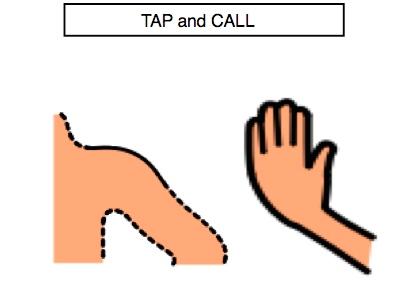
TAP AND CALL TEACHING PICTURE  used to teach joint attention

An example of an activity that provides needed direct social language instruction is Tap and Call, from the Rules and Tools Curriculum. Tap and Call is the first rule of the 68 rules and lessons in the Social Language Rules and Tools Curriculum and is taught to increase successful interactions by ensuring  joint attention. If you teach preschoolers to Tap and Call then:

  1. The preschooler who is speaking will get close to the listener
  2. The preschooler who is speaking will look at the listener
  3. The preschooler who is speaking will gain the listener’s attention

With this the preschooler who is listening is much more likely to respond with eye contact or a verbal response; they will establish joint attention and the communication circle will be complete!

How to teach this? 

Roleplay! Through roleplay, parents, teachers and speech language pathologists can engage preschool children in interactive lessons to teach these skills. 

Pointer finger icon from Rules and Tools

For example, using a large pointer finger prop (which is easily and inexpensively cut out of foam board) creates drama as adults model Tapping and Calling their listeners before they talk. Best of all, this can become an interactive game for the preschool audience watching the role play. Encourage your preschoolers to call out “FREEZE, YOU NEED TO TAP AND CALL!” when the adult role players ‘forget’ to Tap and Call before talking.

Enhance the learning experience with a multisensory element like singing. In the example above preschoolers can say and clap out a chant:  “They might not notice me at all, if I forget to ‘Tap and Call’!” 

Using songs when teaching social language rules can tap into different learning styles.  Songs have been shown to improve attention and memory.  Tap and Call has a song to the tune of “TAPS” (see Social Language Rules and Tools Curriculum for the words to the Tap and Call song).     

Adults and peers can use the large pointer finger prop/token along with the chant and song to playfully generalize the Tap and Call rule to the classroom during snack, games, crafts, and free play activities.   These props, chants and songs can be sent out of the classroom to many different settings within the school and to the child’s home to ensure generalization of new rules to different environments and to different people.   

How to find out more information?  

Refer to Rule 1.1 of Social Language Rules and Tools Curriculum for details about these interactive roleplay lessons and the multimodality teaching methods. 

Some children are missing positive communication experiences over and over in every possible interaction with peers, teachers, siblings and parents. What a lot of missed opportunity and missed reinforcement from those possible interactions!  Unlike ABA and Playfulness therapies where adults do all the work, Social Language Rules and Tools Curriculum teaches communicatively challenged children to recognize and implement subtle, key rules or behaviors that their more successful peers use intuitively all day long. 

The rule sets are listed in developmental order based on literature review (included in the program on pages 195-229). 

Stay tuned for the next Talk and Play blog for Lesson 1.2 Answer, ‘What?’ 

Guest Author: Deborah Fortin, author of Social Language Rules & Tools: A Preschool Curriculum

Advanced Treatment Strategies for Youth with Complex Behavior

Speaker John Pagano, PhD, OTR/L who present Advanced Treatment Strategies for Youth with Complex Behavioral Challenges

On November 16, John Pagano, PhD, OTR/L presented his Therapro Saturday Seminar, Advanced Treatment Strategies for Youth with Complex Behavioral Challenges, to a captivated audience. The energy in the room was palpable throughout the two hour talk. Dr. Pagano ‘s passion was evident as he discussed assessing and treating children and adolescents who have complex behavioral disorders. He shared clinical examples and anecdotes to highlight his talk, peppered with humor. Leading the audience through many experiential activities provided them with examples of practical tools to use with individuals and groups.

John is an occupational therapist who practices at an adolescent psychiatric hospital and school. He is a certified instructor of Positive Behavioral Support and Movement Based Learning Strategies. His years of experience include working in various settings including adolescent juvenile detention, psychiatric hospital, adolescent group home, and in special needs, regular education and preschool classrooms. He is the author of the recently published book, FAB: Functionally Alert Behavior Strategies: Integrated Behavioral, Developmental, Sensory, Mindfulness & Massage Treatment.

John discussed the importance of setting functional behavioral goals when providing OT, PT, and Speech/Language therapies for students with complex behavioral disorders. He frequently reiterated the value of a team approach, including ABA specialists, to working with this population.

FAB Strategies® are Dr. Pagano’s evidence-based, practical strategies that use “clinical reasoning based on current clinical research and neurology to develop the individualized strategies needed to address complex behavioral challenges.” John reviewed Sensory Processing Disorders, how they interact, and how to treat them using sensory based interventions. In his discussion of Sensory Modulation Disorders, John stated that his research and experience have shown that the olfactory sense is a powerful teaching tool for those with ASD and for those who have experienced trauma. He has found that pairing a scent is very effective for achieving the desired Quiet Alert state of arousal. He advocated using materials like Scented Dough and scented markers as treatment materials.

John disclosed that research supports that mindfulness strategies are an effective and powerful treatment methodology for improving special needs students’ behavior and executive functioning. John led the group in breathing and movement activities that he uses with his students that also increase body awareness. John taught the group a number of quick, easy, and practical strategies to circumvent problem behaviors. For example, his FAB Turtle Strategy involves 4 steps: 1) Notice environmental & body triggers – STOP 2) Go to the sensory coping area 3) Do your individual coping strategy 4) Later problem solve with help. Fidgets like Loopeez, Boinks, Panic Pete, and Theraband were mentioned as some of John’s favorites for calming.

Dr. Pagano is a dynamic presenter who generously shared resources and evidence-based, practical treatment strategies for working with children and adolescents who have complex behavioral challenges. He integrates all that he has learned in his years of experience with current research so adeptly!! Attendees left this seminar with ideas they could put to use immediately in their practice.

Take a look at some of the overwhelmingly positive comments from those who attended John’s seminar:

“I left full of simple/functional strategies to try with my students, all ages. John is simply AMAZING!!!” – Christie H, Speech/Language Pathologist

“John is an excellent speaker who was very helpful, evidence based, and offered suggestions for treatment.” – Renee S., Physical Therapist

“Offered many resources & activities that can be used immediately in my practice & therapy.” – Rose O, Occupational Therapist

“John’s sense of humor made this important topic fun. Many teachers & therapists are struggling in the classroom. These are strategies that can be implemented Monday. In addition, his strategies come from evidence based research of strategies/techniques that help our students make progress.” – Jennifer H, Occupational Therapist

Thank you, John!

Filomena Connor, OT, MS, OTR
November 16, 2019