Tag Archives: classroom strategies

Classroom strategies encompass OT-informed approaches that support attention, posture, sensory needs, and motor skills to help students succeed academically and socially.

Advanced Treatment Strategies for Youth with Complex Behavior

Speaker John Pagano, PhD, OTR/L who present Advanced Treatment Strategies for Youth with Complex Behavioral Challenges

On November 16, John Pagano, PhD, OTR/L presented his Therapro Saturday Seminar, Advanced Treatment Strategies for Youth with Complex Behavioral Challenges, to a captivated audience. The energy in the room was palpable throughout the two hour talk. Dr. Pagano ‘s passion was evident as he discussed assessing and treating children and adolescents who have complex behavioral disorders. He shared clinical examples and anecdotes to highlight his talk, peppered with humor. Leading the audience through many experiential activities provided them with examples of practical tools to use with individuals and groups.

John is an occupational therapist who practices at an adolescent psychiatric hospital and school. He is a certified instructor of Positive Behavioral Support and Movement Based Learning Strategies. His years of experience include working in various settings including adolescent juvenile detention, psychiatric hospital, adolescent group home, and in special needs, regular education and preschool classrooms. He is the author of the recently published book, FAB: Functionally Alert Behavior Strategies: Integrated Behavioral, Developmental, Sensory, Mindfulness & Massage Treatment.

John discussed the importance of setting functional behavioral goals when providing OT, PT, and Speech/Language therapies for students with complex behavioral disorders. He frequently reiterated the value of a team approach, including ABA specialists, to working with this population.

FAB Strategies® are Dr. Pagano’s evidence-based, practical strategies that use “clinical reasoning based on current clinical research and neurology to develop the individualized strategies needed to address complex behavioral challenges.” John reviewed Sensory Processing Disorders, how they interact, and how to treat them using sensory based interventions. In his discussion of Sensory Modulation Disorders, John stated that his research and experience have shown that the olfactory sense is a powerful teaching tool for those with ASD and for those who have experienced trauma. He has found that pairing a scent is very effective for achieving the desired Quiet Alert state of arousal. He advocated using materials like Scented Dough and scented markers as treatment materials.

John disclosed that research supports that mindfulness strategies are an effective and powerful treatment methodology for improving special needs students’ behavior and executive functioning. John led the group in breathing and movement activities that he uses with his students that also increase body awareness. John taught the group a number of quick, easy, and practical strategies to circumvent problem behaviors. For example, his FAB Turtle Strategy involves 4 steps: 1) Notice environmental & body triggers – STOP 2) Go to the sensory coping area 3) Do your individual coping strategy 4) Later problem solve with help. Fidgets like Loopeez, Boinks, Panic Pete, and Theraband were mentioned as some of John’s favorites for calming.

Dr. Pagano is a dynamic presenter who generously shared resources and evidence-based, practical treatment strategies for working with children and adolescents who have complex behavioral challenges. He integrates all that he has learned in his years of experience with current research so adeptly!! Attendees left this seminar with ideas they could put to use immediately in their practice.

Take a look at some of the overwhelmingly positive comments from those who attended John’s seminar:

“I left full of simple/functional strategies to try with my students, all ages. John is simply AMAZING!!!” – Christie H, Speech/Language Pathologist

“John is an excellent speaker who was very helpful, evidence based, and offered suggestions for treatment.” – Renee S., Physical Therapist

“Offered many resources & activities that can be used immediately in my practice & therapy.” – Rose O, Occupational Therapist

“John’s sense of humor made this important topic fun. Many teachers & therapists are struggling in the classroom. These are strategies that can be implemented Monday. In addition, his strategies come from evidence based research of strategies/techniques that help our students make progress.” – Jennifer H, Occupational Therapist

Thank you, John!

Filomena Connor, OT, MS, OTR
November 16, 2019
School Daze! What are the Most Popular Back to School Products?

Planning for “Back to School” assumes a high priority for parents, teachers, and therapists as July gives way to August. You’ve told us that you and your students LOVE these school /therapy items!  Start the new academic year with a bang using these items in your toolbox. Check them off your list!

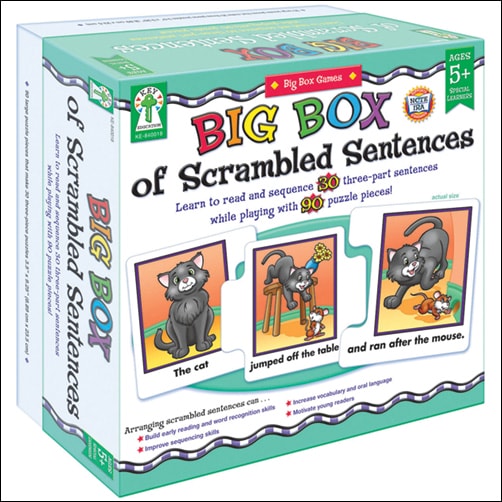
Big Box of Scrambled Sentences- a great back to school product
Big Box of Scrambled Sentences
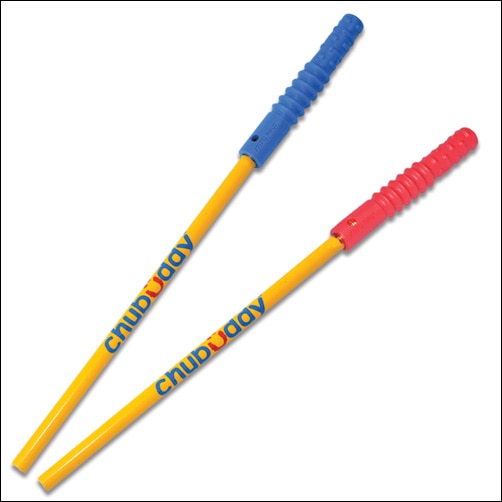
  • For students who focus better and calm with oral input, Topper Zilla is a winner.  It has a chew factor of 3, meaning it is designed for strong chewers. It is not only Godzilla-like strong, but soft as well. It is appropriate for any age, and includes a pencil.
  • To help build a child’s foundation for success with school tasks by improving strength of the trunk and upper upper body, and fine motor control, Upper Body and Core Strength Fun Deck is comprised of 52 fun activities at your fingertips. It also includes game ideas.
  • The Star Spacer helps students understand letter spacing, sizing, and alignment.  It is a simple, clever tool that works! By providing immediate results, the student gains confidence in his/her more legible handwriting. For Grades 1-5, and for older students with writing difficulty.
  • Use Learn to Move, Move to Learn! to plan group activities using 52 creative, theme-based lessons that utilize a sensory-integrated developmental sequence, this book is a must! All of the themes have 7 sensorimotor activities including warm-up, vestibular, proprioception, balance, eye-hand coordination, cool-down, and fine motor. The activities are geared to support young school-age children with diverse abilities.

Of course, we have plenty more “favorite and popular” back to school products – be sure to view the Therapro Back to School Catalog for hundreds more ideas to make this the best school year ever!

Topper Zilla -  a must have on the back to school shopping list
Topper Zilla

Rhythm of the Words: Using Songs & Games to Boost Literacy

Cleopatra Knight-Wilkins, OTD, MED, OTR/L presenter for the Saturday Seminar  Rhythm of the Words: Integrating Multicultural Songs & Games with Occupational Therapy to Promote Literacy.

Cleopatra Knight-Wilkins, OTD, MED, OTR/L presented a joyful April Saturday Seminar at Therapro headquarters entitled: Rhythm of the Words: Integrating Multicultural Songs & Games with Occupational Therapy to Promote Literacy. Attendees were up on their feet, moving, clapping and singing for most of the two hour seminar. Dr. Knight-Wilkins led the attendees in activities that engaged their sensory systems. She discussed how the songs and games can be used as part of the therapeutic process as well as how they can be used to target educational goals.

Cleopatra’s rich and extensive experience as an occupational therapist, educator, and performing artist has fueled her passion for integrating musical elements with occupational therapy modalities by using multicultural songs, games, and movement patterns to address the occupation of literacy. Currently, she is in the process of publishing her research-based, multi-media curriculum resource guide entitled Rhythm of the Words: Integrating Multicultural Songs & Games with Occupational Therapy to Improve Literacy. She presented a poster session at the AOTA Annual Conference in New Orleans earlier this month on this topic.

AOTA advocates for the role of occupational therapists in supporting literacy. Research indicates that movement and music improve literacy development. Cleopatra cited a number of interesting studies that demonstrate that isolated handclapping songs result in improved motor and cognitive skills. One particular study that examined training classroom handclapping songs versus participation in music appreciation classes found that training handclapping songs was more efficient in developing literacy skills in 2nd and 3rd grade children than was participation in music appreciation classes.

Attendees formed small and large groups to participate in ‘warm up’ activities, games that involve imitation and chanting, and musical play with graded complexity of movements. Favorites included “Head ‘N Shoulders Baby” played with a partner clapping in various patterns, and “Button You Must Wander,” where a button is passed secretly around a circle while “It” sits in the center of the circle and must guess who has the button. In addition to games and chants, Cleopatra recommended musical CDs such as Make a Sound and Move Around, Simplified Rhythm Stick Activities, and Songames for Sensory Processing. Using Gertie Balls to bounce, catch, and throw to a rhythm, chant, or song can address visual motor, fine motor, and timing skills.

Dr. Knight-Wilkins was an engaging presenter who demonstrated that music, rhythm and movement offer a unique, evidence-based approach to improving language literacy in children of all ages and abilities.

Take a look at some comments from attendees:

“Enjoyed the ‘occupation’ of children reminder! Could implement activities for a whole group and at individual desks.” – Adriana M,, Occupational Therapist

“Something different but very relevant to school-based practice, especially when many schools now have lost funding for music programs.” – Jennifer C., Occupational Therapist

“Cleo was lovely & entertaining. Very knowledgeable. Different perspective on the regular teaching method.” – Anonymous, Occupational Therapist

“Movement to songs was wonderful – I can see how my students would enjoy it. Reminds me that I want to put music/rhythm in my sessions more often.” – Janet L., Occupational Therapist

Thank you, Cleopatra!

Filomena Connor, MS, OTR/L
April 13, 2019