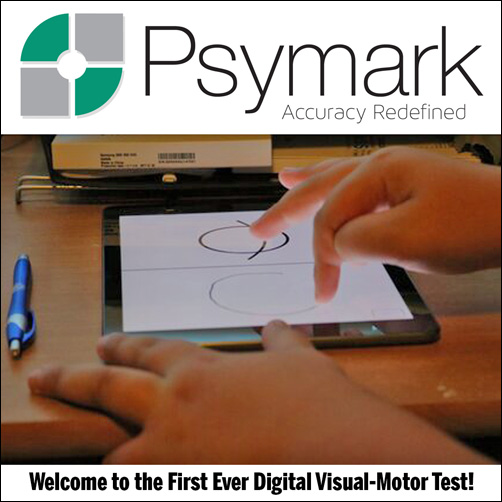
Technology is transforming school-based occupational therapy, and the latest episode of the OT Schoolhouse Podcast highlights a game-changing tool that’s making assessments more efficient than ever. In this episode, Karen Silberman, creator of the Psymark Psymark Visual-Motor Progress Monitoring Apps, and occupational therapist Heather Donovan join host Jayson Davies to dive into the latest innovations in Psymark’s digital tools for visual-motor assessments. This tool not only saves time but also equips practitioners and educators with actionable intervention strategies—helping support students more effectively while reducing unnecessary referrals.
What You’ll Learn
In this episode, listeners will gain insights into Psymark’s groundbreaking research and the effectiveness of its digital tools. Highlights include:
Pencil-Finger-Stylus Study: Findings show that digital input methods produce nearly identical results to traditional pencil-and-paper tasks, reinforcing the validity of digital assessments.
Real-World Impact: A case study from a school district revealed a 48% increase in students reaching the Proficient range after a 12-week intervention, highlighting the effectiveness of targeted support using Psymark’s tools.
A Sneak Peek at an Exciting New Digital Visual-Motor Assessment
Listeners will also get an exclusive preview of the upcoming Psymark Visual Motor Screener (VMS), set to launch this spring! This powerful screening tool is designed for both occupational therapists and general education teachers, allowing them to efficiently assess large groups of students and provide tailored intervention strategies for those who need additional support.
The VMS toolkit will include:
The Visual Motor Screener (VMS)
A training video
A comprehensive manual
This new tool will empower professionals to quickly identify visual-motor challenges and implement targeted strategies to help students succeed.
Don’t Miss This Episode!
Hear how Psymark is leading the way in digital visual-motor assessments. visit otschoolhouse.com/episode171 to listen and discover how these advancements are shaping the future of occupational therapy and student success.
At Therapro, we’re committed to providing resources and tools that support therapists, educators, and families. Stay connected for more updates on the latest in assessments and interventions!
Handwriting remains an important skill for recording information, expressing one’s thoughts on paper and communicating ideas to others, despite the increasing use of technology in educational settings. Writing demands placed upon students increase as they progress from primary, through secondary, to further and higher education. Confident, legible, and fast handwriting can support success both within the educational system and in workplace settings that still require the ability to write legibly and fast.
The most important objective in acquiring the skill of handwriting is to be able to write legibly, however, in many situations, the speed of handwriting is also important.
Based on this realization, the authors of the DASH-2 (who are experts in motor control) wanted to provide a reliable measure of the speed of handwriting while at the same time accounting for legibility. Thus, when measuring the speed of production, only letters/words that are legible within the context of the writing are counted.
Uses of the DASH-2
The primary aim of the DASH-2 is to provide a reliable age-appropriate measure of handwriting speed and legibility. Data from the DASH-2 can be used to:
identify individuals with handwriting difficulties
determine eligibility for extra support
provide a detailed description of handwriting performance
contribute to diagnostic assessment (e.g. Dysgraphia)
monitor progress and evaluate intervention effectiveness
Copy Best: Copying a sentence in ‘best’ handwriting for 2 minutes
Alphabet Writing: Writing lower case letters in alphabetic order from memory continuously for 1 minute
Copy Fast: Copying letters in words and words in sentences from a model sentence that contains all the letters of the alphabet quickly for 2 minutes. This is the same sentence used in Copy Best.
Graphic Speed: Drawing X’s in circles for 1 minute
Free Writing: Writing on the topic of My Life of Past/Present/Future for 10 minutes
Interpretation of Test Results: The 7Ss and 4Ps
Although the main focus is on speed and legibility, the authors encourage obtaining other useful information about an individual’s handwriting and written expression. They offer a format that is part of the Record Form for making Qualitative Observations during the testing.
The 7Ss are features of the examinee’s handwriting that can be observed in the finished product:
Shape/letter formation
Size
Spacing
Slant/slope
Stringing together/joining
Site/sitting on the line
Shakiness
The 4Ps have been associated with poor handwriting outcomes.
Posture
Paper Position
Pen/Pencil Grip
Pressure
Types of Scores:
The DASH-2 yields different types of scores pertaining to the five DASH-2 tasks:
Raw scores and scaled scores for each of the four core tasks
A total Standard Score
Percentile equivalents for the total standard score
The four types of supplementary scores provide:
A scaled score for the Graphic Speed task
a Copy Speed Difference score for the Copy Best/Copy Fast tasks
The percentage of illegible words from Free Writing
A WPM score for each section on the Free Writing task, to provide a profile of the whole Free Writing task
Summary:
This relatively new handwriting assessment fills a gap in our tools for the evaluation of handwriting speed and legibility for older students. Developed by the same authors of the Movement Assessment Battery for Children – Third Edition who are experienced in observing motor control and evaluation development, we can feel comfortable in getting reliable results from the DASH-2. It is being used in some exciting research projects at the University of Washington. We think it is an important component in our ability to identify handwriting difficulties with a standardized and reliable assessment.
In today’s fast-paced world, having a calming retreat is essential for individuals who may experience sensory overload, including children and adults with autism, ADHD, sensory processing challenges, or anxiety. Sensory spaces provide these much-needed areas of refuge, offering tools to regulate emotions, improve focus, and promote overall wellbeing. Whether you’re a therapist designing a clinic, an educator enhancing a classroom, or a parent creating a calming corner at home, sensory spaces can make a significant difference.
What is a Sensory Space?
A sensory space is a carefully designed environment that provides sensory input to help individuals regulate their emotions, behaviors, and sensory processing needs. These spaces are often used to support children and adults with sensory processing challenges, such as those with autism, ADHD, or sensory integration disorders. Sensory spaces can include calming elements like soft lighting, weighted blankets, and gentle music, as well as stimulating features such as textured surfaces, bubble tubes, and interactive activities. The goal is to create a balanced setting that promotes relaxation, focus, or engagement, depending on the individual’s needs.
The Importance of Sensory Spaces
Sensory spaces are vital for individuals with sensory processing challenges as they provide a safe, controlled environment to meet unique sensory needs. These spaces are essential for promoting emotional regulation, reducing anxiety, and fostering focus and engagement. These spaces are more than just calming zones—they empower individuals by offering opportunities to explore sensory experiences in a controlled, therapeutic manner. Whether it’s the soothing glow of a bubble tube or the tactile engagement of sensory-rich objects, these elements foster relaxation, learning, and emotional balance. By offering a mix of calming and stimulating elements, sensory spaces empower individuals to better navigate their environments, enhance self-awareness, and build skills for independence. For children in therapeutic, educational, or home settings, these spaces are a critical tool for supporting holistic development and well-being.
Therapro’s Plug-and-Play Sensory Solutions
At Therapro, we understand the importance of accessible sensory solutions. Creating a sensory space doesn’t have to involve extensive renovations or large areas. Products like the Luminea Corner,SENcastle All-In-One Sensory Room, and Luminea Bubble Tube Kits offer practical, ready-to-use options for therapists, educators, and parents.
Luminea Corner: This innovative solution combines sensory integration with skill development through its compatibility with the Luminea app. The app enables dynamic interaction with the bubble tube and fiber optic lights, offering a customizable light display that can be used to work on fine motor skills, visual perception, and speech goals. This dual-purpose setup not only creates a calming sensory retreat but also transforms the space into an engaging therapeutic tool tailored to individual developmental needs.
The SENcastle: Perfect for small spaces or as a cozy corner within a larger sensory room, the SENcastle All-In-One Sensory Room provides everything needed to create a calming and engaging environment for self-regulation and relaxation. Its centerpiece, a captivating light column, integrates visual and auditory elements to stimulate multiple senses. Additionally, the SENcastle includes weighted, vibrating, and tactile pillows that target the tactile, auditory, proprioceptive, and visual senses, making it a compact yet comprehensive solution for sensory integration and therapeutic support.
Luminea Bubble Tube Kits: These versatile kits are designed to adapt to a variety of spaces, with three distinct base options that cater to different sensory and therapeutic needs. The simple protector module provides a sleek, minimalist design that safeguards the electronics while maintaining easy access. The square base offers a sturdy seating area, allowing users to sit comfortably and view the bubble tube from multiple angles, ideal for group or one-on-one sessions. The corner base is perfect for maximizing space efficiency, enabling users to interact with the bubble tube from a seated or floor-level position while enjoying a cozy, immersive experience. Each of these options ensures that the bubble tube is both functional and accessible, providing visual stimulation to support sensory integration and therapeutic goals.
Tips for Designing Your Sensory Space
Adapt to Your Space: With Therapro’s modular options, even small spaces can become sensory havens.
Prioritize Accessibility: Ensure the sensory tools are easy to access and interact with for users of all abilities.
Maximize Comfort: Incorporate soft seating, cushions, or mats to create a welcoming environment.
Incorporate Multi-Sensory Elements: Combine visual, tactile, and auditory stimuli for a holistic sensory experience.
Make the Most of Your Space with Therapro
At Therapro, we understand the challenges of designing sensory spaces. That’s why our solutions are thoughtfully designed to be effective, user-friendly, and adaptable. Whether you’re a professional or a parent, our sensory tools provide the perfect foundation for creating spaces that enhance well-being and promote regulation.
Explore the Luminea Corner, SENcastle, and Luminea Bubble Tube Kit to get started on your sensory space journey. Together, we can create environments where individuals feel calm, supported, and ready to thrive.