
Category Archives: Motor & Movement

Find practical strategies, research-backed techniques, and resources designed to support the development of gross motor skills in children. This category is ideal for physical therapists, occupational therapists, early interventionists, and parents seeking effective movement-based solutions to enhance coordination, strength, balance, and mobility in young children.

The Peabody Developmental Motor Scales Test

The Peabody Developmental Motor Scales Test-Second Edition (PDMS-2) examines both gross motor and fine motor skills. This test is for children from birth through age 5. The evaluation assesses a child’s development, and also provides training and treatment to improve motor skills. The assessment generally lasts about 45-60 minutes, and provides an in-depth analysis. The Second Edition has been in use since 2000 and is a statistically reliable and valid norm-referenced assessment.
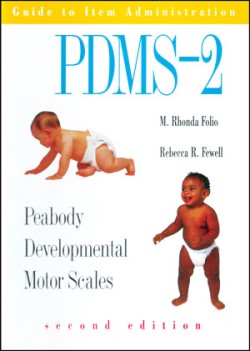
The Peabody Developmental Motor Scales (PDMS-2)When you order the PDMS-2 COMPLETE Kit, you’ll receive an Examiner’s Manual, a Guide to Item Administration, a Picture Book, 25 Profile/Summary Forms, 25 Examiner Record Booklets, the Motor Activities Program Manual and a Peabody Motor Developmental Chart. The PDMS-2 is also offered without the Motor Activities Program Manual (PDMS-2 TEST Kit).

You will also receive the Object Kit and the Shape Cards Kit which both contain sets of test objects to help achieve a standardized administration of the test; the Object Kit includes a black shoelace, six square beads, a wooden pegboard, three wooden pegs, 12 one-inch cubes, a large button strip, a bottle with a cap, a formboard with shapes, a lacing card, a measuring tape, and a roll of masking tape. The Shape Cards Kit includes blackline masters and three shape cards.

The test scores consist of a Gross Motor Quotient, a Fine Motor Quotient, and a Total Quotient. The Gross Motor Quotient is made up of the Reflexes, Stationary, Locomotion, and Object Manipulation subtests. The Fine Motor Quotient includes the Grasping and Visual-Motor Integration subtests. Lastly, the Total Quotient combines both the Gross and Fine Motor subtests.

To reduce scoring and reporting time and errors, the new PDMS-2 Online Scoring and Reporting System has been developed and is purchased separately. It is web-based software that is PC, Mac and iPad compatible. Some of the software Scoring features include:

  • converting PDMS-2 item scores or subtest scores into standard scores, percentile ranks, and age equivalents
  • generating composite quotients
  • comparing PDMS-2 subtest and composite performance to identify significant intra-individual differences

The software Reporting features also include:

  • a printed report of the student’s identifying information and PDMS-2 performance including short-term and long-term treatment goals and objectives
  • score and print reports using as few as one subtest score or only Gross or only Fine Motor scores
  • save or print text or PDF file using two report options:
    • standard clinical report (2 page summary of test scores)
    • detailed clinical report (fully customized 6- to 8- page analysis indicating treatment goals and objectives

Additional features of this web-based software include:

  • pull-down menus to easily navigate among software functions
    fields for storing detailed examiner and testing information
    on-screen subtest and quotient comparisons

A first-time base subscription provides an entire year of unlimited online scoring and report access for up to five users.

Praxis Disorders and Intervention Strategies: Seminar Recap

A new season of Therapro’s Saturday Seminar Series is off and running—and it started strong! On Saturday, August 23rd, Teresa May-Benson, ScD, OTR/L, an esteemed occupational therapist, educator, author, and researcher, presented an in-depth session titled “Praxis Disorders and Intervention.”

Dr. May-Benson currently serves as the Executive Director of the SPIRAL Foundation (Sensory Processing Institute for Research and Learning), a nonprofit dedicated to advancing knowledge in the field of sensory integration and praxis. Her presentation offered attendees a compelling and informative overview of this complex area of practice. The seminar felt like a “fall tune-up,” preparing therapists and educators to reengage with the foundational concepts of praxis just as the academic year gets underway.

During the seminar, Dr. May-Benson clearly and succinctly reviewed the primary components of praxis, describing it as a multifaceted process involving a sequence of sub-processes—each engaging various parts of the brain. She explained how praxis dysfunction impacts ideation, motor planning, sequencing, and execution, and emphasized the importance of identifying these breakdowns in order to provide effective intervention.

In addition to outlining clinical signs and observable behaviors associated with praxis challenges, she presented a toolbox of intervention strategies designed to be immediately applicable across home, school, and clinical environments. A major emphasis was placed on child-directed activity, which she identified as a critical component of successful intervention. According to Dr. May-Benson, when children are not invested in the therapeutic activity, the session loses meaning—and with it, motivation and therapeutic effectiveness. Her approach reinforced the importance of aligning goals and activities with a child’s interests to promote engagement and motor planning success.

The seminar drew a diverse group of attendees, including occupational therapists, educators, parents, and even a grandparent. The feedback was overwhelmingly positive. Participants appreciated the balance of theory and practical strategies, as well as Dr. May-Benson’s ability to make such a nuanced topic accessible and actionable.

Therapro was proud to host this outstanding presentation and extends its sincere thanks to Dr. May-Benson for sharing her time and expertise. Her passion for the field of occupational therapy and deep understanding of praxis intervention left a lasting impression on all in attendance.

Check out  these reviews:

“Very informative. A lot of information presented in thoughtful manner.”

“Good information and gave me a better understanding of praxis disorders”

“Information was broken down in a very clear & helpful way.”

“Great information – helpful to get fuller picture of components of praxis & great ideas for interventions.”

Thank you, Teresa!

Filomena Connor, MS, OTR/L

August 23, 2014

Brain Gym®: Movement-Based Learning Readiness

This past Saturday, Therapro was thrilled to host a dynamic and highly attended professional development seminar at our headquarters, with over 80 enthusiastic participants in attendance.

Pamela Formosa, MA, OTR/L, delivered an engaging and insightful presentation exploring the benefits of Brain Gym®, a movement-based learning readiness program that supports children with a variety of challenges including sensory integration difficulties, attention issues, emotional regulation concerns, and learning differences. Her session focused on how Brain Gym can empower students to “solve their own puzzles” by using movement as a tool for self-regulation and improved focus.

Brain Gym® is an internationally recognized program that uses intentional movement to enhance brain function and prepare the body and mind for learning. Rooted in neuroscience and developmental movement, this approach integrates physical activity with goal setting and self-awareness to create a holistic framework for academic and personal success.

Formosa guided attendees through a range of Brain Gym activities that are designed to activate both hemispheres of the brain, improve body coordination, and promote cognitive development. These exercises can be seamlessly incorporated into classrooms, therapy sessions, or home routines to support readiness for learning and overall engagement.

Why Movement Matters in Learning

Movement is a critical component of brain development, particularly in early childhood and for individuals with diverse learning needs. Programs like Brain Gym® help children access the neurological pathways required for attention, memory, and emotional regulation. When incorporated regularly, these movement-based learning readiness programs can make a meaningful difference in a child’s ability to process information and thrive in educational environments.

Check out this short clip from the workshop to see Brain Gym in action:

Explore More Movement-Based Resources

If you’re seeking more engaging and effective ways to support students’ sensory, motor, and cognitive development, be sure to explore Therapro’s Move to Learn collection. These resources offer therapists, educators, and parents a wide array of movement-based tools designed to enhance readiness for learning, support attention, and promote physical engagement in a fun and accessible way.

From balance and coordination tools to activities that target executive functioning and sensory regulation, our Move to Learn products align well with the principles of Brain Gym and other movement-based learning readiness programs.