Tag Archives: occupational therapy (OT) tools

Occupational therapy (OT) tools include equipment and materials used to support sensory integration, motor skills, coordination, and functional independence in children.

Tips for Choosing Your Pencil Grip from Gail Kushnir, MA OT, B.Ed

On February 2, 2020 Therapro was happy to host another successful webinar, Let’s Do It Write! Writing Readiness presented by Gail Kushnir, MA OT, B.Ed. During this webinar many writing readiness topics were discussed including the use of pencil grips. Gail noted the purpose of a pencil grip is to provide maximum support to the child in order to allow skill, stamina, and speed while handwriting. With a vast array of grips available, choosing the right one can be a daunting task. Gail simplified the process with these basic rules:

Too much pressure… use a soft grip like The Pencil Grip. This soft, molded grip encourages a natural writing position while minimizing finger strain.

Best For: Children and adults needing general support for a dynamic tripod grasp

Pros:

  • Versatile; works for left and right-handers
  • Comfortable for extended writing

Cons:

  • Less structured than other training grips
  • May not correct more severe grip issues
Ergonomic pencil grip tool for improving handwriting comfort and control

Too much flexibility and instability….use a grip with firm support like the Bulb Grip. The Bulb-Shaped Grip features a round, bulbous design that encourages a natural grasp by positioning the fingers comfortably around the soft contour. It’s especially helpful for young children or those struggling with developing hand strength and control.

Best For: Emerging writers who need substantial support to develop fine motor coordination

The Bulb Pencil Grip

Pros:

  • Promotes a relaxed grip
  • Offers excellent tactile feedback
  • Great for children with low tone or motor planning challenges

Cons:

  • Bulky; may not fit all pencil sizes
  • May not support finger isolation as precisely as more structured grips

Tremors….use a weighted grip at the top of the pencil and The Pencil Grip near the point. Weights add subtle weight to the pencil, improving feedback and hand control.

Best For: Students with tremors, poor proprioception, or sensory processing challenges.

Pros:

  • Enhances body awareness
  • Can reduce tremors or shaky writing

Cons:

  • Heavier than standard grips
  • May cause fatigue if overused
Weight for pencils

Ectopic Dermatitis or physical anomalies….use a tube that increases the circumference of the pencil. This foam tubing can be cut to size and slipped over a pencil to create a larger, cushioned grip. It’s especially useful for clients with arthritis, decreased grip strength, or tactile sensitivity. Unlike traditional pre-formed grips, this option offers full-barrel coverage, enhancing stability and comfort.

Best For: Individuals needing a custom or wider grip diameter for improved comfort and control.

Closed Cell Cylindrical Foam Tubing

Pros:

  • Customizable fit and length
  • Lightweight and soft
  • Ideal for users with joint pain or limited fine motor coordination

Cons:

  • Less structured; doesn’t guide finger placement
  • May not appeal to users needing visual or tactile prompts for finger positioning

In most situations, a slanted surface is crucial! Slant boards promote an optimal writing angle, encouraging better wrist extension, upright posture, and proper eye-hand alignment. When used in combination with the right pencil grip, slant boards reduce fatigue and support more controlled, legible handwriting. Therapro offers a range of options—collapsible, adjustable, rigid, and lightweight—to meet the diverse needs of students and clients.

Best For: Enhancing posture, visual tracking, and hand positioning during writing tasks

Pros:

  • Promotes ergonomic writing posture
  • Improves line of sight and reduces neck strain
  • Supports hand and wrist positioning for improved fine motor control

Cons:

  • Bulky to transport (depending on the model)
  • May require space considerations in smaller classrooms
slant board, black

Still not sure, check out Therapro’s Get a Grip on Grips Handy Guide!

Collaborative Blog Project: Handwriting Evaluations

January 23 celebrated National Handwriting Day.  In honor of a holiday near and dear to many occupational therapists’ hearts, we tasked you all with sending us your best ideas, tips, tricks, and opinions on all things handwriting.  We then compiled these comments into Therapro’s first-ever series of collaborative blog posts.  Our first topic, handwriting evaluations! Here is what you all had to say:

Favorite & Most Helpful Handwriting Assessment or Evaluation Methods

Evaluation Tool of Children's Handwriting

By far most therapists surveyed relied on non standardized measures and skilled observations to collect information about a students handwriting.    When it came down to standardized measures the most popular were The Print Tool, The Evaluation of Children’s Handwriting (ETCH), and the Test of Handwriting Skills Revised.

Handwriting Evaluations: Pros & Cons

The Print tool

When discussing the pros and cons of each of these measures a few common themes emerged:

  • The Print Tool provides detailed information about a student’s physical approach to handwriting, but it can be time-consuming to administer and score.
  • Non-standardized measures can be quick and easy, but don’t provide needed normative data.
  • It is difficult to gain reliable information when a student does not yet know the alphabet. 

Other Factors to Consider When Evaluating Handwriting

Visual Perceptual Skills-4

Therapists surveyed indicated that evaluating a student’s motor performance as well as visual perceptual skills was a critical aspect of the handwriting assessment process.  Sensory, environmental, and psychosocial factors were also identified as areas to include when assessing a student’s handwriting.

Helpful Hints & Suggestions for Evaluating Handwriting

  • Include both a near-point and far-point copy task.
  • Include observations of the student performing both preferred and nonpreferred tasks.
  • When observing a child writing, position yourself for an optimal view of the student’s writing hand.
  • Eliminate distraction.
  • Have grips, different seating options, adaptive paper, and a variety of writing tools available to try.
  • Have letter strips available for visual reference.
  • Choose a topic that is of interest to the student to write about.
Handwriting Tools
Adaptive Paper

Thank you to all of the therapists who shared their knowledge and expertise!

Adding Movement to Everyday Activities

A quick web search will unearth a vast number of articles, books, and research supporting the notion that movement is critical to so many life functions, including a child’s ability to attend and engage in learning activities. Cold winters, limited daylight hours, and the current COVID pandemic have all played a significant role in limiting access to movement opportunities.  However, there are still some great ways to move within the confines of these restrictions! Check out these ideas!

Obstacle Courses

Obstacle Course

Obstacle courses can be big, small, built indoors, or built outdoors.  There is no set of specific materials needed, just a little imagination!  At home, obstacle courses are a great rainy day activity. Use couch cushions, blankets, pillows or whatever else is readily available around the house.   In the classroom, obstacle courses make a great option for indoor recess.

Simple modifications can help everyone get in on the fun!

  • To help learners still working on motor planning, establish a starting and end point, and/ or identify materials to use for the course.
  • Make it more complex by adding game rules such as “the floor is lava” and cannot be touched!
  • Get creative juices flowing by establishing a challenge. Can you make it from your desk to the pencil sharpener using only three materials? Can you make it from the couch to the kitchen without touching the floor?

Check out Sensational Fun and Therapro’s free resources for ways to enhance obstacle courses with sensory exploration!

Alternative Seating

Alternative Seating

Swapping out traditional chairs for something that allows for wiggling is a great way to add movement experiences to traditionally sedentary activities! Be sure to supervise those with decreased balance!

Some Ideas Include:

  • Sit on a jacket, blanket, pillow, or air-filled cushion.
  • Sit on an upside-down water jug, chair with wheels, rocking chair, ball chair, or Kore Stool!
  • Place an air filled wedge between a student’s back and the back of the chair or under the feet (also great to support posture and positioning!).
  • Use a ready made Foot Fidget or tie exercise bands to chair or desk legs.

For more alternative seating ideas, check out Therapro’s Blog, Setting up Your Seat for Virtual Learning Success!

Games!

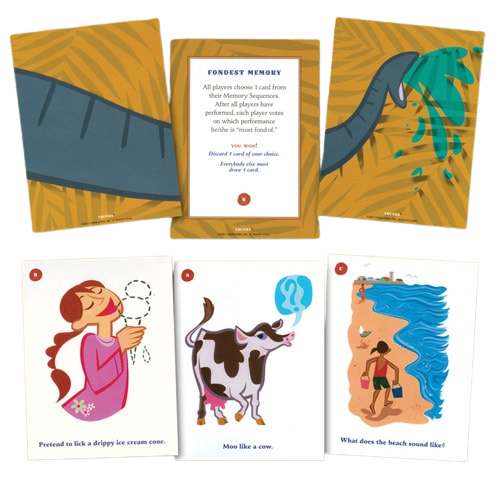
Trunks Memory Game

Games are engaging at all ages and are a great resource for movement.  Some games come with built-in movement opportunities like the Yoga Spinner Game, Trunks, or Letter Treasure Hunt. For games that are traditionally sedentary, table games, a few tweaks can add a dose of movement!

Try These Ideas:

  • When game setup allows, spread game pieces out.  For example, when playing a memory game, place cards in different spots in the room (across multiple desks, across the living room floor, or even taped to the wall!)
  • Use sticky notes or small stickers to cover game board spaces with a movement activity.  For example, take a traditional board game and add movement cues (“10 jumping jacks”, “run in place”) to several of the game’s squares.  When a player lands on this square, they would perform the movement prescribed.

Movement Breaks!

More and more classrooms are adding movement or “brain breaks” into the daily schedule. A simple stretch break can do wonders for changing a student’s level of alertness and their ability to attend. These mini breaks don’t have to be restricted to the classroom; they are perfect for homework sessions, online learning activities, or even Saturday morning cartoon sessions!

Try These Ideas:

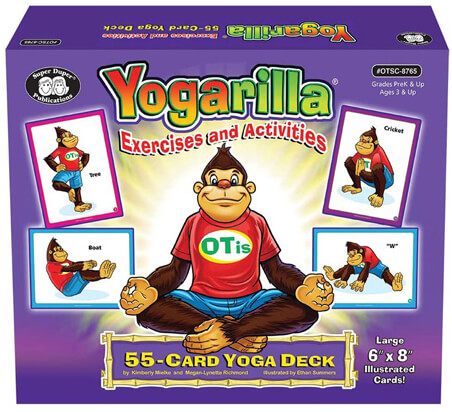
  • Get students involved. At the beginning of the day, assign a movement activity to each student. During the designated movement break time, students take turns leading classmates through their assigned movement.  Make it super simple by distributing movement cards at the beginning of the day (for example, Fun Deck cards or Yoga Cards) for students to use as guidance!
  • Keeping a visual near spaces where sedentary activities usually occur helps to provide reminders to move. Try Move Mindfully Poster Strips, simple cutouts from favorite magazines, or Drive Thru Menus.
  • Create a movement corner near learning spaces to help students have quick and convenient access to movement opportunities without getting off track! These can be quick and easy to create; try using a small yoga mat or towel, some weighted balls or filled water bottles, and/ or a therapy ball.
Move Your Body

Be sure to check out Therapro’s Tap Into Tools For The Body Handy Guide for more ideas!

Small amounts of movement will quickly add up.  Providing the space, tools, and opportunities to access movement experiences will help students attend, focus, and better access their learning environments. In addition, these early, positive experiences with movement will help to establish lifelong health habits!