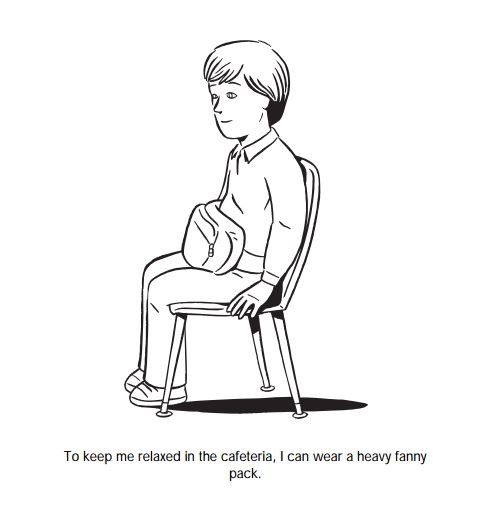
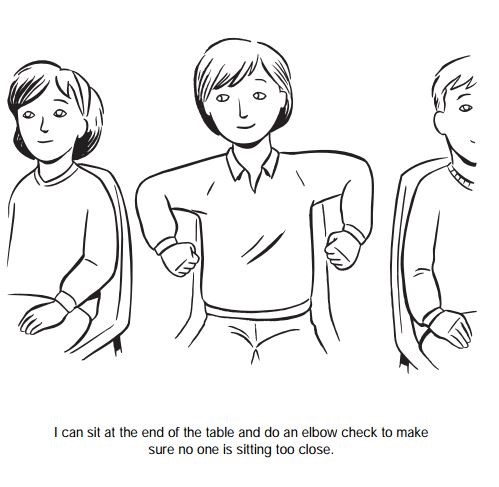
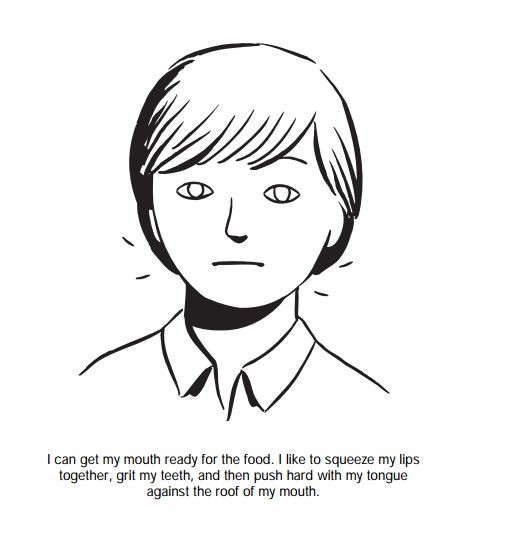
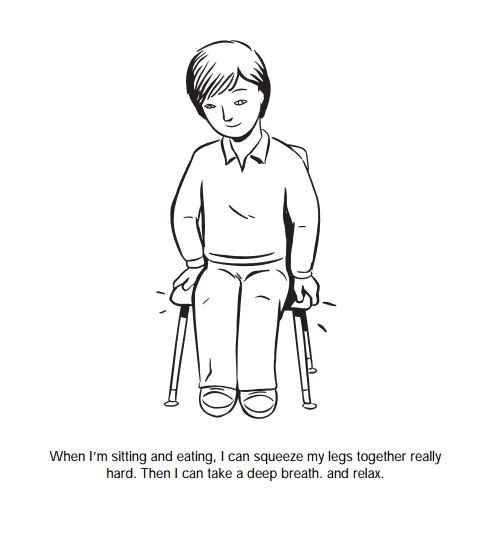
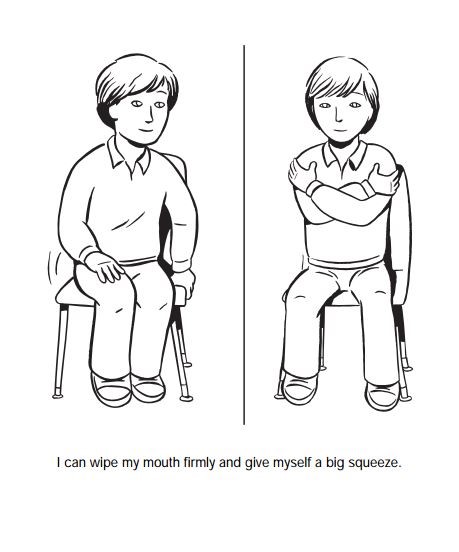
Sensory strategies are techniques used to help children manage responses to sensory input, such as sounds, textures, or movement. These strategies support self-regulation, attention, and participation in learning environments. They are essential for helping children stay calm, focused, and engaged throughout the day.
Ironically, the reasons why we go to these venues are the reasons people with Autism do not like them! Here are a few challenges that may be faced in public entertainment venues:
Sensory: People with Autism often struggle with sensory input and how to deal with it.
Many of these venues may smell strange (or someone may be wearing perfume) and cause a negative reaction for some people. This can be so subtle that the person with autism may not even know that it is causing him/her to act out of control.
Sudden and loud chaotic noises can cause confusion for them in addition to all the chatter and background music in the room.
Sitting too close to other people can cause unwanted light touch that we know can be very irritating. Speaking of touch, a theatre setting may have textured chairs that are uncomfortable
And not to mention all the visual stimuli that occurs – all the bright lights, some moving and others flashing can put a nervous system into overload.
Social Skills: These venues involve social environments which is an area of real challenge for people with Autism
They may be highly anxious in knowing how to interact with the rest of the group.
As a result they may seem aloof or, on the other hand, blunt.
In an attempt to communicate, they may not be able to read the body language or facial expressions of the other person and then their behavior may appear to be inappropriate.
People with Autism take things very literally which may cause misunderstandings with others at the venue.
Routine and Anxiety: Routine is very important for people with Autism
Going somewhere new outside of routine can cause a lot of anxiety.
Even if a person with Autism is used to going to a venue each week, even the absence of a staff member, different layout, etc. could cause anxiety.
Unexpected events are anxiety producing for them.
Other diagnoses that might experience similar challenges:
We as occupational therapists working with people with developmental disabilities are trained to assess their ability to process sensory information as part of their evaluation.
We are finding that many people with no known diagnoses also have challenges with entertainment venues. Recently, I have been privileged to attend professional baseball games in Baltimore, Philadelphia and San Diego. That venue has changed since I went to baseball games as a child – now there is loud music, flashing lights, huge TV screens and people getting up and stepping on your toes which all make me wonder why I am there. It is challenging for me!
Suggested Solutions
Preparation, Preparation, Preparation:
Social Story: A social story can be a written or visual guide describing various social interactions, situations, behaviors, skills or concepts and were introduced and described by Gray and Garand (1993). They are designed to improve the social skills of people with autism spectrum disorders (ASD). Social stories are used to educate and as praise. Social stories model appropriate social interaction by describing a situation with relevant social cues, other’s perspectives, and a suggested appropriate response. About one half of the time, the stories are used to acknowledge and praise successful completion of an accomplishment. These have been used successfully in preparation for entertainment venues. For further information, Therapro, Inc. offers the Newly Revised Book on Social Stories here.
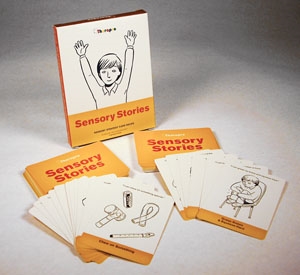
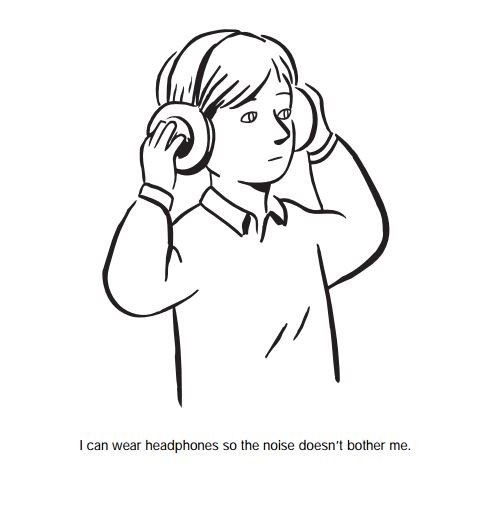
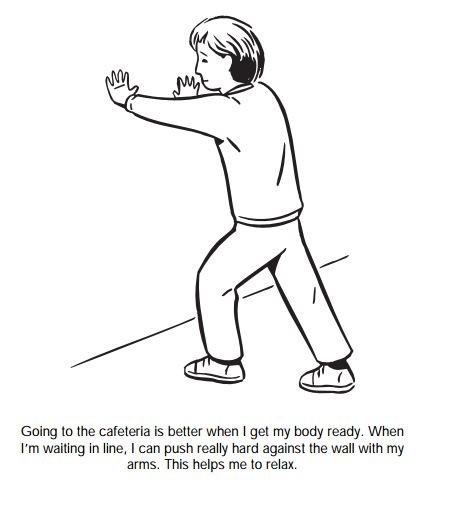
Sensory Stories: Sensory Stories, published by Therapro, are similar to Social Stories but with the specific approach to teaching children with autism and over-responsive sensory modulation issues to successfully engage in social activities within the home, school, and community. Sensory Stories comprise 30 individual stories about daily activities. These Sensory Stories instruct the child to use calming sensory strategies in order to deal with the unpleasant sensory aspects of that particular situation. When read on a regular basis, Sensory Stories assist the child in developing effective routines to manage the sensory experiences surrounding typical daily activities. The authors have conducted several studies to demonstrate their effectiveness. They can be viewed on the Therapro website.
The Venue Itself
Call ahead and see if the facility has a visual tour for an iPad of the venue. A 360 degree tour to show as much of the rooms, location of bathrooms, etc. would be helpful for knowing the physical layout.
Find out what the venue rules are, how services operates so everyone knows what to expect of the routine
Ask if there could be dedicated time that can be with just families with autism
Would there be a quiet area or small area available for families and individuals who might experience stress during the venue? Here at the Therapro Showroom, we have a sensory area for individuals including a bean bag chair and a basketful of sensory tools. This helps when the parent or caregiver want to look around the showroom. Also, our showroom does not have all products out as that could be overwhelming to individuals. Instead, we ask the parent to make a list of interested products and we go into the warehouse to pick them. Shoppers can sit comfortably at a table and make their decisions as to what they want – no rush.
Helpful Tools During the Venue Visit
Fidgets: During stressful times, fidgets help reduce agitation. Therapro’s selection of fidgets have increased through the years as each nervous system finds a fidget helpful and others offensive. Please see our website for numerous fidgets. Our very popular Fidget Kit includes a variety of fidgets so a person can determine which ones they like or dislike. We have many quiet fidgets that can be used unnoticed!
Additional Tools:
Sensory Strategy Cards: These are small cards with such strategies as “I can grasp my elbows and squeeze hard”, “I can put a heavy backpack or fanny pack in my lap”, “I can do an elbow-check to make sure no one is too close.” They are visual reminders of the various strategies that children can use. They can be tucked in a shirt or pants pocket for a quick reference to a preferred strategy or put on a belt loop or backpack.
May’s Therapro Saturday Seminar was a follow-up to last month’s seminar entitled: Developing the Brain from the Bottom Up! Pam Formosa, MA, OTR/L returned with her colleague and Co-Founder of Brain Fit Academy in Hopedale, MA, Christina Schlupf, MA Licensed Educator and ABA technician. They presented: The Listening Program™ and Reflex Integration: A Powerful Combination!
Brain Fit Academy uses a neuro-developmental approach to help students improve overall processing through Reflex Integration and to teach students skills to empower them for success. The Listening Program ™ (TLP), based on the work of French ENT, Alfred Tomatis in 1944, has developed over the years and today, Alex Doman carries on Tomatis’ work, focusing on using sound, music, and technology to improve brain function. TLP can be described as an auditory stimulation therapy that uses music to train the brain by strengthening neurological pathways with the outcome of improving learning, communication, information processing, and more.
Pam and Christina clarified the essential differences among hearing, listening, and auditory processing. They explained that hearing is a passive function, listening is a dynamic function, and auditory processing is also a dynamic function that involves the brain using what it hears to make sense of what is being heard. With a thorough review of the auditory system, we learned how sound frequencies affect brain and body function in a hierarchical manner. Pam and Christina shared an interesting fact about embryonic development: as early as 16 weeks gestation, the fetus responds to the mother’s voice and sounds outside the womb through bone conduction.
TLP utilizes transmission of vibrations through bone, called “bone conduction.” It involves listening to personalized music 5 days per week typically over the course of 20-40 weeks. TLP uses headphones to transmit sound through air (ear canal to the cochlea) and bone (vestibular system) simultaneously. The merits of bone conduction can be seen in several crucial areas including improved vestibular processing, which manifests itself in improved postural control, improved sensory awareness; speech and language development; and stress reduction and regulation of the parasympathetic nervous system. The potential benefits of TLP are astounding!
Pam and Christina presented a case study of an 11 ½ year old child with a clinical diagnosis of Auditory Processing Disorder to illustrate how they might use Reflex Integration in conjunction with The Listening Program™ to achieve positive therapeutic outcomes. Using formal checklist inventories to assess and quantify 6 areas of listening as a baseline of function before beginning treatment, and then again, following treatment, was examined. Changes in the child’s function were quantifiable and impressive between weeks 2 and 20 of treatment. Areas of significant improvement included Receptive and Expressive Listening and Language, Auditory Processing, Listening to the Body, Behavioral and Social Adjustment, Level of Energy, and integration of the Moro, TLR, and ATNR Reflexes.
The Listening Program ™ is one of many tools you’ll find in Brain Fit Academy’s toolbox that can help remediate neuro-developmental immaturity. Used in conjunction with Reflex Integration, it is a powerful therapeutic modality with great potential to help students achieve improved functioning through brain “re-organization.”
Attendees shared their enthusiasm about the seminar:
“The information was enlightening and applicable to my work with preschool students with Autism.” -Jo-Ann F., Teacher
“Understanding elements that we may be missing, yet can relearn. Hope at the end of the tunnel.” – Anonymous, Parent
“Excellent information & will leave with ready to use activities/tx.” – Jennifer P., Occupational Therapist
“I think teachers need to understand the basics of Primitive Reflexes. This can really impact a child’s learning and behavior in the classroom.” – Ann Marie H., Teacher
Like Social Stories, sensory stories are short descriptions of a situation which include specific information about what to expect in that situation and strategies on how to handle the situation.
A sensory story is a method to allow children with sensory modulation issues – sensory integration disorder, sensory integration dysfunction – to cope with everyday experiences. They are in a format that allows children with autism to employ calming strategies throughout the course of specific daily activities like combing hair, going to the dentist and many common school or social activities. These stories are designed to help children navigate daily activities by providing structured, multisensory narratives that prepare them for various situations. When read on a regular basis, Sensory Stories enable children to engage in life.
Our Sensory Stories can help in many different situations including:
Home – to help develop self-care skills (bathing, dressing, showering, bedtime, meal time)
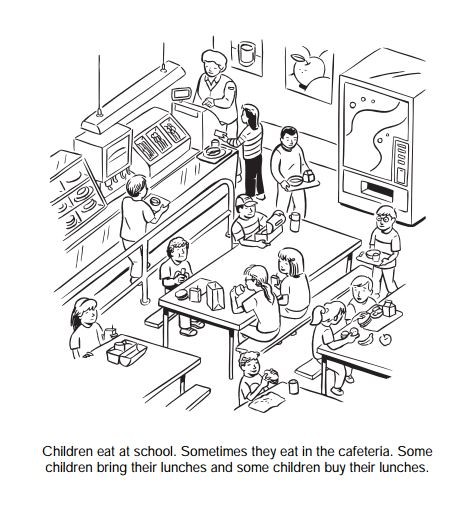
School – social skills and academic skills (assemblies, cafeteria, circle time, desk time, recess, moving in the school, PE class)
Community – to help understand how others might behave in a particular situation (going to restaurant, store, parties, getting a haircut)