Tag Archives: classroom strategies

Classroom strategies encompass OT-informed approaches that support attention, posture, sensory needs, and motor skills to help students succeed academically and socially.

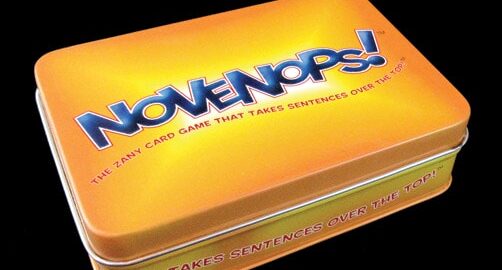
Novenops; game in small yellow tin

NOVENOPS! A Multitasking, Therapy Tool All-Star 

When budgets are tight and space is limited it is essential that the tools in your therapy toolbelt are multitaskers! Games are a fun and engaging therapy tool that can be quickly set up to address many therapeutic AND educational goals. In this post we are going to take a look at all the ways the game NOVENOPS! can be adapted to meet a variety of therapeutic goals. 

What is NOVENOPS ?

NOVENOPS is a popular game that is easily adaptable to all ages and levels. Best of all Kids LOVE it! NOVENOPS is a card game designed to develop an understanding of the basic elements of grammar and sentence structure. NOVENOPS is an acronym created from the words NOun, VErb, NOun, and Phrase. It includes 52 cards, a heavy duty foldable game board and directions all in a portable tin box.

Basic Rules for Playing NOVENOPS!

  • Goal – be the first player to discard all of the cards from their hand
  • Time- about 15 minutes
  •  To Play: Unfold the enclosed “game board” and place it within reach of all players.
  •  After shuffling the game cards, deal 5 cards to each player and place the rest of the cards in the center of the board
  • The first player plays a noun card from their hand onto the Noun space on game board; if they do not have a Noun card, then they draw from the deck.
  • The next play is a Verb card, followed by a Noun card and finally a Phrase card.
  •  Repeat until one player has played all the cards in their hand. They are the “winner.”

For more information, check out the video below.

Modifying Game Play to Target Different Goals!

The Reluctant Writer With Handwriting Goals

Modifying NOVENOPS to meet handwriting goals can be done simply by adding a scoring element. Game play follows the basic rules of NOVENOPS with the following modifications:

  • Players all receive a ‘scoreboard’ at the start of game play. This scoreboard can be any writing paper that is appropriate for the player.
  • Playing a ‘Phrase’ card ends the round and whoever played that card is the winner of the round.
  • The winner of the round writes the sentence they created on their scoreboard as a means to keep score and then play moves to the next round.
  • Whoever has the most silly sentences written on their scoreboard at the end of game play, wins!  

The Reluctant Conversationalist With Expressive And/ Or Receptive Language Goals

Targeting expressive and/ or receptive language goals while playing NOVNOPS typically doesn’t involve changing game play rather changing the pace of the game.  Try this:

  • Set up NOVENOPS as described above and follow the basic instructions for game play.
  • After each round (when a phrase card has been played) take a moment to pause and reflect on what is happening in the sentence.  For example, players have created the silly sentence “The mother hid the dinosaur in the refrigerator”.
  • Target those language goals! These targets can be simple and concrete ‘wh’ questions like; “Who hid the dinosaur?”, “Where is the dinosaur”, “What happened?”, “How did the dinosaur get in the refrigerator”. Or they can involve more creative thinking; “Why do you think the mother hid the dinosaur in the refrigerator?”, “What do you think the dinosaur will eat while he is in the refrigerator?”. 

The Squirmer With Academic Based Goals 

Adding a movement component to seated tasks can do wonders for focus and attention.  One of the easiest ways to make NOVENOPS a movement game is to turn it into a type of obstacle course. Here’s how to do it:

  • Set up a course with three pathways
  • At the  end of each pathway stack three piles of NOVENOPS cards (a stack of noun cards, a stack of verb cards, and a stack of phrase cards).
  • Depending on the student’s abilities, create obstacles or motor challenges along the paths. For example a chair they have to wiggle under, a stack of books they may have to step over, or a winding path they may have to zig zag through.
  • Whoever creates the most sentences before time is up wins!
  • Pro Tip: This is a great activity idea for therapists doing push in sessions! 

A little creativity can go a long way in making the tools in your therapy toolbelt, multitasking superstars! 

My Motor Mats movement path, boy completing a crab walk on a black motor mat

Making Time for Movement Breaks

There is no doubt that movement is an essential part of the learning process but finding the time for movement breaks in an already packed school day can be hard.  However, with the ever growing body of research linking movement to academic performance (Petrigna et al, 2022)  finding the time for movement breaks becomes essential. So, how do you move? Here are some quick ways to add a little extra movement to the day: 

Add Extra Movement Opportunities Into Transitions

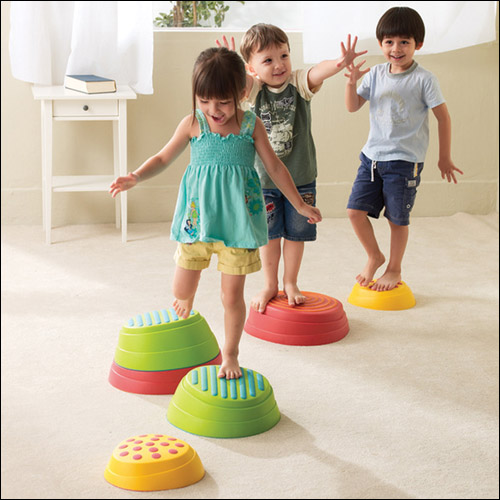
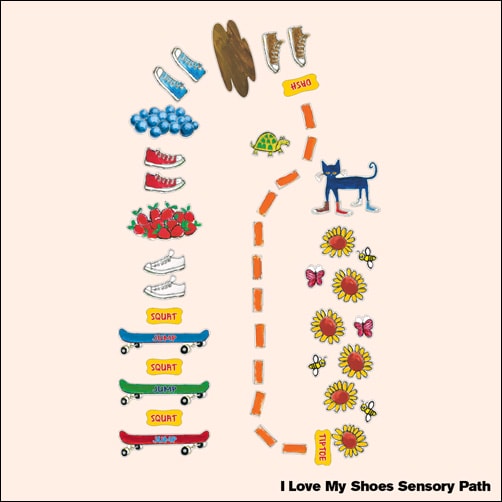
Movement paths (sometimes called sensory paths or motor paths) offer great opportunities to build in movement breaks during naturally occurring transitions, like changing classes.  The simple addition of movements like hopping, balancing on one foot, or turning in a circle offers an enriched movement opportunity that activates different sensory channels helping the brain get ready and be more receptive to upcoming learning activities.  

Add Movement To Academic Lessons

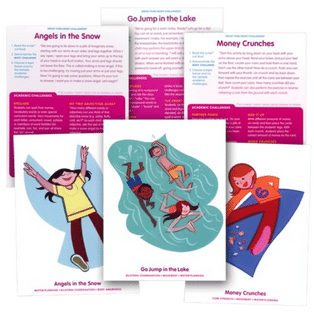
Reach those kinesthetic learners by incorporating movement into academic lessons. Readily available activities, like the Drive Thru-Menus makes this easy to do!  Practicing spelling words? Try spelling each word while performing Angels in the Snow from the Drive-Thru Menus Body Challenge Exercises.

Don’t Just Take A Break, Take A Movement Break

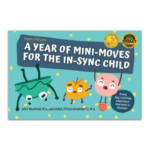
During the school day there are naturally occurring breaks, such as transitions or when students finish up at different times. Fill these moments with meaningful movement opportunities. Use cards from the Move Your Body Fun Deck to add motor movements to transitions. The fun deck offers easy to grab, quick visuals with a variety of different movement activities; pick three for the day, display them on the board, and do each one a few times between activities for a quick brain reset! Another option is the Year of Mini-Moves for the In-Sync Child, which offers a weekly schedule of different movements that can be easily incorporated into the day.  

Create Accessible Movement Spaces

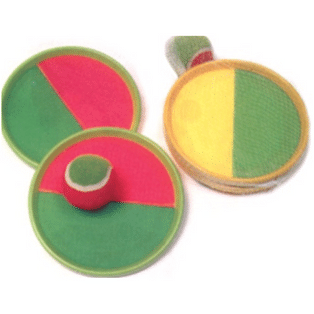
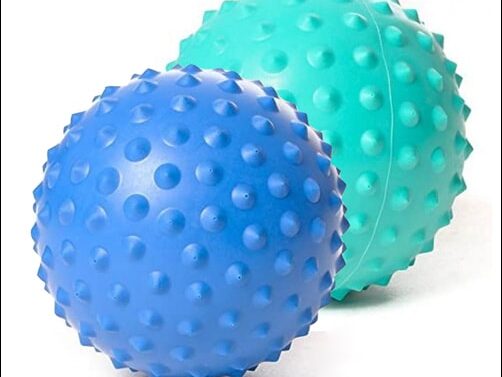
Getting outside often offers a plethora of opportunities for movement breaks but for the student who has gross motor challenges the opportunities can be limited.  Having a variety of activities available will help ensure students of all abilities are able to access movement opportunities.  For students who have difficulty with standard catch and throw ball games, offering alternatives like Magicatch, Beanbags, or Pezzi Activa Balls offers inclusive approaches.  For students who have difficulty accessing standard playground equipment, the availability of parachutes, bubbles, or movement-based games like Trunks can provide alternative movement activities at recess. 

Movement is a critical component of the learning process that can get overlooked during a busy, academic filled, school day.  Building movement breaks into already existing routines and schedules can help students move and succeed! 

Petrigna L, Thomas E, Brusa J, Rizzo F, Scardina A, Galassi C, Lo Verde D, Caramazza G and Bellafiore M (2022) Does Learning Through Movement Improve Academic Performance in Primary Schoolchildren? A Systematic Review. Front. Pediatr. 10:841582. doi: 10.3389/fped.2022.841582.

Tips for Back to School Success

The transition from the relaxed summer schedule to the more structured school schedule can be tough for everyone involved. Here are some tips for making the transition back to school, a little easier.

Add Structure Back Into The Schedule

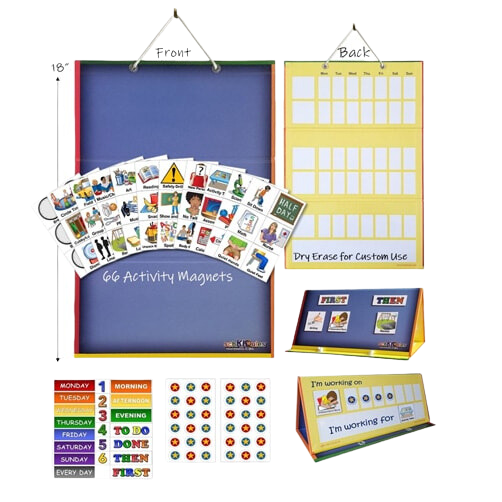
Schkidules a visual schedule used to help transition to back to school, blue board with picture icons depicting daily tasks and yellow board depicting stars earned

As the long days of summer start to wind down, slowly adding more scheduled events into the daily schedule will make the transition into a fully scheduled school day much easier. This could be as simple as a set time for breakfast or adding in a scheduled chore time during the day. Try using SchKidules to make a daily visual schedule.  The easy to use magnetic schedule lets you slowly add in more and more structured activities to the daily lineup and it is in a similar format most kids will see in their classrooms. Once the school year gets going a weekly schedule will be a great way to keep track of school activities and extra curriculars.

Practice Important Self Help Skills

Kids will be expected to do many of their daily self care activities independently or with minimal assistance once they return to the classroom. Lots of practice at home will help kids be ready for this! The resource Self Care With Flair is a great way to teach children important skills like handwashing, putting on coats, and managing their clothing in the bathroom. The Busy Bee Sensory Activity Plush is helpful for practicing the fine motor skills needed for these tasks like lacing, tying, zipping and buttoning.  Pro Tip for kids who have not yet mastered shoe tying, replace standard laces with elastic shoe laces for a slip on and go option.

Green dinosaur Busy Bee Lacing Sensory Activity showing lacing through loops numbered one to five used to prepare fine motor skills needed for back to school

Get In Tune With Sensory Needs

Cover of the product Sensational Fun a card deck of sensory based activities.  used to discover sensory preferences for back to school success

Every sensory system is different, figuring out the particular needs for each system will help kids start off the school year on the right foot! Riding the bus may be hard for kids who have difficulty with loud noises or who struggle with motion sickness. These students may benefit from sensory tools for the eyes and ears. The cafeteria may be especially difficult for students with aversion to certain smells; these students may benefit from fidgets that calm and organize an over responsive sensory system. Students who are not use to early mornings or who are use to afternoon naps may benefit from fidgets that help alert or wake up the under responsive sensory system.   Sensory based activities such as playing with floof, scented dough, or any of the activities found in Sensational Fun will help give insight into sensory needs.

Refresh Academic Skills

 The summer slide happens but there are many ways to keep academic skills sharp. For a fun refresher try learning games. Novenops offers a quick refresh on sentence structure, and Letter Treasure Hunt is great for a review of letter concepts!

Letter Treasure Hunt

Planning ahead for the first day of school can help students make a smoother transition back into the academic year!