Tag Archives: classroom strategies

Classroom strategies encompass OT-informed approaches that support attention, posture, sensory needs, and motor skills to help students succeed academically and socially.

Supporting Reading: More Than Just Literacy Skills

Supporting reading means more than teaching literacy—it’s about building the underlying skills that make reading possible. This is especially true when reading is hindered by other difficulties such as visual inattention, visual impairments, or sensory processing difficulties.  There are many low to high-tech assistive technology options that can help support reading.  With so many options available, how do you decide which option is best for your needs? Here is a quick breakdown!

Tip for supporting reading literacy skills - use light filters for literacy

Use Light Filters When Glare Reduction is Needed
Glare results when too much light enters the eye.  It can come from either a direct or a reflected light source. Glare can be distracting and can also make it difficult to read text or see images.   Overhead fluorescent lights are a major source for glare in classrooms and office spaces. Light Filters are a simple solution for minimizing glare that comes from overhead lights.

Use a Reading Guide Strip When Tracking is Difficult
Difficulty with eye tracking can cause readers to skip lines or words and can decrease reading speed. This may also impact overall reading comprehension.  Reading Guide Strips make it easy to track print through a transparent tinted window. Even better, they are available in a variety of colors making it easy to find the eye’s preferred color!
Reading guides for literacy
Tip for supporting reading literacy skills - use colored overlays for literacy

Use Colored Overlays When More Contrast or Clarity is Needed
Colored overlays can help with print clarity.  Improving print clarity can be helpful in decreasing eye strain and fatigue. It can also help by increasing reading attention and overall comprehension. Options to improve contrast include Highlighter Strips and Reading Guides.   Highlighter Strips work by brightening written words. Reading Guides help improve contrast. Pro tip: color preference varies, try different colored reading guides to see which your eye responds to best!

Use Slant Boards to Increase Visual Attention
Bringing visual material closer to the eye can help increase visual attention.  Slant Boards and book holders are both great tools for this job! Pro Tip: Adjustable slant boards offer maximal flexibility with finding the right angle!
Slant boards for literacy

The ability to read is more than just literacy skills! Low tech adaptations and modifications can make the difference between a successful reader and a struggling reader.

Getting Into the Learning Zone with Sensory Tools!

The “optimal” zone of regulation is crucial during learning activities. The optimal learning zone is characterized by the just right amount of  attention, focus and processing speed to allow learning to take place. Outside of this optimal zone are two zones that are characterized by decreased or heightened levels of arousal.  The appropriate use of sensory tools and strategies may help students maintain an optimal state of alertness during learning activities.  

The low arousal zone is characterized by low energy levels and decreased alertness. This zone may be optimal when we are winding down from a long day but it is not a great zone to be in when learning needs to take place! In the learning environment this state of decreased alertness can make concentration and processing difficult.

The high arousal zone is characterized by increased levels of alertness. Heightened states of alertness are optimal during times of real or perceived danger but is not optimal for learning. In a learning environment this heightened state of arousal will lead to distractions and difficulty with focus.  

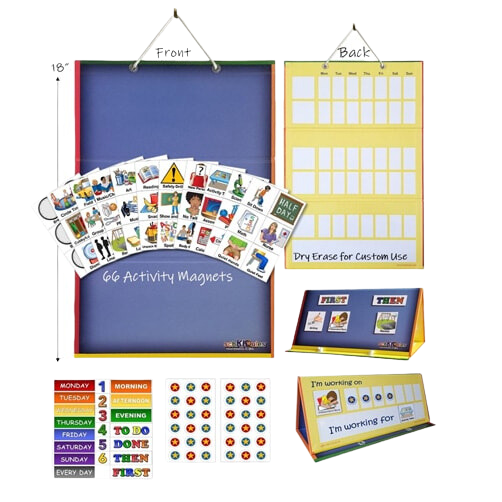
Schkidules visual schedule display

Posted Schedules.  Posting the daily schedule can have a tremendous impact on the student with an over-responsive sensory system.  Posting the schedule allows the student to anticipate what is coming up next and prepare their systems for the sensory experiences that the next event will bring. This helps the student to attend and focus rather than be distracted by the anticipation of what will be happening next. The simplest solution is to write the daily schedule on the board!  For early or nonreaders, a visual schedule (like Schkidules) may be easier to understand.  

Lighting:  Harsh glare and the flicker from fluorescent lights can be distracting for some students. When possible, turning off overhead lights and relying on natural lighting is a great solution.  However, natural lighting is not always available or optimal; in those cases light filters offer a great way to reduce the harsh glare emitted from some types of overhead lighting! 

Patterned Fluorescent Light Filter;  a great sensory tools for getting in the learning zone.
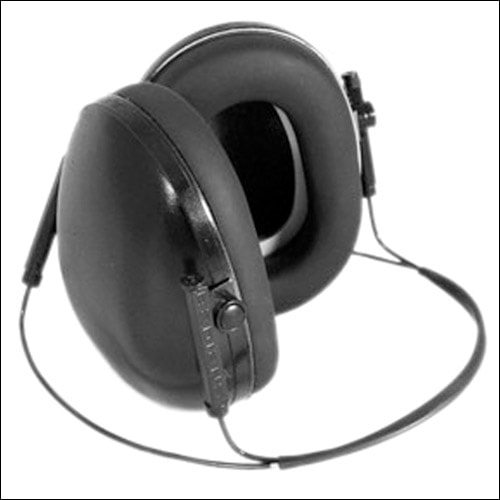
Low Set Behind the Head Earmuff; a great sensory tools for getting in the learning zone.

Noise Reduction. Classrooms can get noisy! The typically responding sensory system may be able to handle the fluctuations in noise levels with expected reactions like covering the ears.  For the student with the over responsive system the rise in noise level (or the anticipation of a rise in noise level) may be distracting or be a source of anxiety.  Rugs and curtains can help to absorb some noise. Chair Socks are a great option for chair legs; they help to minimize the sounds created by chairs moving across the floor.  Access to noise-cancelling headphones may be another option for students with significant sound sensitivity.  

Alternative Seating.  Levels of regulation fluctuate throughout the day.  For students who are in a state of low arousal, movement is a great way to bring the system back into a more  optimal state.  Alternative seating allows for movement input while still engaging in the learning activity. Alternative seating options can range from the subtle input that comes from a textured seat cushion or air filled wedge to the more intense input received from sitting on a stool or ball chair.  Another option is to not sit at all and use a standing desk instead! 

Fidgets.  There are many fidget options available. Fidgets can bring arousal levels up or provide input that is calming all depending on the specific characteristics of the fidget.  Fidgets that provide light touch input (like the Tactile Tiger) tend to help bring arousal levels up while fidgets that provide deep pressure or are resistive in nature ( like the Thera-band hand exerciser) can help calm an over responsive sensory system.  For more information on fidget check out Therapro’s Find Your Fidget Handy Guide! 

Access to the right sensory tools in the learning environment can make a significant difference in a student’s ability to learn and attend.

Collaborative Blog Project: Pencil Grips

Therapro recognizes the value in the experience that comes from therapists working in the field. Back in January, we tried a little experiment; we had you all tell us your best tips and tricks related to handwriting evaluations.  We then took all of that wonderful information and compiled it into a collaborative blog post.  The information that comes from this type of collaborative approach is invaluable, and so we have put together our second collaborative blog post on pencil grips.

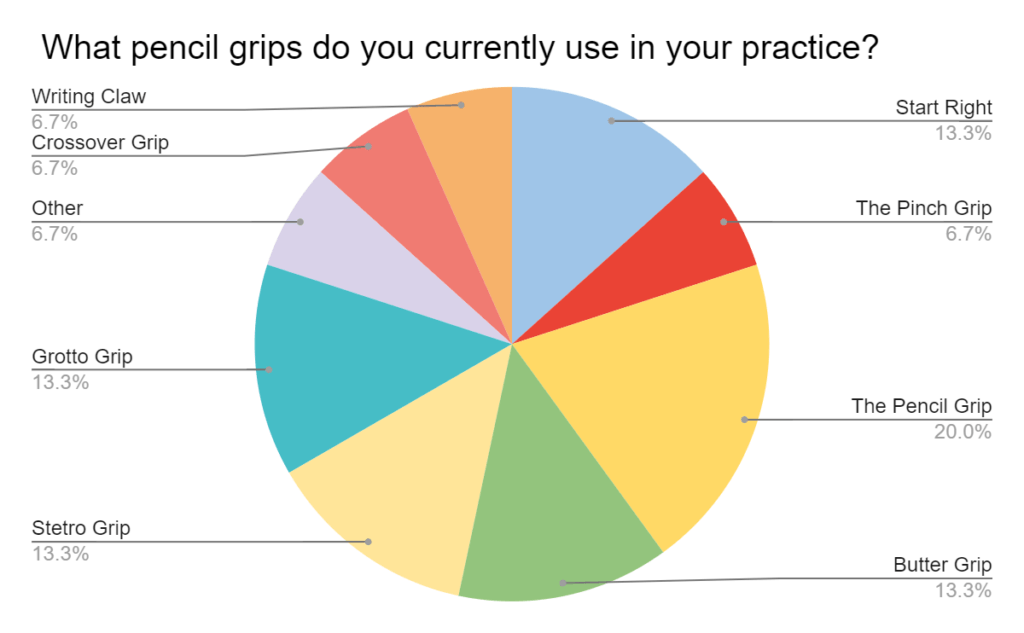
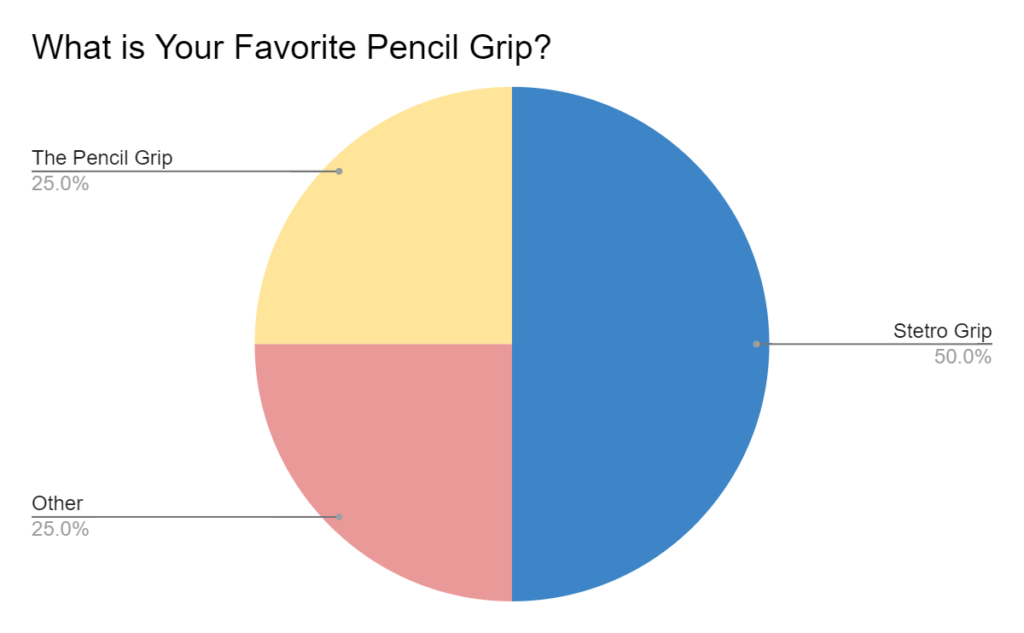
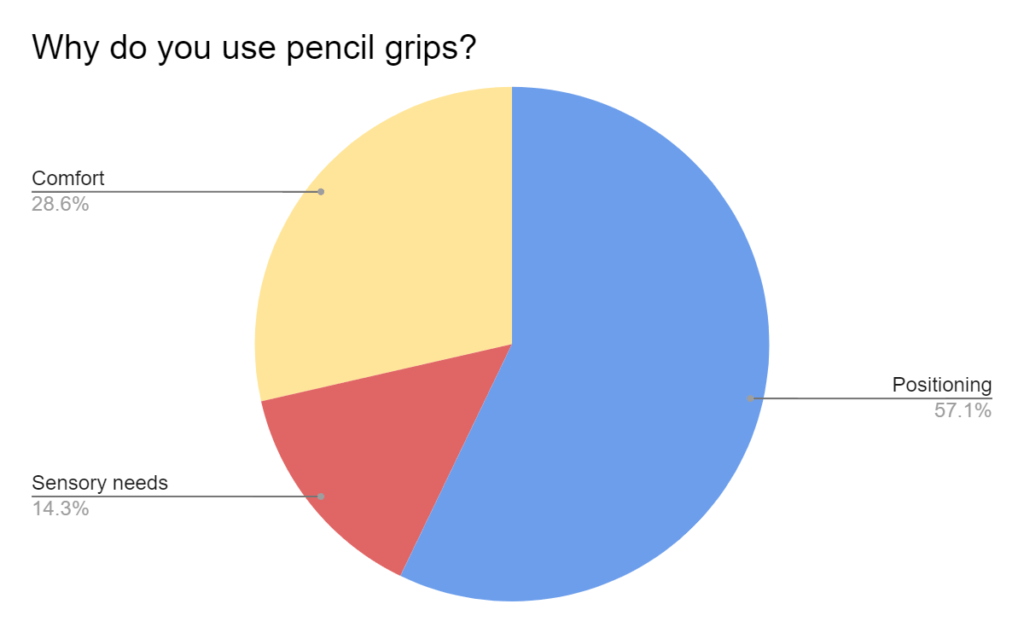
To gather information about the whats and whys of pencil grip usage, we asked you about the grips you are currently using, your favorite type of pencil grip, and the reason that you use grips. The Stetro Grip was identified as a favorite based on its size and “feel in little hands.” The Pencil Grip was a close second based on its design and because “students love it.” 

Pencil Grips: Survey Results

Which Pencil Grips Used when Choosing the Right Pencil Grip
Favorite Pencil Grips when Choosing the Right Pencil Grip
Why Use Pencil Grips

Some other great information that came out of this project was the ways therapists assess the need for pencil grips as well as tips and tricks therapists use to help promote a better pencil grasp.  

When determining the need for a pencil grip, the therapist Therapro surveyed suggested the following: 

  • Do a “Before and After”.  Assess a writing sample with and without a pencil grip to determine if the pencil grip influences legibility or changes the length of time a child is able to participate in the writing task.  
  • Just Ask!: A child’s willingness to use a pencil grip is often an overlooked factor but is absolutely critical. The user should always be an active participant in the decision to use a pencil grip and should have a role in deciding which one works best for them.
  • Check Applicability & Practicality.  Other important factors to consider include how practical is the pencil grip and is it applicable to the student’s current needs. Consider factors such as: Does the child switch classes/ have different environments where they are expected to do writing tasks in? Are there other writing instruments that the child uses (crayons, paintbrushes, etc.), and do they need to be modified in any way? Is the child still expected to do writing tasks or are they moving toward alternative input methods such as typing? 

Tips and Tricks for promoting functional grasp patterns included:

  • Hold small objects in the last two fingers to promote the separation of the two sides of the hand.
  • Use small writing tools (for example, broken crayons,  crayon rocks or short pencils) to promote the development of a tripod grasp.
  • Use triangular-shaped writing instruments to promote a tripod grasp. 
  • Use vertical surfaces (for example, tape the writing paper to the wall) or use slant boards for optimal hand placement and to promote better posture.
  • Highlight the writing space or use highlighter paper to help students write within the boundary area and to increase visual attention. 
  • In a pinch, wrapping clay around the pencil can be used for a pencil grip! 

Thank you to all of the wonderful therapists who took the time to share their expertise with us.  If you are looking for further guidance on choosing the right pencil grip, be sure to check out Therapro’s Get a Grip on Grips Handy Guide!