Tag Archives: saturday seminar recaps

Saturday Seminar Recaps provide concise summaries and key insights from Therapro’s Saturday Sreminar professional development sessions designed for therapists, educators, and caregivers at Therapro’s headquarters in Framingham, MA. This tag offers practical takeaways and resources from each seminar to support ongoing learning.

Developing the Brain from the Bottom Up: A Sensorimotor Approach

May’s Therapro Saturday Seminar was a follow-up to last month’s seminar entitled: Developing the Brain from the Bottom Up! Pam Formosa, MA, OTR/L returned with her colleague and Co-Founder of Brain Fit Academy in Hopedale, MA, Christina Schlupf, MA Licensed Educator and ABA technician. They presented: The Listening Program™ and Reflex Integration: A Powerful Combination!

Brain Fit Academy uses a neuro-developmental approach to help students improve overall processing through Reflex Integration and to teach students skills to empower them for success. The Listening Program ™ (TLP), based on the work of French ENT, Alfred Tomatis in 1944, has developed over the years and today, Alex Doman carries on Tomatis’ work, focusing on using sound, music, and technology to improve brain function. TLP can be described as an auditory stimulation therapy that uses music to train the brain by strengthening neurological pathways with the outcome of improving learning, communication, information processing, and more.

Pam and Christina clarified the essential differences among hearing, listening, and auditory processing. They explained that hearing is a passive function, listening is a dynamic function, and auditory processing is also a dynamic function that involves the brain using what it hears to make sense of what is being heard. With a thorough review of the auditory system, we learned how sound frequencies affect brain and body function in a hierarchical manner. Pam and Christina shared an interesting fact about embryonic development: as early as 16 weeks gestation, the fetus responds to the mother’s voice and sounds outside the womb through bone conduction.

TLP utilizes transmission of vibrations through bone, called “bone conduction.” It involves listening to personalized music 5 days per week typically over the course of 20-40 weeks. TLP uses headphones to transmit sound through air (ear canal to the cochlea) and bone (vestibular system) simultaneously. The merits of bone conduction can be seen in several crucial areas including improved vestibular processing, which manifests itself in improved postural control, improved sensory awareness; speech and language development; and stress reduction and regulation of the parasympathetic nervous system. The potential benefits of TLP are astounding!

Pam and Christina presented a case study of an 11 ½ year old child with a clinical diagnosis of Auditory Processing Disorder to illustrate how they might use Reflex Integration in conjunction with The Listening Program™ to achieve positive therapeutic outcomes. Using formal checklist inventories to assess and quantify 6 areas of listening as a baseline of function before beginning treatment, and then again, following treatment, was examined. Changes in the child’s function were quantifiable and impressive between weeks 2 and 20 of treatment. Areas of significant improvement included Receptive and Expressive Listening and Language, Auditory Processing, Listening to the Body, Behavioral and Social Adjustment, Level of Energy, and integration of the Moro, TLR, and ATNR Reflexes.

The Listening Program ™ is one of many tools you’ll find in Brain Fit Academy’s toolbox that can help remediate neuro-developmental immaturity. Used in conjunction with Reflex Integration, it is a powerful therapeutic modality with great potential to help students achieve improved functioning through brain “re-organization.”

Attendees shared their enthusiasm about the seminar:

“The information was enlightening and applicable to my work with preschool students with Autism.” -Jo-Ann F., Teacher

“Understanding elements that we may be missing, yet can relearn. Hope at the end of the tunnel.” – Anonymous, Parent

“Excellent information & will leave with ready to use activities/tx.” – Jennifer P., Occupational Therapist

“I think teachers need to understand the basics of Primitive Reflexes. This can really impact a child’s learning and behavior in the classroom.” – Ann Marie H., Teacher

Thank you, Pam and Christina!

Filomena Connor, MS, OTR/L
School-Based Feeding Therapy: Strategies and Tools

Eating a snack or lunch is an essential part of a student’s day at school. For students who have “feeding issues” that limit their participation at snack or lunchtime, a therapeutic feeding program might be an appropriate part of their Individualized Educational Plan (IEP). Occupational therapist, Lisa van Gorder, addressed the topic of school-based feeding therapy comprehensively in Therapro’s Saturday seminar entitled: Working with Feeding Problems in the School Setting. Lisa is the owner and Executive Director of Integrated Children’s Therapies in Hudson, MA.

Lisa reviewed some basic feeding facts and safety issues that must be considered prior to starting a feeding program. She explained reasons why a child may not eat, which include but are not limited to:

  • sensory processing problems
  • poor postural stability
  • underlying medical issues

She presented an interesting model in describing how discrimination and regulation play a vital role in oral feeding for the child with SPD.

Lisa cautioned that school systems differ widely in the provision of feeding therapy services. How to initiate treating a feeding problem in the school setting begins with a team approach that includes the child, parent, teacher, therapist, and teaching assistant. This group lays the ground rules for treatment, based on the child’s needs and the expectations within the school setting, i.e. 1:1 feeding therapy or addressing the issue within the school cafeteria where the primary goal may be successful socialization.

Lisa walked us through a hypothetical feeding therapy session, and stressed the importance of engagement of the student, which is very dependent on communicating to the student what the therapist will be doing. Touch cues paired with verbal and visual cues help the student feel safe and at ease with feeding therapy. Lisa described a variety of treatment approaches, including food chaining, in her talk. Her jam-packed toolbox includes the many available cups, spoons, straws, food with varied textures, and regulation activities she has found effective, which include suggestions for creating a therapeutic environment in the cafeteria.

Lisa supported her discussion with many cited research studies. She advised that learning to eat is a long process that evolves over time. The school setting may be one place where the child can gain eating skills, as it is an activity that occurs daily at school. However, further feeding support may be necessary with additional therapeutic input from an outpatient facility or clinic.

Take a look at some positive reviews attendees offered:

“I thought it was helpful – I am walking away with some ideas to try on Monday.” Rose O.

“The information was clear, comprehensive, applicable, & interesting.” Anonymous

“The presenter was extremely knowledgeable and realistic. She was very engaging. Thank you!” Melissa M.

Thank you, Lisa!

Filomena Connor, MS, OTR/L

March 14, 2015

Visual Processing & Perception Assessments: Seminar Highlights

Selecting the best assessment in order to gain the information we seek about a client’s functioning is vital for the occupational therapist, the client, and the team. It’s a jumping off point that helps us design a treatment plan that is meaningful and helps the client achieve goals. On Saturday, February 28th, Therapro’s President, Karen Conrad Weihrauch, PhD, OTR/L, tackled the task of examining 14 standardized visual motor and visual perception assessments as part of the Saturday Seminar Series.

Having the opportunity hear a comparison of the assessments, discuss them, and provide personal experience with the administration of the assessments helped therapists and educators identify tests that they might like to use in their work settings. In addition, being able to actually examine and manipulate the tools was a valuable experience not typically available to us.

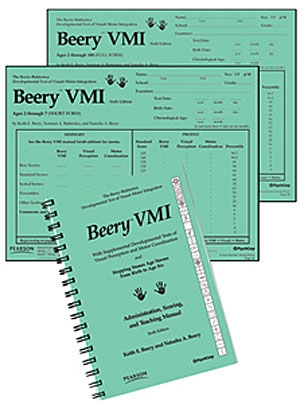
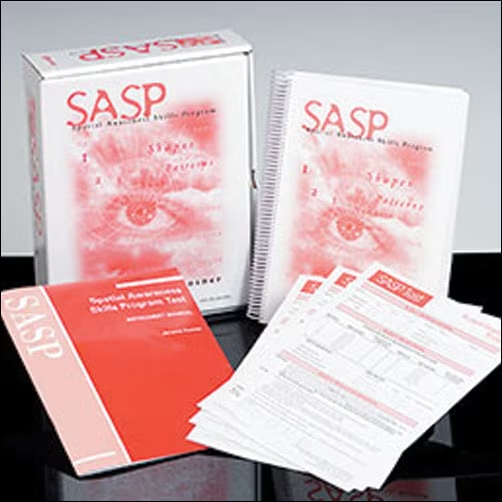
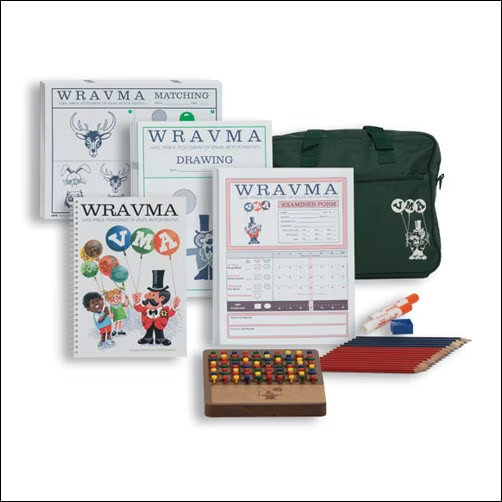
Karen provided a succinct description of each test, including ages for which the test was designed, time required to administer, and interpretation information. Included were new editions of old standards such as the Beery VMI, DTVP-3, and DTVP-A. She presented tests that include useful or unique features. For example, the Spatial Awareness Skills Program (SASP) includes a curriculum manual, the Wide Range Assessment of Visual Motor Abilities (WRAVMA) is the only test available that includes a pegboard for testing dexterity, and the Preschool Visual Motor Integration Assessment (PVMIA) includes two Behavioral Observation Checklists in addition to the two subtests. The PVMIA is unique because its authors are OTs.

Attendees shared their comments regarding this valuable seminar:

“A great review of all available v.p. tests that should be shown to all school system OTs so that they can choose what they want to use.” Beth H.

“As an outpt therapist, I have very limited access to updated assessments. This seminar was very helpful with regard to: easy, wide-range tests that I could use for children and adults in a non-academic setting.” Joanne T.

“Good overview of potential VP/VM tests including quite a few I had never heard of.” Lynne H.

Thank you, Karen!

Filomena Connor, MS, OTR/L

February 28, 2015