Category Archives: Therapist Resources

Comprehensive resources, strategies, and tools designed to support therapists in delivering effective care and ongoing professional growth.

New Year, New Goals: Turning IEP Objectives Into Daily Practice

January is a natural reset point in schools and therapy settings. IEP goals are active, routines are re-established, and teams are asking an important question: Are our goals showing up in daily practice? Effective functional IEP goal implementation goes beyond isolated therapy activities; it ensures skills are practiced meaningfully across classrooms, therapy sessions, and home routines.

Too often, IEP objectives are addressed only during scheduled service time. While direct intervention is essential, true progress happens when goals are embedded into everyday tasks. This means shifting from “therapy-only” strategies to functional, repeatable opportunities throughout the day.

From Goals to Real-Life Skills

Functional IEP goals should answer one key question: What will this student be able to do more independently in daily life? Whether the goal targets fine motor skills, sensory regulation, attention, or executive functioning, carryover is critical.

Drive Thru Menus

One effective approach is using structured, classroom-friendly tools that support consistency across providers. Drive-Thru Menus® are a practical example. These activity cards combine movement, academics, and sensory input, making it easier for teachers and therapists to reinforce goals such as attention, postural control, and self-regulation during natural transitions, not just during therapy time.

Supporting Sensory and Self-Regulation Goals

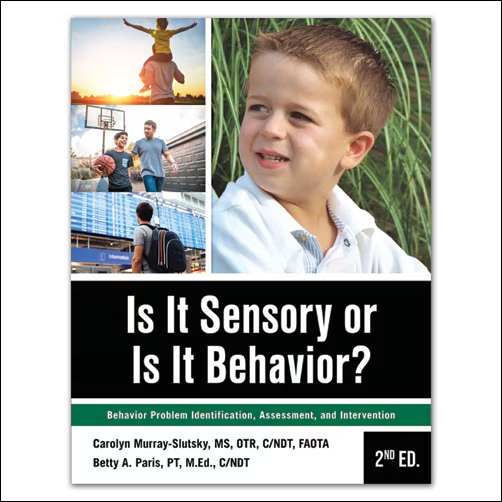
Just Right! A Sensory Modulation Curriculum for K–5

Many IEPs include goals related to sensory modulation, emotional regulation, or classroom participation. The Just Right! Sensory Modulation Curriculum helps teams use shared language and evidence-based strategies to support these goals throughout the school day. When everyone, from therapists to classroom staff, understands why a strategy is used, implementation becomes more consistent and effective.

Embedding sensory strategies into morning routines, work periods, or transitions allows students to practice regulation skills when they matter most.

Making Fine Motor Goals Functional

Fine motor goals should directly support classroom performance, not just skill acquisition. Resources like the Fine Motor Skills in the Classroom help therapists and educators design interventions that improve handwriting, tool use, and classroom participation while aligning with educational demands.

By focusing on functional outcomes—such as completing written assignments or managing classroom tools—teams can better track progress and demonstrate meaningful growth.

Collaboration Is the Key

Successful functional IEP goal implementation relies on collaboration. When therapists, educators, and families use shared tools and strategies, students experience consistent support across environments.

For more ideas on embedding therapy goals into daily routines, explore the Therapro Blog or browse Therapro’s classroom-ready therapy resources designed to support carryover beyond the therapy room.

Learn Faster and Work Smarter: Webinar Highlights

Therapro recently hosted the webinar Learn Faster and Work Smarter, an engaging professional development session led by Dr. Cathy Stern, OD, FOVDR, FCSO, FNORA. This webinar explored the critical role of visual processing in learning efficiency, attention, and overall performance across educational and therapeutic settings. The on-demand recording is now available for those who were unable to attend live or want to revisit the content.

Learn Faster and Work Smarter

Why Visual Processing Matters

A key takeaway from the webinar was the reminder that vision is more than visual acuity. Visual processing involves how the brain interprets and responds to what the eyes see, and it plays a central role in nearly every learning task. Dr. Stern emphasized that a significant portion of the brain is devoted to visual processing, making it foundational to reading, writing, attention, organization, and task completion.

When visual processing is inefficient, learners may appear inattentive, slow, or overwhelmed — even when cognitive ability is intact. Understanding this connection allows therapists and educators to identify hidden barriers to learning.

For clinicians and educators looking to deepen their skill set, our Visual Perception & Cognition category offers a curated selection of tools and resources designed to support development in these exact areas.

Key Concepts Covered in the Webinar

Dr. Stern provided a clear, clinician-friendly overview of how visual processing impacts performance, including:

  • How visual processing speed influences reading fluency, comprehension, and copying tasks
  • The relationship between visual efficiency, attention, and cognitive workload
  • Common signs of visual processing challenges that may be overlooked in traditional evaluations
  • Practical strategies to support visual processing in everyday learning and therapy activities

The session balanced theory with application, making the information immediately usable in school-based, clinic-based, and home settings.

Practical Strategies You Can Apply Right Away

One of the strengths of this webinar was its emphasis on functional application. Attendees walked away with strategies that can be incorporated into existing routines rather than added as separate interventions. These included:

  • Simple visual activities to support processing speed and accuracy
  • Environmental and task modifications that reduce visual demand
  • Ways to integrate visual skill-building into academic and functional tasks

These approaches support more efficient learning without increasing frustration or fatigue for the learner.

Who Will Benefit from This Webinar

The content is especially valuable for:

  • Occupational therapists and COTAs
  • Special education teachers and classroom educators
  • Related service providers supporting literacy and executive functioning
  • Parents and caregivers seeking a deeper understanding of learning challenges

Whether you work with children or adults, the strategies discussed offer insight into improving performance by addressing visual processing at its foundation.

Watch the Webinar On Demand

If you’re looking for practical, evidence-informed strategies to help learners work smarter — not harder, this webinar is well worth your time.
👉 Watch the on-demand recording by clicking here

And be sure to explore our Visual Perception & Cognition category for therapist-approved assessment tools and intervention resources that align with the webinar’s themes.

Stay connected with Therapro for more therapist-approved education, tools, and resources designed to support meaningful outcomes across learning and daily life.

Adapted Scissors Guide: Finding the Right Fit for Every Learner

When it comes to developing essential cutting skills, adapted scissors for kids can make all the difference in supporting learners with physical, cognitive, or sensory-motor challenges. Therapists, educators, and parents know that one size rarely fits all—especially when it comes to fine motor tools. At Therapro, our wide selection of adaptive scissors offers tailored options to meet diverse needs, from improving grip and control to promoting bilateral coordination. This guide compares popular adapted scissors and offers practical tips for selecting the right tool based on each child’s abilities and goals.

1. Easi-Grip Loop Scissors:

Easi-Grip Loop Scissors

Ideal for children with weak grip strength or limited dexterity, Easi-Grip Loop Scissors feature a self-opening mechanism and a continuous loop handle that automatically reopens after each cut. These are particularly effective for learners who have difficulty with standard scissor action due to conditions such as cerebral palsy or low muscle tone. Tip: Position the paper vertically to allow more shoulder stability while cutting.

2. Mounted Table Top Scissors:

For learners with severely limited hand function or the inability to grasp, Mounted Table Top Scissors can be operated with the palm, elbow, or even a fist. They stay secured to a surface and allow for one-handed use, making them an excellent choice for children recovering from surgery or those with hemiplegia. Tip: Use with a non-slip mat to ensure stability and safety during use.

Mounted Table Top Scissors

3. Dual-Controlled Training Scissors:

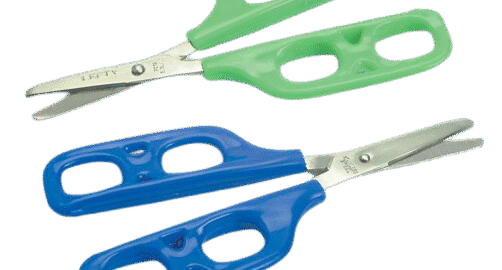
Dual Control Teaching Scissors

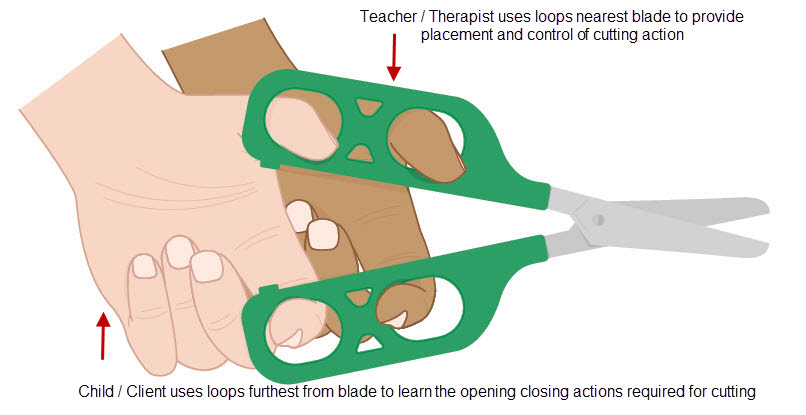
Perfect for developing scissor skills with adult support, Dual-Controlled Training Scissors allow a therapist, teacher, or parent to guide the cutting motion alongside the child. This model is ideal for beginners who need extra hand-over-hand support while learning proper finger placement and control. Tip: Use these scissors for modeling open-close sequences before transitioning to independent use.


Therapist Tips for Success:

  • Start with snipping activities using short strips of paper to build confidence.
  • Reinforce midline orientation by centering the cutting activity.
  • Combine cutting with visual-motor integration tasks to strengthen tracking and planning skills.

Selecting the right pair of adapted scissors for kids can significantly enhance a learner’s sense of independence and participation in school and home activities. Visit the Adaptive Scissors Category Page for our full selection.


By choosing the right adapted scissors and using strategic therapist-informed techniques, you empower every child to achieve cutting success—one snip at a time.